
Carney says he backs strikes on Iran ‘with some regret’ as world order frays
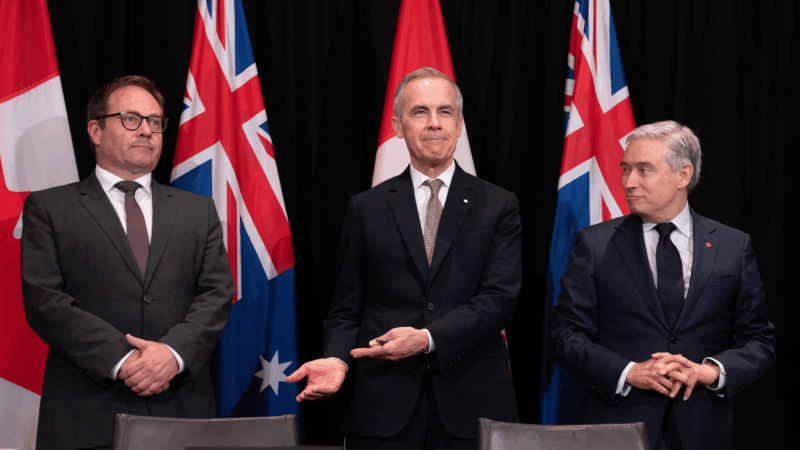
MELBOURNE, Australia — Canadian Prime Minister Mark Carney said Wednesday he supported the strikes on Iran “with some regret” as they represented an extreme example of a rupturing world order.
Carney spoke at the Lowy Institute, a Sydney-based international policy think tank, during the Australian leg of a trade-focused, three-nation visit that began in India. He will address the Australian Parliament on Thursday, then fly to Japan on Friday.
“Geostrategically, hegemons are increasingly acting without constraint or respect for international norms or laws, while others bear the consequences. Now the extremes of this disruption are being played out in real time in the Middle East,” Carney said.
The Canadian prime minister stressed his country was not apprised beforehand of the U.S.-Israeli airstrikes, in his first remarks since the war broke out on Feb. 28.
“We were not informed in advance, we were not asked to participate,” Carney told reporters traveling with him in Australia. “Prima-facie, it appears that these actions are inconsistent with international law.”
Whether the U.S. and Israeli airstrikes broke international law was “a judgment for others to make,” he said.
Canada supported efforts to prevent Iran from obtaining a nuclear weapon and from threatening international peace and security, Carney said. The two countries haven’t had relations for 15 years because of reported human rights abuses in Iran. Canada last year designated the Iranian Revolutionary Guard as a terrorist entity.
“We are actively taking on the world as it is, not passively waiting for a world we wish to be. But we also take this position with some regret because the current conflict is another example of the failure of the international order,” he said.
Despite decades of U.N. efforts, “Iran’s nuclear threat remains and now the United States and Israel have acted without engaging the U.N. or consulting with allies including Canada,” he added.
Carney built on themes he laid out in January at the World Economic Forum in Davos, Switzerland, in a speech that garnered widespread attention. He argued the world order was undergoing a rupture and the old norms of the rules-based order were being erased.
Canada and Australia aim to increase cooperation in critical minerals, artificial intelligence and defense technologies.
Canada and Australia are both rich in critical minerals and worked together to build “the largest mineral reserve held by trusted democratic nations,” Carney said.
Iranian civilians are now fleeing the relentless bombing for neighboring Turkey
As the U.S. military broadens its strikes in Iran, traumatized Iranians are reaching the border with Turkey.

A split Senate votes against measure to constrain Trump’s authorities in Iran
Democrats in the Senate were facing an uphill climb Wednesday in their push to restrain President Trump's ability to wage war against Iran.
WATCH: How traffic dried up in the Strait of Hormuz since the Iran war began
The effective closure of the Strait of Hormuz is "about as wrong as things could go" for global oil markets. Iran achieved it not with a naval blockade, but with cheap drones.

As Mississippi waits to spend opioid settlement funds, children and families suffer
Mississippi will receive more than $400M to fight the opioid epidemic. So far, officials haven't directed it toward programs that support addiction recovery.
Alabama’s new state climatologist takes the reins
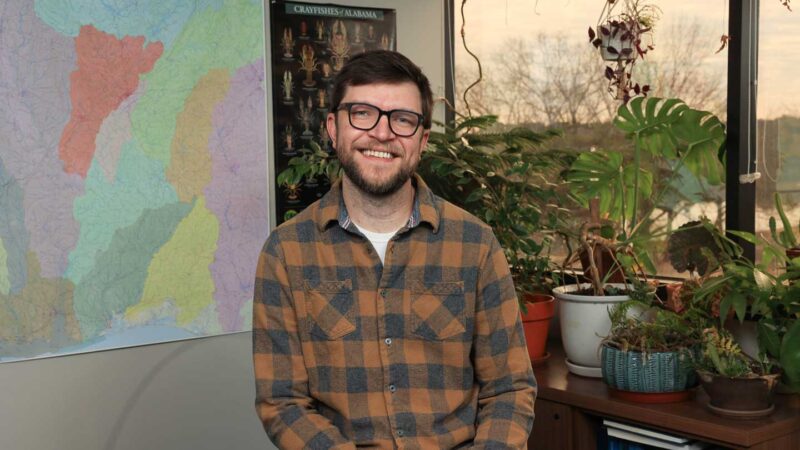
The controversial John Christy is retiring as Alabama’s state climatologist. Lee Ellenburg now assumes the role and is already making a few changes, including declaring that climate change is real and caused by humans.
Colossal Biosciences breeds controversy while trying to revive mammoths
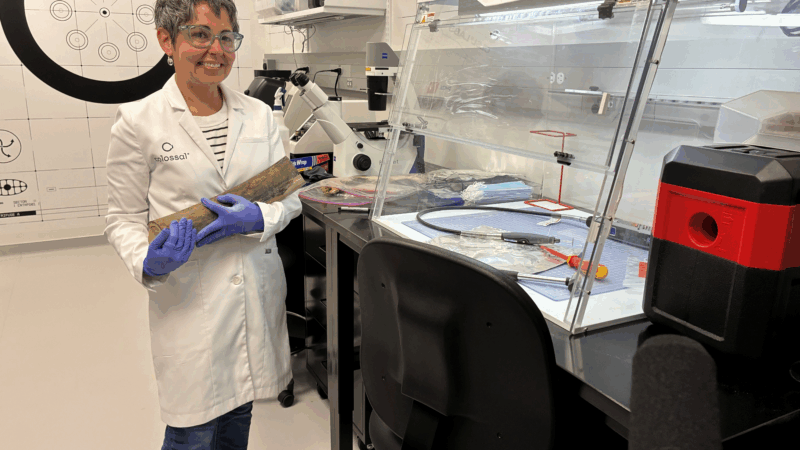
A Texas biotech company is trying to bring mammoths and other extinct creatures back to life. The science is as intriguing as the ethical questions are thorny.
