
Can Americans learn to love tiny, cheap kei cars?

Sitting in the Oval Office this month, President Trump went on one of his trademark riffs, an aside about vehicles that are popular in Asia but impossible to buy new in the United States.
“They have a very small car. It’s sort of like the Beetle used to be with the Volkswagen,” he said. “They’re very small. They’re really cute.”
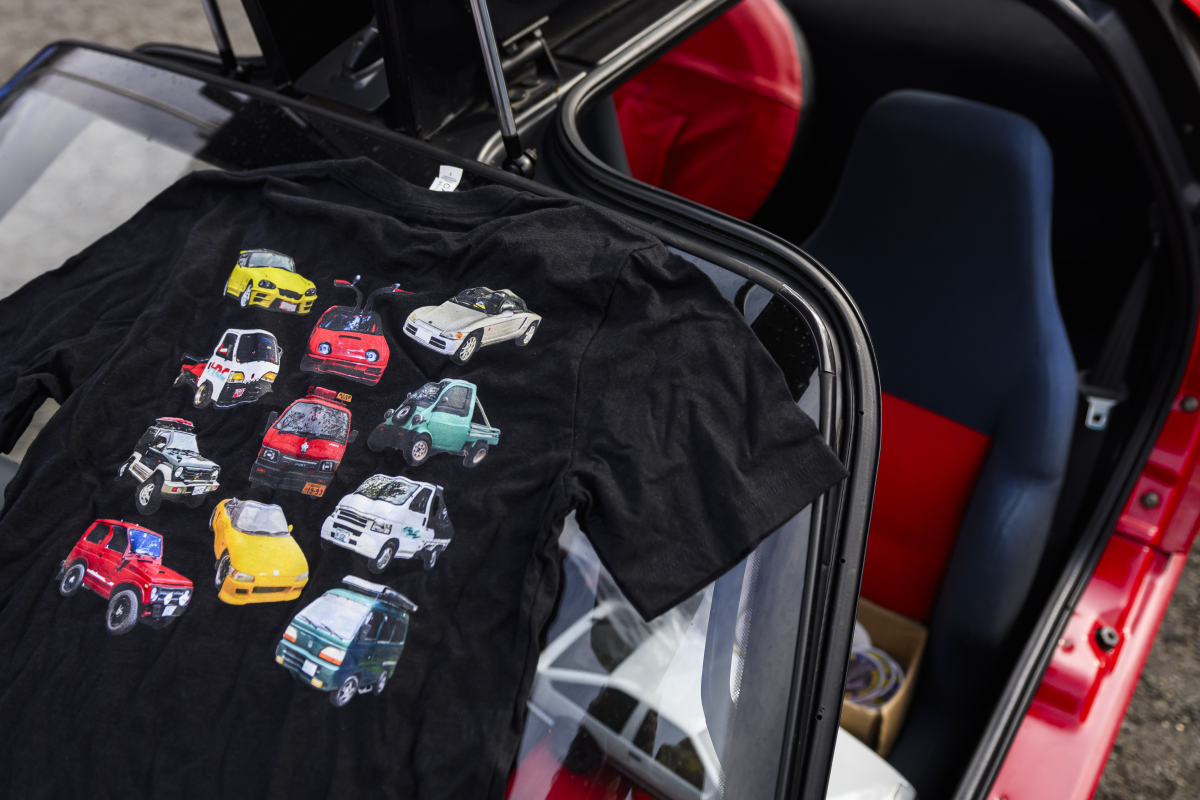
In Japan, these vehicles are known as kei cars. They are, indeed, very small. They are, indisputably, very cute.
“But you’re not allowed to build them” in the U.S., Trump went on. “I’ve authorized the secretary [of transportation] to immediately approve the production of those cars.”
That news came in the middle of a press conference about the Trump administration relaxing fuel economy rules — a change that will make it easier for Americans to buy more of the big, fuel-guzzling trucks and SUVs that car buyers love.
Trump’s endorsement surprised, delighted and somewhat confused American kei car enthusiasts.
It is not actually illegal to build tiny cars for the U.S. auto market. The problem is that kei cars built for foreign countries don’t meet U.S. safety standards, so you can’t import them unless you’re willing to buy an antique. And companies could build tiny cars to U.S. standards, but given the American preference for big vehicles, they simply don’t.
“If this is going to be a kick in the right direction to maybe get the domestic auto industry to reconsider cars like this,” said Andrew Maxon, a kei car owner and the founder of the Capital Kei Car Club, “I’m all for it. I’ll take what we can get.”
An antique exemption

Kei cars, trucks and vans are very popular in Japan. But while new models might meet Japan’s safety standards for things like airbags and seat belts, they’re not designed to meet the very specific U.S. requirements.
So they can’t be imported and driven in the U.S. unless they’re at least 25 years old, which qualifies them as an antique and exempt from federal safety standards. That’s why every vehicle at a recent Capital Kei Car Club meetup in Northern Virginia was at least 25.
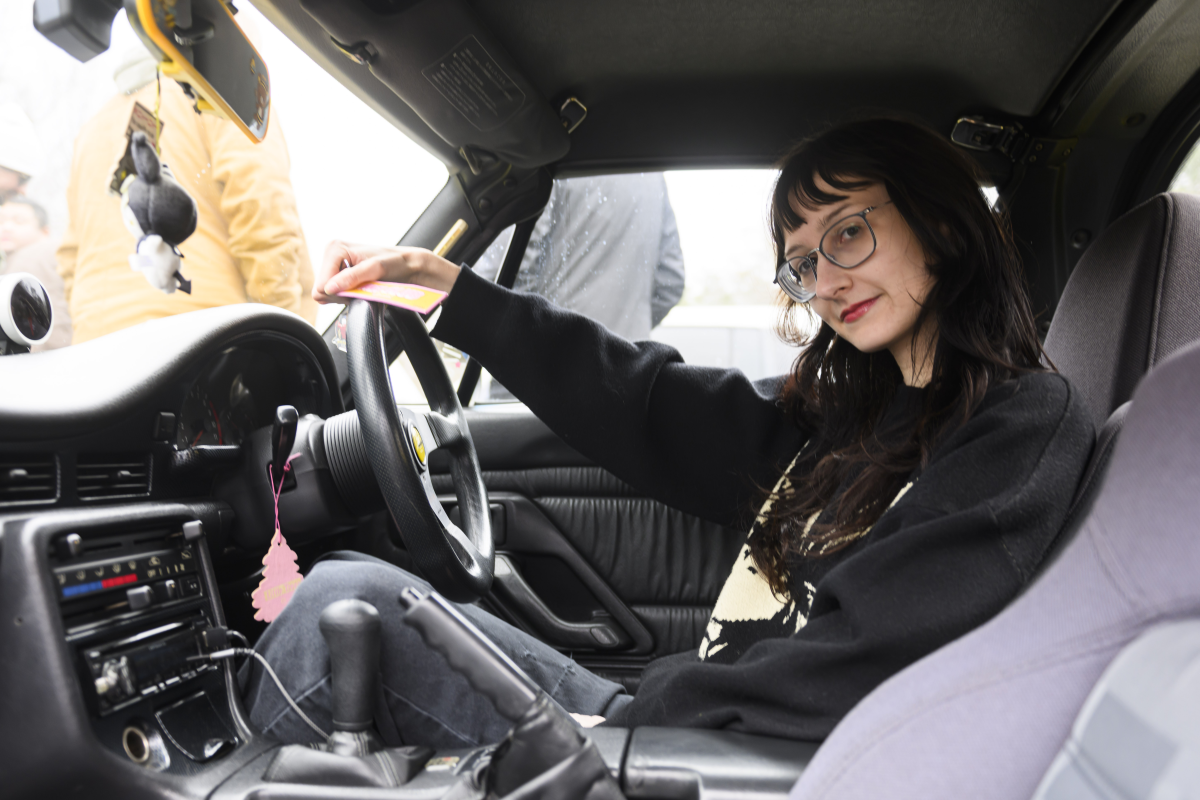
Drivers raved about their tiny cars — their fun handling, their cute appearance, the delighted responses they get when they drive them around.
Drivers of kei vans and trucks also emphasized that the vehicles are practical. Ryan Douglass replaced his midsize American pickup with a pint-size Japanese one, but while it’s shorter than a modern Mini Cooper, it still has a full 6-foot bed, longer than you’ll find on a lot of massive trucks these days.
“I can lay down in the bed and not even touch the ends of it,” he said. More to the point, he can fit in a sheet of plywood.
Unbeatable prices, with some drawbacks

A new kei car, truck or van can be snagged in Japan for less than $15,000.
And the imported antiques? Douglass paid $8,000 for his truck, which runs great, and he says that was on the expensive end; he paid someone else to manage all the import paperwork.
Mainstream pickups are pricey in the U.S. right now, even when they’re used. In November, the average price on Carfax.com was more than $34,000.
Douglass marvels at how much his kei truck saved him.
“I think I could get five or six of these and customize them to my heart’s desire and still be cheaper than a brand-new truck that I can buy out of a dealership today,” he said.
There are drawbacks, of course. Douglass’ license plate warns drivers behind him that his vehicle is, in fact, “VRYSLW.”

The snub-nosed front of the vehicle means there’s no protective crumple zone in front of the driver. If you crash a kei truck, your knees take the hit directly. And because these vehicles are all antiques, their safety specs are antiquated too.
“I accept the terms and conditions,” said Sergey Hall, whose 1992 Suzuki Cappuccino car is even smaller than Douglass’ vehicle. “That’s the best way to put it. I know that there are no safety features on it. No airbags, ABS [antilock braking system], no throttle position sensors or anything like that.”
Safety concerns are why some states ban imported antique kei vehicles, even if federal rules allow them. That frustrates kei car enthusiasts, who note that motorcycles, which are not renowned for safety, are legal on highways.
“What is a ‘safe’ vehicle?” mused Dan Kobayashi, who drives a Honda Acty kei truck. He noted that a car that’s slow and small is safer for pedestrians. And he pointed out that kei cars have great visibility, compared with bigger vehicles with giant hoods and chunky “A pillars” framing the windshield. So unlike the driver of a big SUV, Kobayashi said, “I don’t have to worry about hitting kids in front of me, because I can see in front of me.”
Still, kei car drivers do have to worry about whether other drivers can see them on American roads, where giant vehicles are moving at high speeds.
Little interest in little cars
In his remarks, Trump said that companies “can’t build” little cars in the U.S. and that he’d immediately authorize the production of tiny vehicles.
The thing is, building these vehicles is not actually prohibited in the United States.
Yes, federal safety standards block imports; for the record, the Transportation Department confirmed to NPR that those safety standards are not being waived for small cars. And, yes, some states restrict imported antiques because of safety concerns. So what’s stopping automakers from building versions of these cars that do meet U.S. safety standards?
The American shopper.
When companies sold smaller cars in the past, “people didn’t want to buy them,” says Jessica Caldwell, head of insights at the car data site Edmunds.
“We look at the subcompact car — that is the smallest car sold in the United States. That segment is less than 1% of the market,” she says. And it’s shrinking, not growing.
Federal fuel economy rules have been criticized for incentivizing larger vehicles. Automakers have another incentive to go big: They make bigger profits on bigger vehicles.
But consumer preferences have also spoken loud and clear. Years ago, Daimler made a push to sell the Smart fortwo, a tiny car by any definition. It was cheap and cute, and it could fit sideways in a parking spot. But it was discontinued in 2019 after about a decade of disappointing sales.

At the Capitol Kei Car Club meetup, I asked everyone there — big fans of tiny cars — whether they think America writ large could learn to love them too. Could small, cheap and slow take off?
“If I had to bet, I would bet against it, unfortunately,” Andy Creedon said, summing up the overwhelming consensus.
Kobayashi was more optimistic. His truck is useful, he said. And small vehicles like this are popular in other countries; why not in the U.S.? As he said, a little enviously: “Everybody else in the world has it.”

PHOTOS: Your car has a lot to say about who you are
Photographer Martin Roemer visited 22 countries — from the U.S. to Senegal to India — to show how our identities are connected to our mode of transportation.

Looking for life purpose? Start with building social ties
Research shows that having a sense of purpose can lower stress levels and boost our mental health. Finding meaning may not have to be an ambitious project.
Danish military evacuates US submariner who needed urgent medical care off Greenland
Denmark's military says its arctic command forces evacuated a crew member of a U.S. submarine off the coast of Greenland for urgent medical treatment.
Only a fraction of House seats are competitive. Redistricting is driving that lower
Primary voters in a small number of districts play an outsized role in deciding who wins Congress. The Trump-initiated mid-decade redistricting is driving that number of competitive seats even lower.

Homeland Security suspends TSA PreCheck and Global Entry airport security programs
The U.S. Department of Homeland Security is suspending the TSA PreCheck and Global Entry airport security programs as a partial government shutdown continues.

FCC calls for more ‘patriotic, pro-America’ programming in runup to 250th anniversary
The "Pledge America Campaign" urges broadcasters to focus on programming that highlights "the historic accomplishments of this great nation from our founding through the Trump Administration today."
