
By the numbers: A look at international students at Harvard and across the U.S.
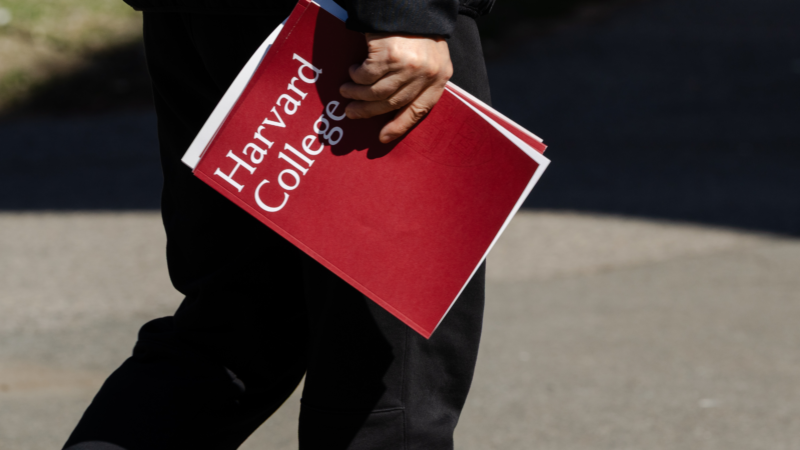
“Without its international students, Harvard is not Harvard.”
That’s what the nation’s oldest and wealthiest private university in the U.S. said in its lawsuit against the Trump administration, which sought to prevent the elite institution from enrolling thousands of international students.
A judge quickly blocked the Trump administration’s effort on Friday, and issued a temporary restraining order. The ruling comes as the number of international students at U.S. colleges and universities reached a record high.
Here’s a look at the impact of international students, by the numbers:
1.1 million
In November, Open Doors® 2024 Report on International Educational Exchange announced that the total number of international students at U.S. colleges and universities reached an all-time high of more than 1.1 million students for the 2023 and 2024 year.
This represented a 7% increase from the previous academic year.
“The experience of studying in the United States not only shapes the lives of individuals, but the future of our interconnected world,” said Scott Weinhold, with the Department of State Bureau of Educational and Cultural Affairs in a statement announcing the Open Door findings. “The ties formed between U.S. and international students today are the basis of relationships for future business and trade, science and innovation, and government relations.”
India sent the most international students to the U.S. for higher education with more than 331,000 students enrolled, according to the 2023-2024 data from Open Doors.
China followed as the second leading country of origin with more than 277,000 students, including nearly 123,000 graduate students, studying in the U.S. It’s the leading nation for sending undergraduates and non-degree students to the U.S. Combined, India and China account for more than half of all international students in the country.
$43.8 billion
International students contribute not only academic and athletic talent to their campuses but also billions of dollars in economic activity across the nation.
According to NAFSA: Association of International Educators, these 1.1 million international students at U.S. colleges and universities contributed $43.8 billion to the U.S. economy during the 2023-2024 academic year and supported more than 378,000 jobs.
“International students’ contributions to the U.S. are significant and multi-faceted, and this year’s record-breaking economic total is the latest proof of that,” Fanta Aw, NAFSA executive director and CEO, said in a statement. “Yet we cannot be complacent. Meanwhile, competition for the world’s best and brightest is increasing.”
Aw urged the U.S. government to adopt politics that help attract and retain talent from overseas.
“We cannot afford to lose international students’ meaningful positive impact on American students’ global competence, our economies, and our communities, particularly in the areas of STEM-related research and innovation,” Aw said.

140
Harvard relies on nearly 7,000 international students from more than 140 countries to come to its campuses. This is more than 25% of its total enrollment, according to 2024-2025 data from Harvard.
When including all of the scholars and researchers, the international population at Harvard exceeds 10,000.
In comparison, as of fall 2024, Yale University had 3,639 international scholars (including trainees, researchers, students and others) from 129 countries.
And Columbia University reported a total of 16,926 international students and scholars (including faculty and researchers) coming from 149 countries.
196
Students from other countries make a notable impact across on a various sports and fields.
Harvard has 42 varsity sports teams, and for the 2024-2025 rosters, about 21% of the athletes — approximately 196 out of 919 — are from abroad, Sportico reported last month.

70
Harvard has hosted international students under the F-1 visa program for 70 consecutive years, the university said in its federal lawsuit against the Trump administration. This program, provided by the U.S. government under the Student and Exchange Visitor Program (SEVP) and overseen by the U.S. Department of Homeland Security, allows international students to pursue their education at Harvard. The university has also long been designated as an exchange program sponsor to host J-1 nonimmigrants. Both programs allowed students from other countries to get an education at Harvard.
And Harvard is not unique. Thousands of high schools, colleges and universities have similarly hosted international students through these visa programs.
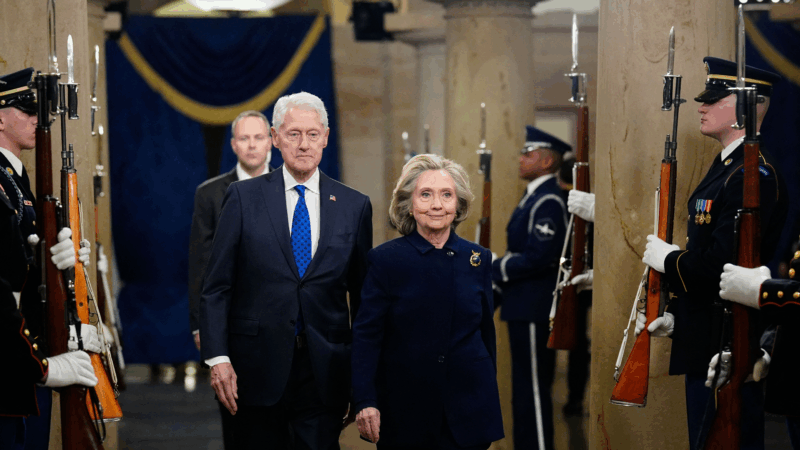
Video of Clinton depositions in Epstein investigation released by House Republicans
Over hours of testimony, the Clintons both denied knowledge of Epstein's crimes prior to his pleading guilty in 2008 to state charges in Florida for soliciting prostitution from an underage girl.
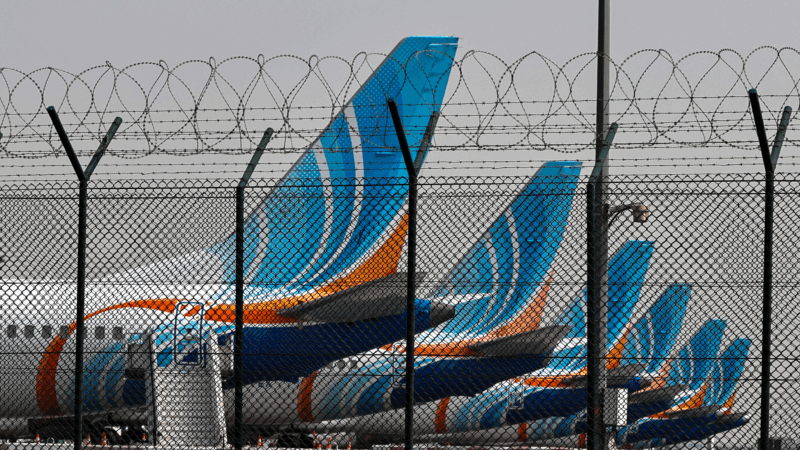
Some Middle East flights resume, but thousands of travelers are still stranded by war
Limited flights out of the Middle East resumed on Monday. But hundreds of thousands of travelers are still stranded in the region after attacks on Iran by the U.S. and Israel.

‘Hamnet’ star Jessie Buckley looks for the ‘shadowy bits’ of her characters
Buckley has been nominated for a best actress Oscar for her portrayal of William Shakespeare's wife in Hamnet. The film "brought me into this next chapter of my life as a mother," Buckley says.
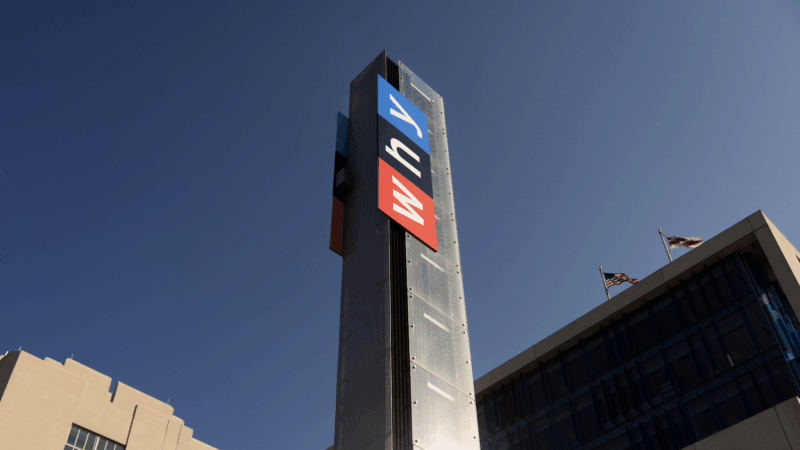
How, who, and why: NPR flips its famous letters to defend the right to be curious
NPR is standing up for the public's right to ask hard questions in a national campaign dubbed "For your right to be curious." At NPR's headquarters, on billboards in New York City, Chicago, and Washington, D.C., and across social media, NPR's three iconic letters transform into "how," "who," and "why" — a bold declaration of its commitment to fight for Americans' right to ask questions both big and small.

Oil prices surge, but no panic yet, as Iran war continues
Global oil prices are in the high $70s as traffic through Strait of Hormuz comes to a halt. Some analysts have warned they could top $100 a barrel if the stoppage is prolonged.
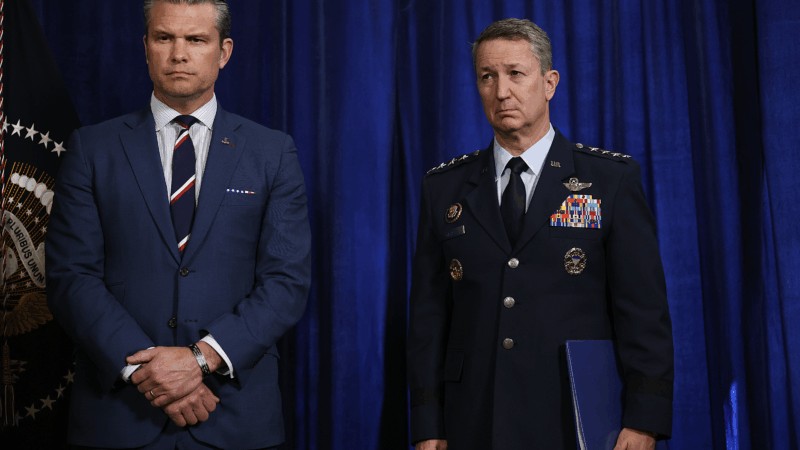
Hegseth: ‘We didn’t start this war but under President Trump we’re finishing it’
The remarks are the first to reporters since the U.S.-Israeli military operations against Iran began Saturday despite weeks of talks designed to stave off a conflict.
