
By land and by sea, these new nonfiction books will carry you away

I like the country, but I wouldn’t want to live there. My husband and I are of one mind about that. Years ago, when we were house hunting, we opened the kitchen door of a little city rowhouse and surveyed, not a grassy backyard, but a concrete slab that formed a grim little patio. “No mowing!” my husband cried ecstatically. We bid on that house — still our home — the very next day.
Clearly, I’m not the target audience for Helen Whybrow’s memoir, The Salt Stones; yet, I was transported by it. Whybrow, a former editor, has lived for over 20 years with her family on Knoll Farm in Vermont. There, she tends a flock of some 90 Icelandic sheep, known for their double-ply coats and disinclination to docility.
Whybrow’s closely-observed accounts of her working life as a shepherd are filled with muck, sweat and a hard-won sense of the interconnectedness of the natural world. Here are snippets from an extended passage where Whybrow — along with her then 3-year-old daughter, Wren — release the sheep from their paddock to munch their way through a spring meadow. Even as she leads her sheep, Whybrow leads her readers into a deeper recognition of how the sublime and the sinister grow side-by-side:
Our pant legs are drenched and heavy with dew. The sheep stream ahead of us, calling to each other in the yellow buttercups . … We walk after them, as if through a light-filled doorway in a dream. …
Nearby, I show [Wren] the diminutive plant called shepherd’s purse, with its tiny white flowers . … helpful for diarrhea. Next to it I spot one of those tiny thin-skinned snails, inside which is an invisible worm that can find its way into the brain of a sheep and drive it mad.
Lobo, the farm’s guard llama who protects the flock against predators like coyotes, will later be felled by one of those worms carried in those “tiny, gleaming golden snails in the grass, deliverers of death.”
Reading about Whybrow’s life has made me more aware of the teeming environment — above and below that backyard concrete slab — that I normally don’t notice.

A Marriage at Sea, by Sophie Elmhirst, is a true story that’s part extreme adventure tale, part meditation on the mystery of a loving partnership.
Maurice and Maralyn Bailey were a lower-middle-class English couple bored with their lives in the early 1970s. Maralyn, the go-getter of the two, decided they should sell their suburban bungalow, buy a boat, and sail ’round the world.
In June 1972, the couple set off on a 31-foot wooden sloop called The Auralyn. A year later, in the middle of the Pacific, a whale breached out of the briny deep and knocked a hole in the Auralyn. It sank within minutes.
Maralyn (who couldn’t swim) and Maurice spent four months adrift on a rubber raft. They survived, barely, by catching and eating raw fish and birds, sucking water out of turtles’ eyeballs, and, in depressive Maurice’s case, fighting the temptation to tip himself overboard.
Elmhirst, who writes for The Guardian and The New Yorker, knows how to tell a perfect storm of a story, relying, in part, on Maralyn’s diary. Here, for instance is the day when the pair “woke to find themselves sunk in a hollow in the middle of the raft.” The bottom of the rubber raft had been pierced by the spines of tiny fish and needed patching. Afterwards, to stay afloat, the couple “had to pump two or three times an hour.” Elmhirst then uses poetic license to enter into Maurice’s thoughts:
Now and then, in brighter moments, Maurice liked to entertain the idea that they had become at one with the Pacific. … But times like this exposed the absurdity of such a view. … Boats, like humans are in a state of permanent decline. Every time a boat touches the water, it degrades. … They were not meant to be here.
I’m only skimming the surface of the existential depths of A Marriage at Sea. This is a tale that makes you understand the lure of the open water and why it’s best, perhaps, that most of us resist it.
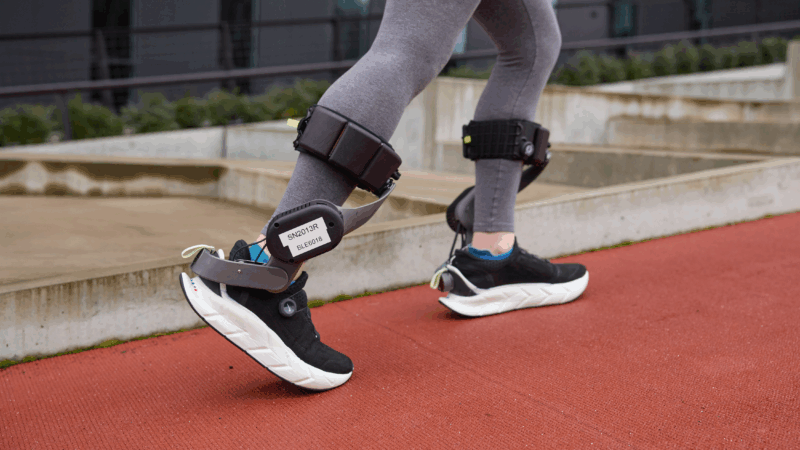
‘E-bike for your feet’: How bionic sneakers could change human mobility
Nike's battery-powered footwear system, which propels wearers forward, is part of a broader push to help humans move farther and faster.

Hospitals are posting prices for patients. It’s mostly industry using the data
The Trump administration pushed for price transparency in health care. But instead of patients shopping for services, it's mostly health systems and insurers using the information for negotiations.

How the use of AI and ‘deepfakes’ play a role in the search for Nancy Guthrie
As artificial intelligence becomes more advanced and commonplace, it can be difficult to know what's real and what's not, which has complicated the search for Nancy Guthrie, according to law enforcement. But just how difficult is it?

Immigration officials to testify before House as DHS funding deadline approaches
Congressional Democrats have a list of demands to reform Immigration and Customs Enforcement. But tensions between the two parties are high and the timeline is short – the stopgap bill funding DHS runs out Friday.

Mikaela Shiffrin set to ski for the first time in the Olympics in team combined event
The team combined event pairs a downhill skier with a slalom skier. The top U.S. duo — the slalom star Shiffrin and Breezy Johnson, who won gold in the downhill on Sunday — is a medal favorite.

Buddhist monks head to DC to finish a ‘Walk for Peace’ that captivated millions
The group of Buddhist monks is set to reach Washington, D.C., on foot Tuesday. The monks in their saffron robes have become fixtures on social media, along with their rescue dog Aloka.
