
Brother to Bruh: How Gen Alpha slang has its origins in the 16th century
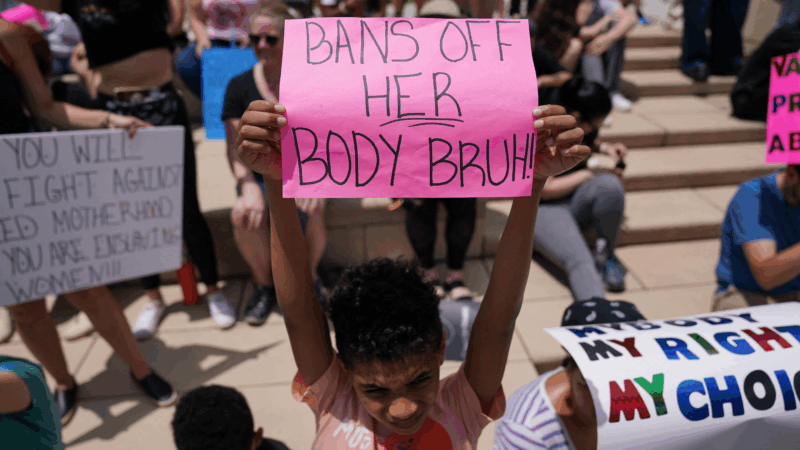
Has your pre-teen child suddenly dropped the use of “Mom” or “Dad” in favor of calling you… “Bruh?” (As is the case for at least some of our editors).
While we can’t offer you compensation for the shock and confusion, we can provide an explanation of what “bruh” means and where it comes from in our latest Word of the Week.
Jamie Cohen, assistant professor of media studies at CUNY Queens College, and Amanda Brennan, known as the Internet Librarian, say we can thank social media for getting us to this point.
What was once another shortened way to call a friend “brother,” “bruh” is now being used by Gen Alpha to address parents, express sadness, frustration, happiness and seemingly everything under the sun.
“It’s punctuation. It is a sentence on its own that, depending on how you say it and who it’s said to, it can mean anything,” Brennan said.
It’s become ubiquitous thanks to TikTok, but the origins of this word, expression or what have you, go back as early as the 16th century.
Where did ‘bruh’ come from?
Over many hundreds of years, a number of words have emerged that abbreviate “brother” including “bro,” “bra” and now “bruh.” The earliest evidence of an abbreviated use of “brother” is with the word “bro,” used as early as the 16th century, said Jesse Sheidlower, former editor-at-large of the Oxford English Dictionary and an adjunct professor at Columbia University.
“Bro” usually came before “a man’s name or to a character, especially the name of an animal,” Sheidlower said. In African American folklore, we see “bro” being used in this way during the 19th century, especially in the Caribbean and Southern U.S., he said.
The first known use of the word “bruh” appeared much later, in the 1890s, according to Merriam Webster.
Back then it was being spelled “brer” and comes from the “Br’er Rabbit,” a series of stories by Joel Chandler Harris, an American journalist and folklorist who wrote these stories from the African American oral tradition, Sheidlower said.

How has internet culture brought us to “bruh”
For a long time, “bruh” was put aside in favor of “bro” or “bra” (as surfers liked to call each other).
The use of “bruh” is a perfect example of how internet culture and especially TikTok, have transformed how people talk to each other, according to Brennan, who used to work at Know Your Meme, a website dedicated to documenting internet phenomena.
“I think ‘bro’ and ‘bruh’ are great examples of how words evolve over time and take their meaning so far away from what it used to be,” Brennan explained.

“Bro” walked so “bruh” could run, essentially.
It really began with the age of the 2010s meme culture, a far simpler time in our internet’s history, when the use of “bro” became widespread. While “bro” can be used as a way to refer to a friend, the internet evolved its meaning to refer to a stereotypical frat boy and their style and culture as “bro culture,” Brennan said.
Brennan herself wrote the Know Your Meme page dedicated to explaining the use of “bro.”
Phrases and memes like “U Mad Bro?” became a sensation and so did “Come at me, bro” (from Jersey Shore fame). And then you have, “Don’t Tase me, bro!” a phrase plucked from a viral video of a University of Florida student begging security officers not to Tase him during a Q&A with then-U.S. Sen. John Kerry. (They Tased him anyway.)
A short-lived app called Vine, where users watched and posted 6 second long videos that played on a loop, brought us to “bruh,” according to Cohen, the media studies professor.
Twelve years ago high school basketball player Tony Farmer collapsed after hearing his sentence in criminal court for kidnapping, assaulting and robbing a former girlfriend. A creator on Vine used this clip and put the sound effect of someone saying “bruh” as Farmer collapsed. As far as we know, that is the origin of “bruh” on the Internet, Cohen said.
Why does “bruh” matter today?
“Bruh” is popular on TikTok as users have taken the word to launch into a story, express shock, or confusion, or even to address their parents or teachers, Brennan and Cohen said.
Cohen says young watchers of TikTok are taking “bruh” and running with it.

“You could probably have a complete conversation with one word just based on how you use it. It can be despair or it could be excitement or it could be just a reference,” he said.
Brennan added, “But the meaning is defined by everything happening in the moment around it, and it is a temporal word where I could say it five times a day, and each time could be like a different meaning of a sentence and it’s just one sound.”
Brennan had some advice for parents grappling with this new turn of phrase.
“Don’t be afraid of the slang. Just zoom out and think about how words are all made up by people, even the ones that aren’t slang, and read your context clues.”
Opinion: The immorality of betting on war
Traders on prediction markets bet on nearly anything. One made more than half a million dollars betting on the U.S. strike against Iran. But should people wager on human suffering?

Alabama man facing execution for deadly robbery asks for clemency as he didn’t kill victim
Charles “Sonny” Burton is scheduled to be executed March 12 for his role in a 1991 robbery in which a man was fatally shot. His supporters and attorney are asking the governor for clemency, arguing that his life should be spared because Burton didn’t fire the gun or witness the killing.

Curling had its moment at the Olympics and now Paralympics. It sparked a curling bonanza in America
Hundreds of people become interested in curling every four years and the 2026 numbers already show that boom.
One week into the Iran war, the fallout is global
The war is no longer just about the U.S., Israel and Iran. More countries are getting caught in the political crossfire or being drawn into the fighting themselves.
Iran’s president defies U.S. demands while apologizing for strikes on neighbors
President Masoud Pezeshkian said Saturday that a demand by the U.S. for an unconditional surrender is a "dream that they should take to their grave." He also apologized for Iran's attacks on regional countries.
What the Trump administration says about why it went to war with Iran
The Trump administration says it is "laser focused" and mission driven, but the messaging has been varied. The range of cited motivations for striking Iran now are sometimes at odds with each other.
