
Brazil’s Supreme Court votes to convict ex-President Bolsonaro of a coup plot
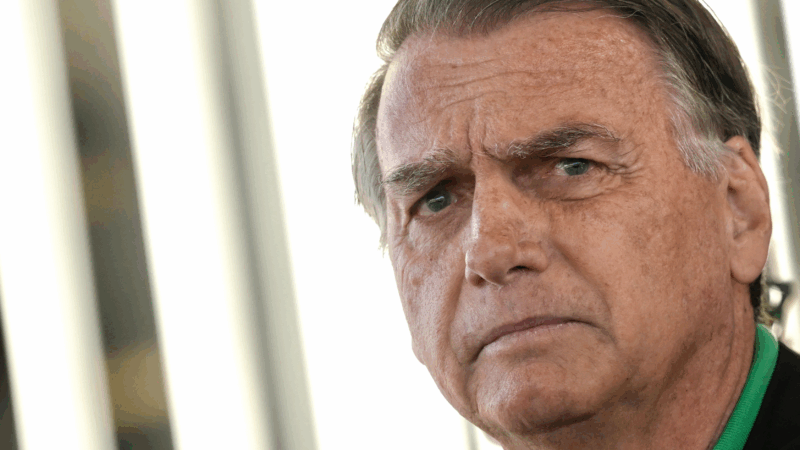
RIO DE JANEIRO, Brazil — Brazil’s Supreme Court has reached a majority vote to convict former President Jair Bolsonaro, with three of the five justices on the panel voting to find him guilty of attempting a coup to stay in power after losing the 2022 election.
The verdict is historic: It marks the first time a former Brazilian head of state went on trial for attempting to overthrow the government.
The 70-year-old far-right leader, who governed Brazil from 2019 to 2022, and seven alleged co-conspirators faced accusations ranging from plotting a coup, attempting to overthrow Brazil’s democratic order, and participating in an armed criminal group.
Justice Cármen Lúcia’s guilty vote on Thursday delivered the majority needed to convict Bolsonaro.
Bolsonaro, who has been under house arrest since August, also faces additional charges linked to riots in Brasília on Jan. 8, 2023. On that day, Bolsonaro supporters stormed government buildings after he lost the 2022 election to leftist leader Luiz Inácio Lula da Silva, causing property damage and destroying historical items.
Proceedings are set to continue through Friday, when the final vote will be cast and the sentence announced. But with a majority already secured, Bolsonaro and his co-defendants — including three former generals and the former head of the navy — are on track to be convicted, and could face up to 40 years in prison.
The judge leading the case, Supreme Court Justice Alexandre de Moraes, gave his guilty verdict first, with nearly five hours of evidence and argument on Tuesday. Moraes, long seen as a nemesis of Bolsonaro, was widely expected to convict him — and did not hold back in his ruling. Bolsonaro’s allies view Moraes’ handling of the trial and broader crackdown on disinformation in Brazil as heavy-handed. In response, the Trump administration has slapped Moraes with sanctions, stripped him of his U.S. visa and imposed 50% tariffs on Brazilian goods.
Moraes accused Bolsonaro of orchestrating efforts to undermine democracy, repeatedly calling him “the leader of a criminal organization.” He said Bolsonaro began laying the groundwork for a coup in 2021, spreading disinformation about Brazil’s voting system and encouraging actions that led to the Jan. 8, 2023, riots in Brasília.
Moraes pointed to “overwhelming evidence” of a plot by elite army personnel to assassinate then-President-elect Lula and Moraes himself, noting that part of the plan — poisoning Lula and shooting Moraes — was printed inside the presidential palace. In court, the justices were shown the document, codenamed Operation Green and Yellow Dagger, with key passages highlighted.
“This wasn’t drafted in secret by terrorists,” Moraes said. “It was written in Brazil’s government headquarters, while Bolsonaro was in office.”

While Moraes and two other justices pushed for convictions on all charges for the former president, on Wednesday Justice Luiz Fux pressed for his acquittal on all five counts. He took 13 hours to read his dissent and said the case should be heard by the full 11-member Supreme Court, arguments that could potentially be used by Bolsonaro’s defense team to appeal a final verdict.
Bolsonaro has consistently denied the allegations. His lawyer, Celso Villardi, argued there is no evidence linking him to a coup plot. A final session to debate sentencing is to be held Friday. The former president’s lawyers have said he would appeal a guilty verdict. The other defendants have also denied the charges.

The case has severely strained Brazil’s relations with the U.S. A strong Bolsonaro ally, Trump called the trial a “witch hunt” when his administration imposed the 50% tariff on Brazilian goods in August.
Asked Tuesday about possible further sanctions, White House press secretary Karoline Leavitt said there were “no additional actions to preview,” but stressed the issue remains a priority for the administration.
“This president is unafraid to use the economic might, the military might of the United States to protect free speech around the world,” Leavitt said.
A former army captain, Bolsonaro became Brazil’s first far-right president since the end of the military dictatorship in 1985. His rapid rise from congressman to president in 2019 was as quick as it was brutal — surviving an assassination attempt in 2018.
Bolsonaro built a fiercely loyal base as a deeply divisive figure, particularly during his handling of the COVID-19 pandemic.

Nicknamed the “Trump of the Tropics,” Bolsonaro championed gun rights, traditional family values and an anti-gay stance while wielding social media with unfiltered bravado.
Since leaving office, he has faced multiple legal challenges, including abuse of power and falsifying COVID vaccination records. In 2023, he was barred from public office until 2030 for spreading disinformation about Brazil’s voting system.
Yet he remains a powerful force: He won 49% of the vote in 2022 and still draws tens of thousands to the streets in his defense.
With Bolsonaro sidelined, his allies are now vying to inherit his mantle ahead of the next year’s elections, betting that his influence will continue to shape Brazil’s political future.
For Brazil, the trial is a reckoning. The country has endured repeated coup attempts, including the 1964 takeover that ushered in two decades of military rule. Now, its Supreme Court is moving to hold a former president accountable for allegedly trying to undermine democracy and steer the country back toward authoritarian rule.

GOP Rep. Tony Gonzales of Texas ends reelection bid after admitting to affair with aide
Republican Rep. Tony Gonzales of Texas said late Thursday he was withdrawing from his reelection race, after having admitted an affair with a former staff member.
Pentagon labels AI company Anthropic a supply chain risk
The Pentagon said in a statement Thursday that it has "officially informed Anthropic leadership the company and its products are deemed a supply chain risk, effective immediately."
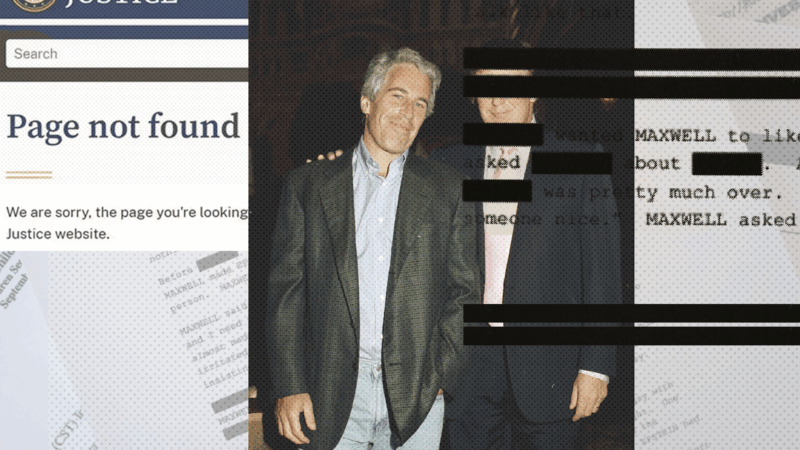
Justice Department publishes some missing Epstein files related to Trump
The Justice Department has published additional Epstein files related to allegations that President Trump sexually abused a minor after an NPR investigation found dozens of pages were withheld.
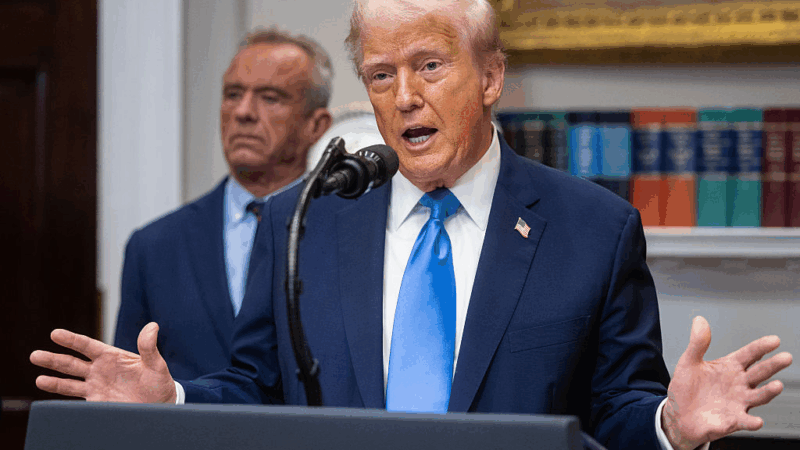
Pregnant women in ERs took less Tylenol after Trump autism warning
A study in The Lancet finds that pregnant women in emergency rooms used less Tylenol after President Trump said it could raise their babies' risk of autism. Scientists say there is no proven link.
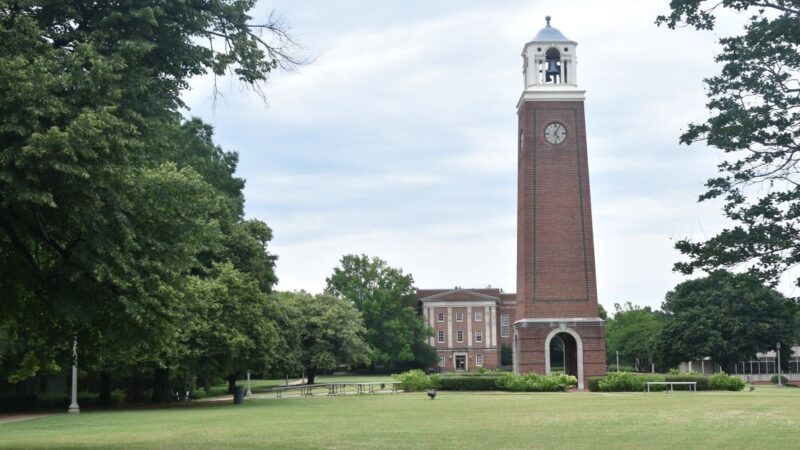
Mixed reactions, including relief, greet news the Coast Guard is buying BSC campus
The U.S. Coast Guard will take possession of the 192-acre campus in the northeast corner of Birmingham’s Bush Hills Neighborhood and will begin work to refit it as a training center for officers and enlisted personnel.
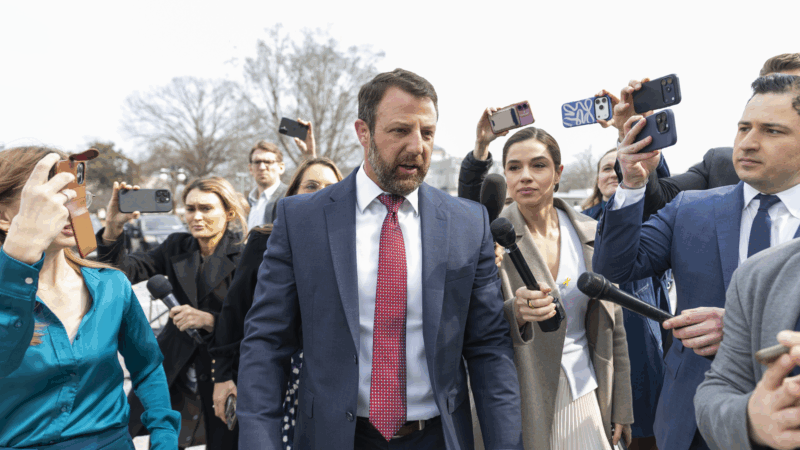
What you need to know about Sen. Markwayne Mullin, Trump’s new pick to lead DHS
President Trump announced Thursday that Sen. Markwayne Mullin, R-Okla., is his pick to replace Kristi Noem as the head of the Department of Homeland Security.
