
Bondi Beach attack casts a shadow on Hanukkah celebrations in Israel
TEL AVIV, Israel — A rabbi with a blowtorch climbs onto a scissor lift and is hoisted up to a giant Hanukkah menorah.
“Are you ready!?’ he asks the children gathered below.
“Yes!” they shout in unison.
Rabbi Shaul Reizes uses the blowtorch to light the first, rightmost candle and leads the children and a crowd of grownups assembled behind them at Habima Square in Tel Aviv in singing the Hanukkah blessings.
It was at a ceremony like this one, thousands of miles away in Australia, where two gunmen opened fire on Sunday, killing at least 16 people, including a 10-year-old girl and a Holocaust survivor. The tragedy is casting a heavy shadow over the Jewish festival of lights in Israel, where people of all ages had been looking forward to celebrating — especially this year, as a ceasefire in Gaza has held since October and all but one of the hostages taken by Hamas-led militants in the attack of Oct. 7, 2023, have been returned.

The Orthodox Jewish Chabad movement lights these large menorahs in cities around Israel — and around the world — every year. Reizes says what the assailants did on Bondi Beach in Sydney, Australia, won’t change that.
“What they want to do is to bring more darkness to the world, and we are sure that our mission now, especially this night, is to bring more lights to the world,” he said.
In Tel Aviv, it’s the first time there are large public activities in honor of the holiday since the COVID pandemic and the wars that started on Oct. 7, 2023.
“Hanukkah is back after several years of being canceled, basically,” said Alice Eldar, as her toddler pranced around her with a glowstick, shouting, “Hanukkah!”
Eldar said she was happy that things were returning to normal and her family could attend public menorah-lighting ceremonies and buy the traditional jelly-filled donuts called sufghaniyot at the bakeries in town.
“It feels like we can actually celebrate again,” said Eldar.
She has lived in Israel for six years and heard about the attack in Australia from her mother, who called from London to tell her.
“You’re seeing more and more of these kinds of antisemitic attacks and this sentiment of intense hatred of Jewish people again,” said Eldar, who is not Jewish but is raising her kids in the tradition. “It’s really depressing.”
In many countries, including Australia and the United States, Jews are feeling increasingly vulnerable despite beefed-up security outside their schools and synagogues. In Israel, there have been attacks by militants — including the Hamas-led attack two years ago that sparked the Gaza war — but many Jews here still say they feel safer in a country where the majority shares their faith, and they don’t seem troubled by the absence of armed guards posted at such sites.
That’s why the attack in Bondi Beach, in which two police officers were among the 40 people injured, can make Australia look like a scary country to people like 28-year-old Raz Kahlon. As he crossed Habima Square on his bike, Kahlon said he had been hoping to travel to Australia someday to experience the beach culture there.
“It was one of my dreams, to go to Sydney to surf there, to meet the new people, to meet the good vibe people,” he said, adding that he doesn’t think he’ll go now. Hearing about the shooting is like getting “a big ‘no’ on the country,” he said.
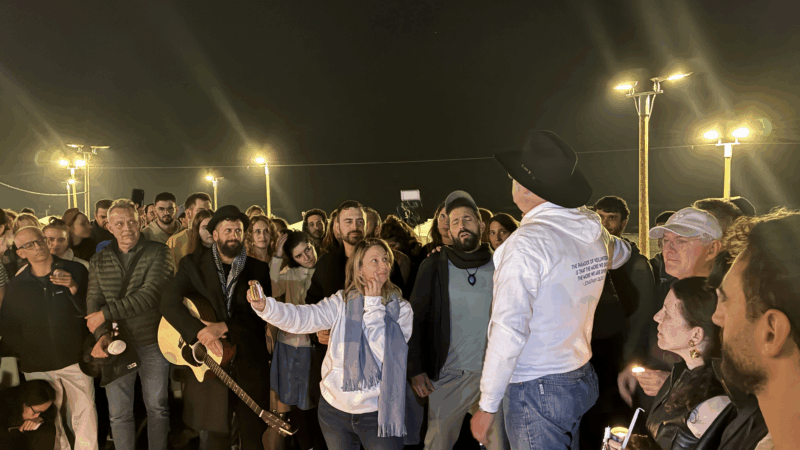
A short walk from Habima Square, a crowd congregated at 10 p.m. on Tel Aviv’s Frishman Beach for a vigil to remember the victims of the mass shooting in Australia. They lit memorial candles, placed them in the shape of a Star of David on the boardwalk and sang a prayer for peace.

Among the many English speakers there, some had an accent from Down Under.
“I felt that it was important that I show up this evening,” said Ben Freeman, who comes from Melbourne and spent much of Sunday checking in with his many friends and relatives in Sydney to see if they were OK. He was relieved to learn that they were.
Freeman said he grew up experiencing antisemitism in Australia. But the rise in threats and violence against Jews and Jewish institutions back home just became too much, he said, and led to his decision to move to Israel.
“When Oct. 7 happened, things shifted massively in Australia. And I hung around for another year and I decided to pick up and come to a country where I wouldn’t have to explain myself, and I could be free.”
He agrees with Israeli Prime Minister Netanyahu, who said this week that Australia’s government “did nothing to stop the spread of antisemitism in Australia” despite a wave of attacks against Jews, including arson at synagogues, vandalism of Jewish property and antisemitic slurs shouted at anti-Israel rallies. Netanyahu also said Australia’s decision to recognize a Palestinian state “pours fuel on the antisemitic fire.”
“I think the response to Oct. 7 was really disappointing, from the Australian government,” Freeman said. “To be really, really honest, the blood is on their hands.”
Eli Parkes, who moved to Israel 10 years ago, said the Australian Jewish community is made up largely of people whose grandparents, like his, were Holocaust survivors. They moved to Australia, he said, because they wanted to get as far away as possible from “the antisemitism of the Old World.”
“And it doesn’t get much further than Australia,” he said. “When we grew up, we thought we were the blessed Jews who didn’t have to deal with all that. And unfortunately, the last few years have shown us that that isn’t quite true.”
Transcript:
UNIDENTIFIED PERSON: (Singing in Hebrew).
MARY LOUISE KELLY, HOST:
Jews around the world are mourning the victims of an attack in Australia, victims who included a young girl and a Holocaust survivor. The target was a celebration marking the start of Hanukkah on Sydney’s Bondi Beach.
UNIDENTIFIED PERSON: (Speaking Hebrew) Sydney, Bondi Beach.
KELLY: In Israel, the tragedy is casting a heavy shadow. NPR’s Jerome Socolovsky reports from Tel Aviv that people of all ages were looking forward to the holiday, especially this year.
SHAUL REIZES: (Speaking Hebrew).
UNIDENTIFIED CHILDREN: Yay.
JEROME SOCOLOVSKY, BYLINE: Rabbi Shaul Reizes lights the first candle on the giant Hanukkah menorah. It was at a ceremony like this one that two gunmen opened fire over the weekend in Australia. The Chabad movement organizes them every year in cities around Israel and the world. Reizes says the gunmen in Sydney won’t change that, even though a Chabad rabbi was among the dead.
(SOUNDBITE OF MUSIC)
REIZES: What they want to do is to bring more darkness to the world. And we are sure that our mission now, especially this night, is to bring more lights to the world.
(Singing in Hebrew).
SOCOLOVSKY: As the rabbi sings with the children, they play with toys that glow and sparkle.
(SOUNDBITE OF CLAPPING)
SOCOLOVSKY: Alice Eldar is happy to be out celebrating again with her toddlers.
ALICE ELDAR: Hanukkah is back after a couple of years of…
UNIDENTIFIED CHILD: (Vocalizing).
ELDAR: …Being canceled.
UNIDENTIFIED CHILD: (Vocalizing).
ELDAR: Hanukkah is finally back.
SOCOLOVSKY: It is back in Tel Aviv, with lots of activities around the city for the first time since COVID and the wars that followed the Hamas-led attack on October 7, 2023. Now they can go out and buy the traditional jelly-filled donuts called sufghaniyot.
ELDAR: You know, eating sufghaniyot, celebrating. Come to see the lights…
UNIDENTIFIED CHILD: (Vocalizing).
ELDAR: …And everything.
UNIDENTIFIED CHILD: (Vocalizing).
ELDAR: Yeah. I feels like we can actually celebrate again.
SOCOLOVSKY: But the celebrations this year are overshadowed by what happened on a beach thousands of miles away.
(SOUNDBITE OF OCEAN WAVES)
SOCOLOVSKY: I just walked down to the beach here in Tel Aviv where several volleyball games are going on under the floodlights. People are out for a stroll. There’s some joggers on the boardwalk, and there’s a vigil going on for the victims of the shooting in Australia.
UNIDENTIFIED CROWD: (Singing in Hebrew).
SOCOLOVSKY: People sing a song of peace as they huddle around memorial candles laid out forming a star of David on the boardwalk.
BEN FREEMAN: I’m here because I’m an Australian Jew, living in Israel, and I believe that it was important that I show up this evening.
SOCOLOVSKY: Ben Freeman says the rise in threats and violence back home became too much.
FREEMAN: When October 7 happened, things shifted massively in Australia. And I hung around for another year, and then I decided to pick up and come to a country where I wouldn’t have to explain myself, and I could be free.
SOCOLOVSKY: He agrees with Israeli Prime Minister Netanyahu’s charge that Australian leaders didn’t take antisemitism seriously.
FREEMAN: It was coming. It’s been coming for a long time. I think their response to October 7 was really disappointing from the Australian government. And I think that we were far, far, far too left-field, and I think that, to be really, really honest, the blood is on their hands.
SOCOLOVSKY: Australian Jews here say they’re heartbroken. Still, they miss their country, as you can hear when they conclude the vigil with their national anthem.
UNIDENTIFIED CROWD: (Singing) Australians let’s us all rejoice, for we are young and free.
SOCOLOVSKY: Jerome Socolovsky, NPR News, Tel Aviv.
UNIDENTIFIED CROWD: (Singing) In golden soil and wealth for toil, our home is girt by sea. Our land abounds in nature’s gifts of beauty, rich and rare.
A ‘Jane Doe’ in the R. Kelly trials is ready to share her real name. And her story
A once anonymous R. Kelly survivor, Reshona Landfair is now ready to reclaim her voice.
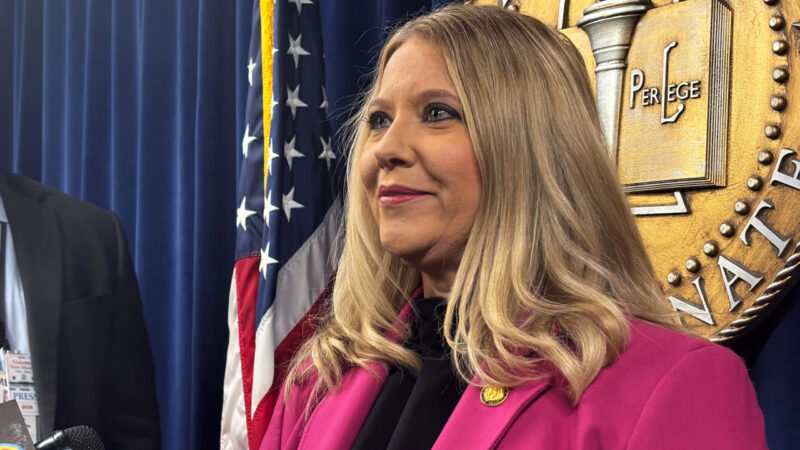
Alabama seek to bring back death penalty for child rape convictions
Alabama approved legislation Thursday to add rape and sexual torture of a child under 12 to the narrow list of crimes that could draw a death sentence.
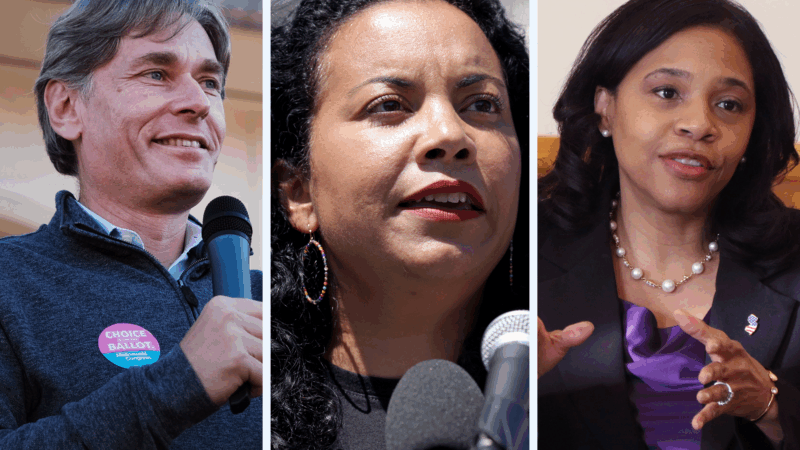
What a crowded congressional primary in N.J. says about the state of Democrats
The contest is one of the first congressional primaries of the year where we will find out what issues are currently resonating with some Democratic voters. Here are some key things to know.
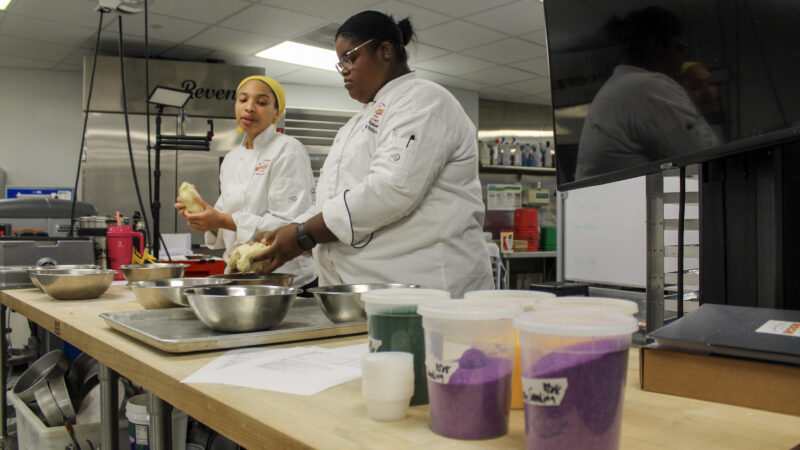
At NOCHI, students learn the art of making a Mardi Gras-worthy king cake
With Carnival in full swing, the New Orleans culinary school gave its students a crash course — and a rite of passage — in baking their first king cake.
The Winter Olympics in Italy were meant to be sustainable. Are they?
Italy's Winter Olympics promised sustainability. But in Cortina, environmentalists warn the Games could scar these mountains for decades.
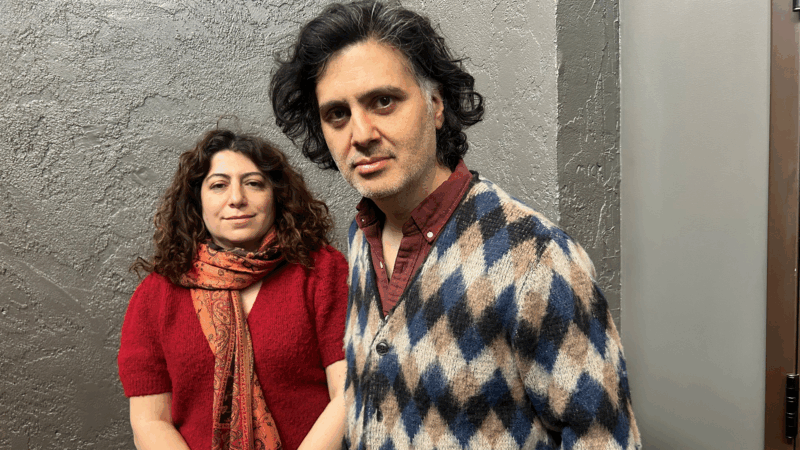
Their film was shot in secret and smuggled out of Iran. It won an award at Sundance
Between war, protests and government crackdowns, the filmmakers raced to finish and smuggle their portrait of Tehran's underground arts scene to the prestigious film festival.
