
As U.S. pressure mounts, Venezuela’s foreign ‘hostages’ face growing uncertainty
BOGOTÁ, Colombia — Manuel Alejandro Tique used to live in a peaceful condo on the outskirts of Bogotá, from where he would bike to his office in the center of the city several times a week. Now, he’s in a maximum security prison in Venezuela, where inmates are rarely allowed to communicate with the outside world.
“We are constantly worried about how he’s doing,” says his sister Diana Tique, who lives in the three-bedroom apartment that has been the family’s home for years.
She says that during the first months of her brother’s detention, she had trouble sleeping, adding that the “emotional toll” of having him detained without trial in a foreign prison has been immense.
Manuel Tique, a 32-year-old humanitarian worker, is among a growing number of foreign nationals detained by Nicolás Maduro’s authoritarian government as Venezuela faces economic sanctions and political isolation from the United States and Europe.
With the U.S. now amassing naval forces and even blowing up several boats in the southern Caribbean in an anti-narcotics mission that Maduro has described as the start of a potential attack on his government, relatives of the prisoners say they face a new level of uncertainty.
“I’m scared about the military pressure,” says Manuel Tique’s father, Víctor Manuel. “It might lead to freedom, but it could also mean Maduro holds these prisoners for longer.”
Venezuela’s government has accused many of the foreigners in its prisons of plotting to overthrow President Maduro.
But human rights groups say these prisoners are mostly tourists, business people and humanitarian workers who had nothing to do with Venezuelan politics.
Juan Pappier, the deputy Americas director at Human Rights Watch, says that currently there are 89 foreign nationals imprisoned in Venezuelan jails, from countries that include Colombia, Spain, Argentina, France and the Czech Republic.
Earlier this year, Venezuela released 10 Americans held in its jails in exchange for more than 200 Venezuelan migrants whom the U.S. had deported to a notorious prison in El Salvador.
Pappier says that Venezuela intensified detentions of foreigners after its presidential election in 2024 — a vote that Maduro has been widely accused of stealing.
Dozens of countries did not recognize Maduro’s reelection last year, with current White House officials describing the Venezuelan president as an “illegitimate” leader who heads a “narco-terror cartel.”
“It appears that the Venezuelan regime is holding these foreigners as hostages,” Pappier says.
“Foreign governments did the right thing by condemning the electoral fraud in 2024. And in response, the Maduro regime is extorting them by holding their nationals in prison and forcing them to engage with the Maduro regime for their release.”
Manuel Tique was working for a humanitarian group called the Danish Refugee Council when he traveled to Venezuela last year. He had been asked to deliver a workshop to local aid groups on how to monitor food and medicine distribution.
But Tique was arrested at a border post while seeking entry into Venezuela, and was not heard from for weeks, in what amounts to a forced disappearance, according to human rights groups.
“We lost contact with him on Sept. 14 [of last year],” says his sister Diana Tique. “And only got news of him on Oct. 17, when Venezuelan officials spoke about him on TV.” Venezuela’s powerful interior minister, Diosdado Cabello, accused Tique of being a mercenary who was in Venezuela to recruit fighters for an anti-government mission.
In a year, Tique has only been allowed to make two phone calls. He’s currently in a prison known as Rodeo One, where inmates are rarely allowed to leave their cells.

“It’s heart-wrenching,” says his father, Víctor Manuel, “because it’s a situation that you cannot control.”
Human rights groups say that it’s not clear what the Venezuelan government wants in exchange for Tique, or some of the other foreigners in Venezuelan jails.
But some say that as Maduro’s grip on power comes under pressure, his government is likely to take more prisoners.
“It’s an act of desperation,” says David Guillaume, a nurse from Florida who spent four months in Rodeo One — and shared a cell with Tique, where the two inmates coped with boredom and anxiety by playing chess with pieces they made out of toilet paper.
Guillaume says he was arrested in September of last year after trying to enter Venezuela as a tourist.
He was freed in January, along with five other Americans, after a Trump envoy met with Maduro and discussed possible economic sanctions relief.
“My American privilege kind of made me chill, because I realized I wasn’t going to be there for a long time,” Guillaume says. “So I tried to learn the names and nationalities of the people there” to relay the information to foreign governments and human rights groups.
But while negotiations to free prisoners have worked in some cases, they can also make things worse, says Laura Dib, a human rights lawyer at the Washington Office on Latin America (WOLA), a think tank and advocacy group.
“It actually creates a very dangerous environment in which anyone can be detained,” Dib says, adding that the Venezuelan government has realized there are benefits from keeping international hostages.
“Seeking other ways to pressure without necessarily negotiating and giving an authoritarian government what they want is very, very important,” she says.

Dib points out that several nations are now issuing travel warnings, telling their citizens not to go to Venezuela as a result of the large number of foreigners imprisoned there without trial.
Back in Bogotá, the Tique family says they want the Colombian government to be more vocal about the release of its citizens — and to link trade and security cooperation to their freedom.
But with American naval forces gathering off Venezuela’s coast, fears are intensifying over what this growing show of force could mean for the prisoners — trapped between fragile diplomacy and the prospect of armed confrontation.
“What has happened to us is an injustice,” says Víctor Manuel Tique. “And it doesn’t help to improve Venezuela’s situation.”
Parents, are you sure your kid’s car seat is installed right? Here’s how to know
In this visual guide, certified car seat experts walk through common installation mistakes and how to fix them. Learn what a secure car seat base and a tightly fastened tether look like and more.
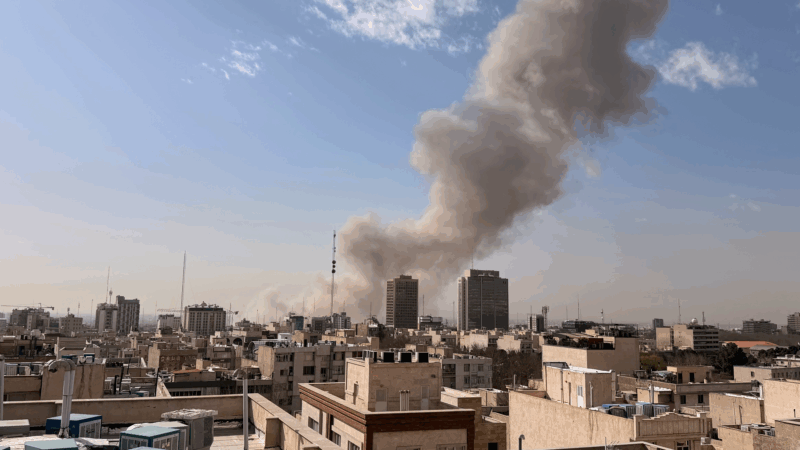
Trump announces ‘major combat operations’ in Iran
Israel and the U.S. have launched strikes against Iran, with explosions reported in Tehran and air raid sirens sounding across Israel.
Trump says he is ‘not happy’ with the Iran nuclear talks but indicates he’ll give them more time
U.S. President Donald Trump said Friday he's "not happy" with the latest talks over Iran's nuclear program but indicated he would give negotiators more time to reach a deal to avert another war in the Middle East.
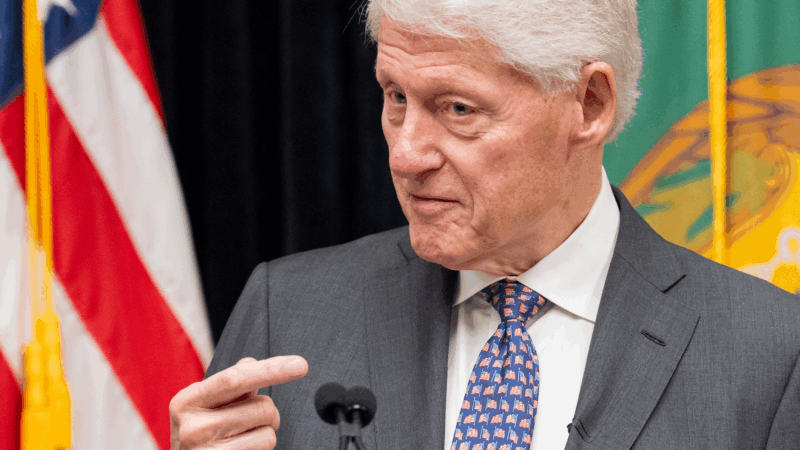
Bill Clinton says he ‘did nothing wrong’ with Epstein as he faced grilling over their relationship
Former President Bill Clinton told members of Congress on Friday that he "did nothing wrong" in his relationship with Jeffrey Epstein and saw no signs of Epstein's sexual abuse as he faced hours of grilling from lawmakers over his connections to the disgraced financier from more than two decades ago.
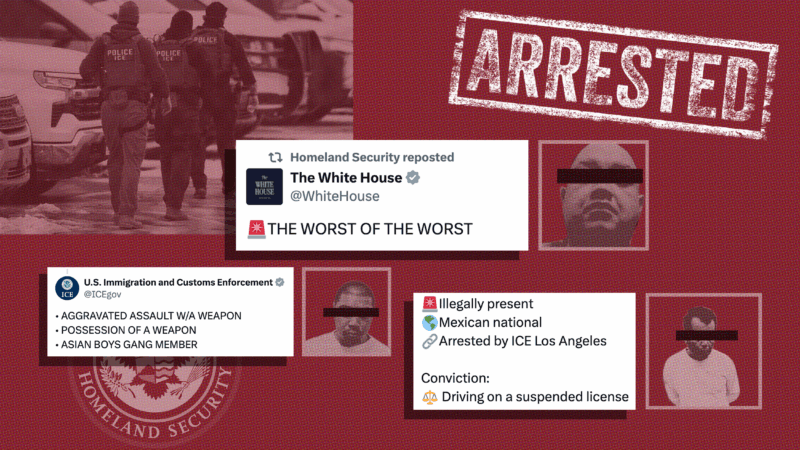
How the federal government is painting immigrants as criminals on social media
Experts say this kind of media campaign is unprecedented and paints a distorted picture of immigrants and crime
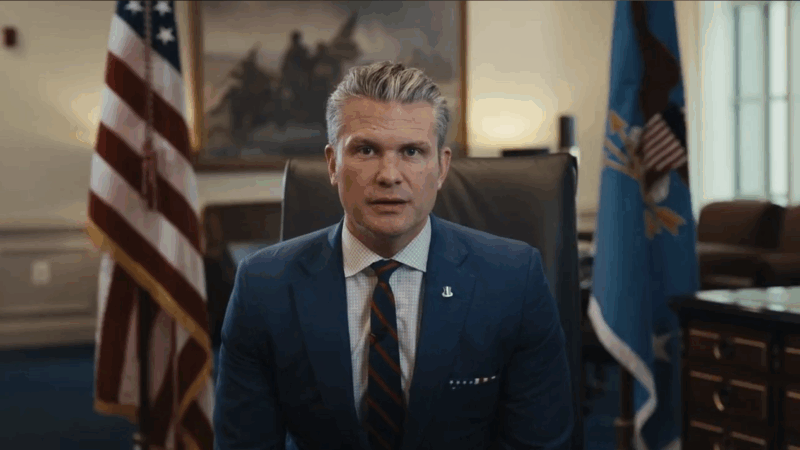
Pentagon puts Scouts ‘on notice’ over DEI and girl-centered policies
After threatening to sever ties with the organization formerly known as the Boy Scouts, Defense Secretary Hegseth announced a 6-month reprieve
