
As Trump reshapes foreign policy, China moves to limit risks, reap gains
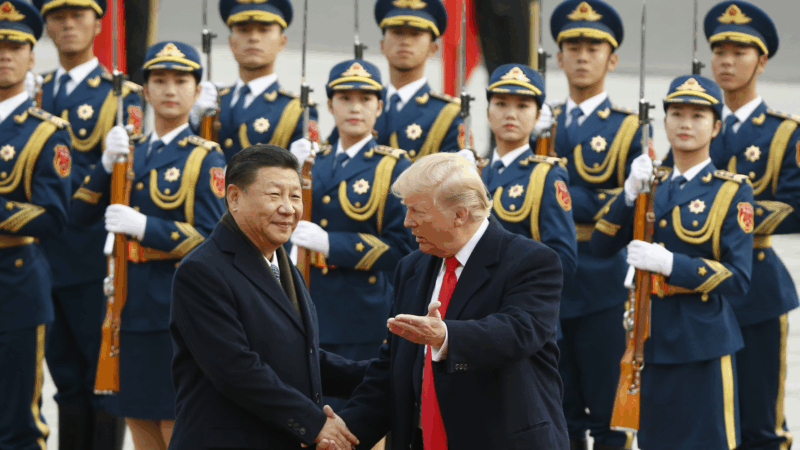
So far this year, the Trump administration has starkly illustrated its shift in strategic focus to the Western Hemisphere, with the abrupt removal by force of the leader of Venezuela and the expression of expansionist ambitions toward Greenland.
China, which the U.S. until recently saw as its “pacing threat,” may feel relieved that neither of President Trump’s targets were in its neighborhood.
On the other hand, it may also worry that U.S. actions are aimed in part at countering China’s influence, per Trump‘s and his officials‘ explanations, and that Trump’s “America First” rhetoric has not reduced his appetite for what China calls “military adventurism.”
“Given how much significance China attaches to regime security, American willingness to intervene is the greatest concern for Beijing,” says Tong Zhao, an expert on strategic security issues and nuclear weapons at the Carnegie Endowment for International Peace.
China’s experience of U.S. foreign intervention
Beijing’s concerns about U.S. foreign military intervention stretch back to the early days of the Communist-led People’s Republic, when China deployed as many as 3 million troops and support personnel to the Korean Peninsula over the course of the 1950-1953 Korean War.
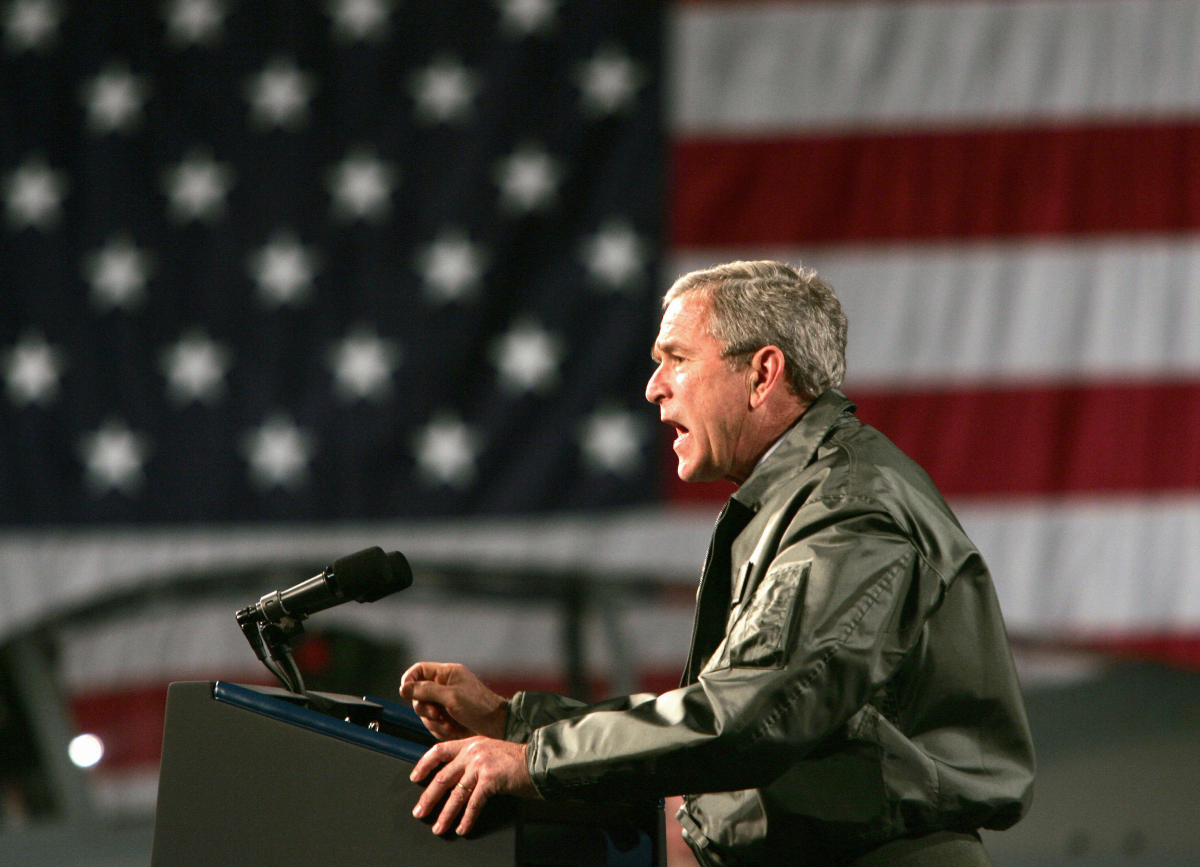
In the post-Cold War era, China was alarmed by the U.S. invasion of Iraq and overthrow of Saddam Hussein without formal authorization from the United Nations. But Chinese experts say the Chinese military benefited from studying the U.S. military’s weapons and tactics. And for the first two decades of this century, U.S. preoccupation with wars in Iraq and Afghanistan consumed U.S. attention and resources that might otherwise have been used against China.
“I would summarize China’s stance towards U.S. military actions since World War II as considering two factors,” says Chu Shulong, an international relations expert at Tsinghua University in Beijing.
“First, is it [the U.S.] invading a foreign nation in violation of the U.N. charter, and second, does it have a direct effect on China’s security?”
China has objected to U.S. actions in Venezuela and designs on Greenland but has not pushed back hard.
China’s concern is about its ties with the U.S.
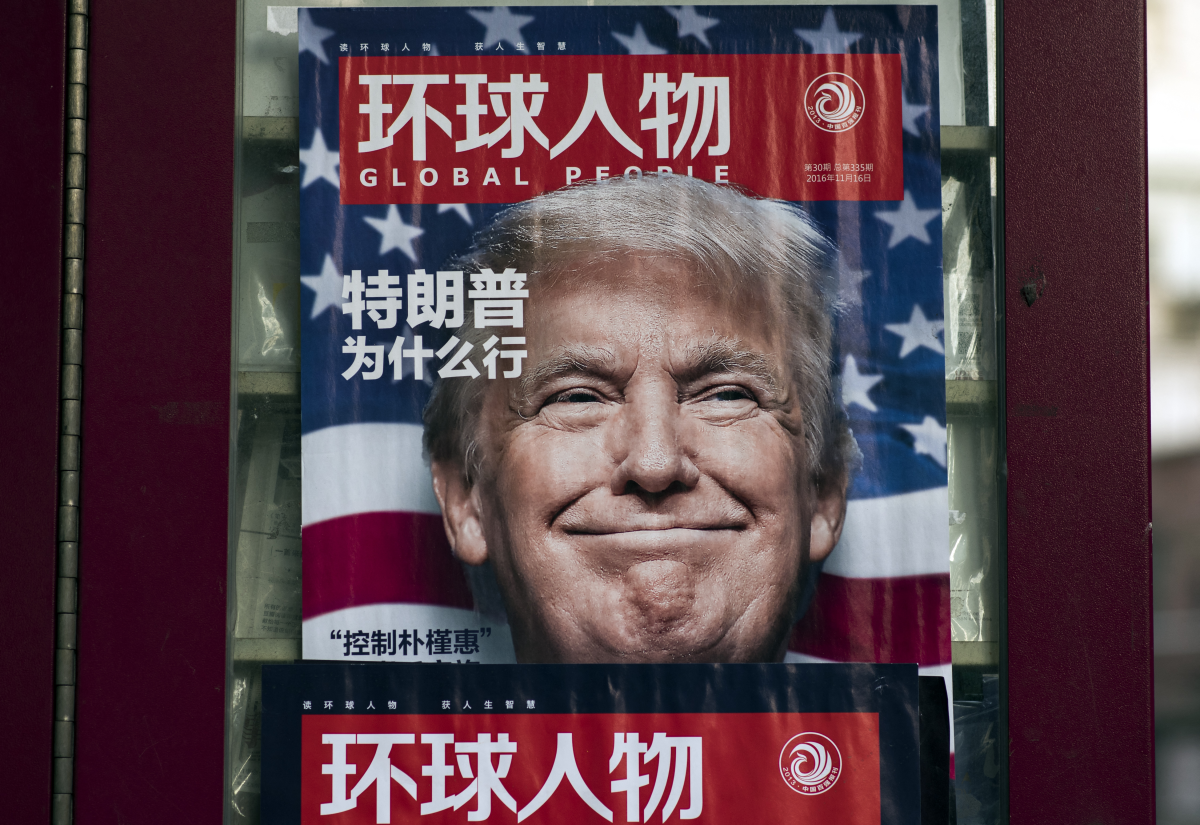
“China’s main concern is how to maintain a working relationship with Trump to prevent him from taking further actions that harm China,” Chu says. “So, while China doesn’t approve of the U.S. actions in other parts of the world, it doesn’t feel [like] they have much direct relation to China.”
China gets about 4% of its crude oil from Venezuela, and as a result of U.S. actions, the country’s “investment environment is certainly very unfavorable for China,” says Jiang Shixue, director of the Center for Latin American Studies at Shanghai University.
But Jiang says that China’s trade and investment in Latin America are not aimed at the U.S. and, in fact, could align with Trump’s priorities.
“A prosperous, fast-growing Latin America will reduce drug trafficking and illegal immigration,” he says. “Doesn’t that help the United States? And if the U.S. can develop economic and trade relations with Latin American countries, why can’t others?”
Jiang says Beijing is also pleased that Trump isn’t saying much about other countries’ democracy or human rights and that the countries he intervenes in are small and weak.
“He’s interested in stabilizing major power relations and avoiding World War III. Those are reassuring messages to Beijing.”
Is a grand bargain on the horizon?
Trump’s focus on the Western Hemisphere, the Carnegie Endowment’s Zhao argues, hints at the logic of a possible U.S.-China grand bargain, which could come up when Trump visits China in April.
That is, “for China to restrain its own expansion of economic and geopolitical influence in the Western Hemisphere, in exchange for the United States to accommodate Chinese core interests in the Asia-Pacific.”
Chief among these is Taiwan, which China considers its own territory, Zhao adds. That’s an optimistic scenario for China. But even if the grand bargain doesn’t pan out, Trump’s interventionism is also a windfall for China’s official narrative and its critique of U.S. foreign policy.
Beijing has long argued that the U.S. has a habit of grabbing other countries’ oil and other resources under the pretense of advancing democracy and liberal values.
China’s liberals are “genuinely disillusioned, because what the U.S. is doing right now is worse than the behavior of America’s illiberal rivals,” says Zhao.
“Those of us who study the United States used to greatly admire your democracy and rule of law,” says Chu. “We considered it your most fundamental strength, something other countries should learn from and emulate. But Trump’s two terms, especially his second term, have proved that the rule of law is unreliable.”
NPR’s Jasmine Ling contributed to this report in Beijing.

Where are all the protest songs?
Protest requires people to take a stand and hold firm. Pop songs are designed to appeal across demographic lines. In music, as in the rest of the world, resistance takes place closer to the ground.
Trump officials propose testing a citizenship question amid a push to alter the census
The Trump administration proposes to include a question about U.S. citizenship status in this year's field test of the 2030 census, as Republicans push to alter the counts behind voting maps.
Some Public Health Service officers quit rather than serve in ICE detention centers
A special corps of health care workers have been called in to work with detained immigrants and many feel deeply conflicted about the assignment, saying they're not able to provide good care.

‘More relevant every day’ in the U.S.: A filmmaker documented Russia’s journalists
Julia Loktev's documentary My Undesirable Friends follows young independent journalists covering Putin's invasion of Ukraine.

Measles continues to spread in the US, but with some letup
As South Carolina's outbreak grows to 876 confirmed cases, vaccinations in the state surged in January. Cases have also been reported in two ICE detention facilities.

The Winter Olympics gets 8 new events, including its first new sport in decades
Ski mountaineering will make its Olympic debut this year, the first winter sport to do so since 2002. Skeleton, luge, ski jumping and moguls are also getting new events.
