
As strikes on alleged drug boats grow, so do questions about their legality and goal
The U.S. military carried out two more strikes on alleged drug boats this week. The attacks were not in the Caribbean Sea but in the eastern Pacific Ocean, signaling an expansion of the Trump administration’s campaign against drug trafficking from South America.
Defense Secretary Pete Hegseth posted a video on X of a blue speedboat skipping along the ocean waters before being hit and then bursting into flames.
“Just as Al Qaeda waged war on our homeland, these cartels are waging war on our border and our people,” Hegseth wrote in the Wednesday message. “There will be no refuge or forgiveness — only justice.”
The strikes represented the eighth and ninth known boat attacks, which have killed at least 37 people. The Trump administration has yet to provide public evidence to support its assertions that the individuals on the boats were cartel members and that the vessels were transporting drugs, raising concerns about the legality of the strikes and the real goals of the White House campaign.
Prior to the strikes in the Pacific, the U.S. military had been ramping up the number of troops and naval ships in the Caribbean Sea off the coast of Venezuela. International law experts say it’s an unprecedented amount of military hardware to confront suspected drug boats, which has fueled questions about whether the operation is about countering narcotics trafficking or instead toppling Venezuelan leader Nicolás Maduro.
“It’s such overkill in this naval deployment that there could be no justification if all the United States is trying to do is to attack a couple of small boats and intimidate drug traffickers,” said Benjamin Gedan, who led the Venezuela portfolio at the Obama White House. “It’s either a bluff meant to scare the pants off the Venezuelan generals and encourage them to rise up and remove the president … or actual preparations for some sort of war with Venezuela.”
Trump has insisted that he has the legal authority to launch the attacks in international waters, calling it a national security issue to save American lives.
During a meeting on Wednesday with NATO Secretary-General Mark Rutte, Trump boasted about expanded use of force.
“They had one today in the Pacific. And the way I look at it, every time I look because it is violent and it is very — it’s amazing, the weaponry,” he said. “They have these boats that go 45, 50 miles an hour in the water, and when you look at the accuracy and the power. Look, we have the greatest military in the world.”
He asserted that his actions are saving the lives of tens of thousands of Americans without providing evidence. He also said the U.S. may likely conduct strikes on land next.
“We will hit them very hard when they come in by land,” he said. “We’re totally prepared to do that. And we’ll probably go back to Congress and explain exactly what we’re doing when we come to the land.”
Some lawmakers are raising concerns
The power to declare war rests with Congress, not the White House.
After the al-Qaida attacks on Sept. 11, 2001, Congress passed an authorization for use of military force, granting the president the ability to use the U.S. military against the terrorist group responsible for the attacks.
The Trump administration has designated several South and Central American drug cartels and gangs as foreign terrorist organizations, but Congress has not authorized the use of force against them.
Lawmakers — Democrats and some Republicans — have expressed concerns that the strikes on suspected drug boats violate domestic and international laws.
Republican Sen. Rand Paul of Kentucky charged that Trump has set a new precedent of shoot first, ask questions later.
“The idea of indiscriminately killing people without knowing their names, without seeing any evidence, without making a formal accusation or without collecting evidence,” he said. “It’s kind of ironic that we think these people are so dangerous, we’re going to kill them without any information.”

At the White House on Thursday, Trump said he thinks lawmakers will support his administration’s efforts, but when asked why he wouldn’t just ask Congress for a declaration of war, he said: “I don’t think we’re going necessarily to ask for a declaration of war. I think we’re just going to kill people that are bringing drugs into our country. OK. We’re going to kill them. They’re going to be, like, dead.”
The Trump administration has given few specifics about its legal justification for the military strikes other than that the president is taking action under his Article II powers as commander in chief and as a defensive measure.
In a notification to Congress last month, the administration said the president has determined that unspecified cartels are nonstate armed groups and that their actions amount to an “armed attack” on the United States.
The administration also said Trump has determined that the U.S. is in an armed conflict with nonstate actors — cartels in South America — and that the Defense Department is conducting operations against them pursuant to the laws of armed conflict.
Questions about the legality of the strikes
But legal experts say the administration’s justification is full of holes.
“What this boils down to is the president of the United States asserting a prerogative to kill people based solely on his own say-so,” said Brian Finucane, a former legal adviser for the State Department.
Finucane, who is now with the International Crisis Group, says the pivotal legal conclusions “are simply reached by executive fiat,” thus “making it permissible for the president to engage in premeditated killing.”
“Outside of armed conflict, there is a word for the premeditated killing of people, and that word is ‘murder,'” he said. “And just because the administration puts together this fig leaf of a legal justification does not legitimize these premeditated killings in the Caribbean.”
It’s not just Venezuela that feels targeted. The latest strikes raised particular concerns in Colombia, which has coastlines on both the Caribbean and Pacific.
Colombian President Gustavo Petro has accused the U.S. of murder and charged that some of the strikes killed Colombians. Trump responded by announcing that he would stop aid payments to Colombia.

“They’re not going to get away with it much longer,” Trump said on Thursday. “We’re not going to put up with it much longer. Colombia is very bad.”
This week, a group of independent United Nations experts said even if the boats are transporting drugs, as the White House asserts, “the use of lethal force in international waters without proper legal basis violates international law of the sea and amounts to extrajudicial executions.”
“These moves are an extremely dangerous escalation with grave implications for peace and security in the Caribbean region,” wrote the experts, who are appointed by the U.N. Human Rights Council.
On Wednesday, Secretary of State Marco Rubio largely listened as Trump sparred with reporters about his legal authority and allowing Congress to weigh in.
When Trump turned to his top adviser on foreign policy for his thoughts, Rubio was blunt.
“Bottom line, these are drug boats,” he said. “If people want to stop seeing drug boats blow up, stop sending drugs to the United States.”
Claudia Grisales contributed reporting.

In reversal, Warner Bros. jilts Netflix for Paramount
Warner Bros. says Paramount's sweetened bid to buy the whole company is "superior" to an $83 billion deal it struck with Netflix for just its streaming services, studios, and intellectual property.
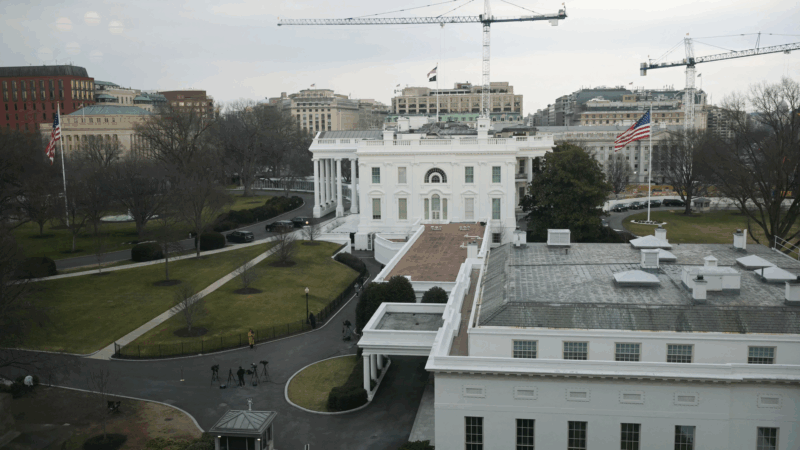
Trump’s ballroom project can continue for now, court says
A US District Judge denied a preservation group's effort to put a pause on construction
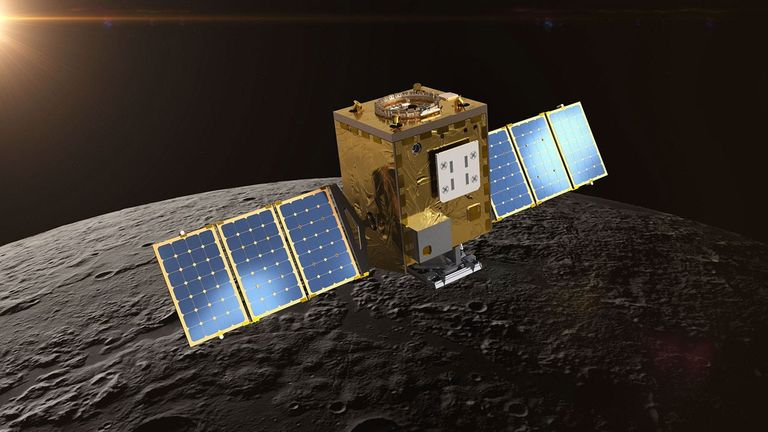
NASA lost a lunar spacecraft one day after launch. A new report details what went wrong
Why did a $72 million mission to study water on the moon fail so soon after launch? A new NASA report has the answer.

Columbia student detained by ICE is abruptly released after Mamdani meets with Trump
Hours after the student was taken into custody in her campus apartment, she was released, after New York City Mayor Zohran Mamdani expressed concerns about the arrest to President Trump.
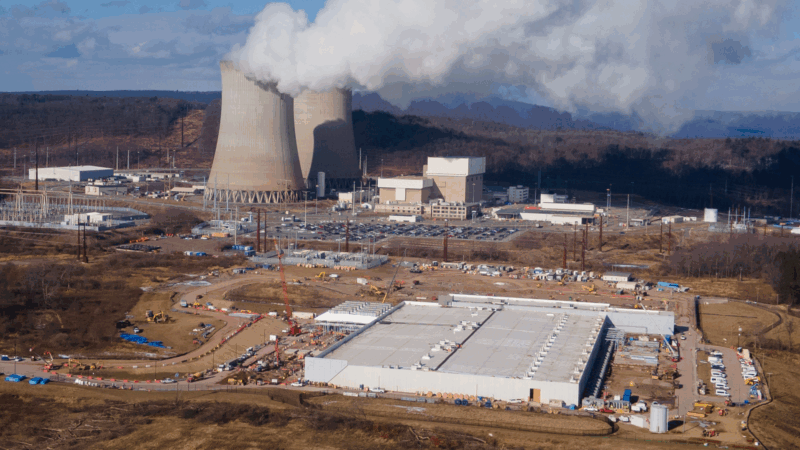
These major issues have brought together Democrats and Republicans in states
Across the country, Republicans and Democrats have found bipartisan agreement on regulating artificial intelligence and data centers. But it's not just big tech aligning the two parties.
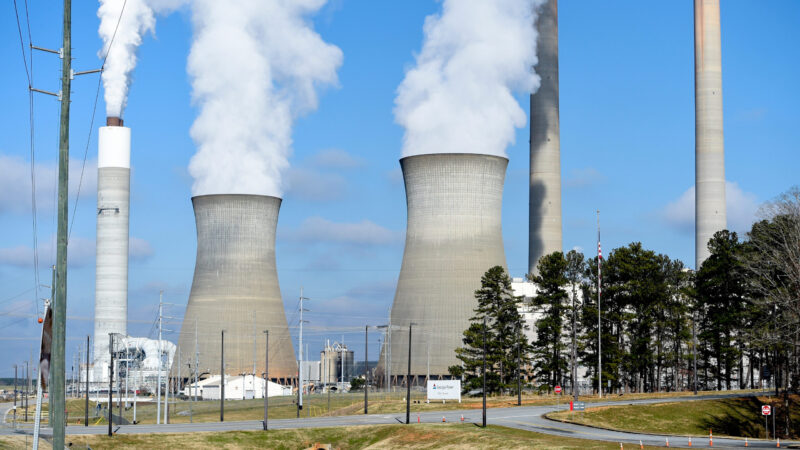
Feds announce $4.1 billion loan for electric power expansion in Alabama
Federal energy officials said the loan will save customers money as the companies undertake a huge expansion driven by demand from computer data centers.
