
As few as 3 radar controllers monitored Newark’s airspace Monday night, FAA says
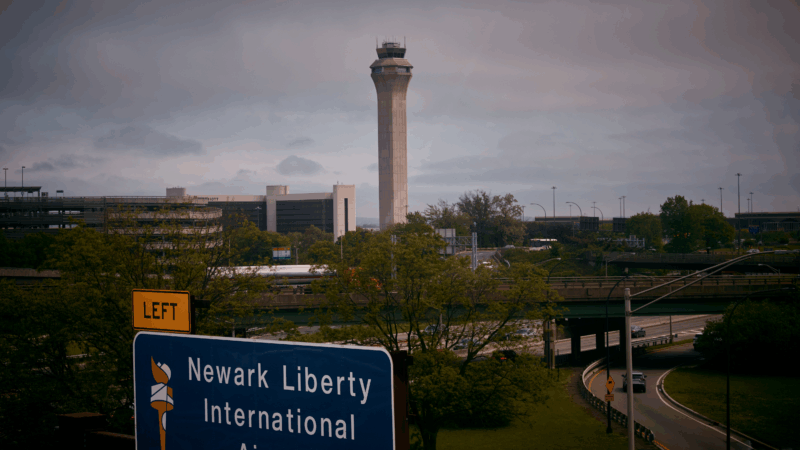
On Monday evening, there were as few as three air traffic controllers at a Philadelphia radar center scheduled each hour to guide planes that were flying into and out of Newark Liberty International Airport, according to the Federal Aviation Administration.
That’s despite a target of 14 air traffic controllers for that time period, per an agreement between the FAA and the air traffic controllers union, The New York Times reported. NPR has not independently confirmed that report. The FAA did not reply to NPR’s question about the agreement, and the union did not reply to multiple requests to comment.
In an emailed statement to NPR, FAA spokesperson Rick Breitenfeldt said “at least three controllers were scheduled for each hour” at the Philadelphia facility that manages air traffic at Newark on Monday night.
“We plan for staffing with traffic management initiatives to ensure safety is never compromised,” Breitenfeldt added.
Monday night’s slim staffing came as the FAA struggles to keep air travel flowing smoothly through one of the busiest airports in the country, where technological troubles, a worker shortage and ongoing runway construction have hampered operations in recent weeks.
To address these challenges, the FAA has slowed arrivals and departures at Newark , leading to scores of cancellations and delays for frustrated fliers.
“If we reduce the number of flights at Newark, we’re not doing it to annoy people. We’re not doing it to delay people’s travel. What we’re doing is guaranteeing safety,” Transportation Secretary Sean Duffy said in a Monday press conference.
While air traffic controllers in an airport’s tower handle flight traffic within a few-mile radius where it is often visible to the eye, the Terminal Radar Approach Control — or TRACON — directs incoming and outgoing planes that are further away from an airport.
Management of flight traffic at Newark was moved from Long Island to Philadelphia last summer. (Duffy said the Biden administration “bungled” the relocation and didn’t address technical problems that arose in the fall.)
The part of the Philadelphia facility controlling Newark airspace has 22 fully certified controllers and five fully certified supervisors, the FAA said in a separate statement Tuesday. There are also 21 controllers and supervisors in training — 10 of whom are receiving on-the-job training and are certified in at least one position, which means they can work without supervision from an instructor.
The agency also emphasized that the U.S. is facing a national shortage of air traffic controllers and said staffing goals for Newark’s airspace have not been met for years.
The low staff levels at Newark have worried some travelers, but a shortage of controllers alone would not likely pose a threat to passenger safety, says John Hansman, a professor of aeronautics and astronautics at the Massachusetts Institute of Technology.
“We run the system very conservatively and very safely,” Hansman said. In most cases, an insufficient number of air traffic controllers just means a slowdown in traffic, he said.
“If you get to this very extreme case we appear to be in, then you have secondary concerns about fatigue and stress, et cetera, that may degrade performance, but I don’t think we’ve necessarily seen that at this point,” Hansman added.
Brief communications outages in Philadelphia in late April and early May hampered operations in Newark. After the first incident, several air traffic controllers took time off in response to the stress and trauma they experienced, NPR previously reported.
Another telecommunications issue in Philadelphia on Sunday briefly slowed traffic at Newark, but Duffy said a Friday evening software update successfully kept a redundant communications line functioning and prevented a full-blown outage.
Duffy has called the national air traffic control system “antiquated” and last week announced a plan to overhaul it.

Mitski comes undone
She may be indie rock's queen of precisely rendered emotion, but on Mitski's latest album, Nothing's About to Happen to Me, warped perspectives, questionable motives and possible hauntings abound.

This quiet epic is the top-grossing Japanese live action film of all time
The Oscar-nominated Kokuho tells a compelling story about friendship, the weight of history and the torturous road to becoming a star in Japan's Kabuki theater.

The Live Nation trial could reshape the music industry. Here’s what you need to know
On Tuesday opening statements will begin for the federal antitrust trial against Live Nation, one of the largest entertainment companies in the world.
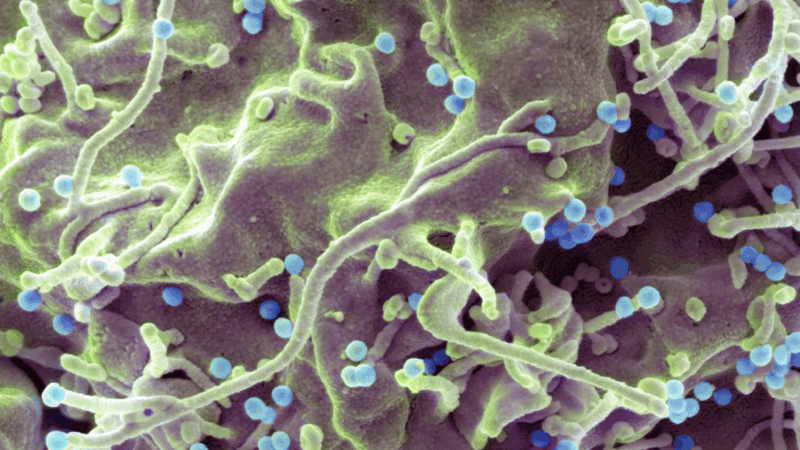
A new one-a-day-pill holds promise for HIV’s ‘forgotten population’
It's designed to take the place of complicated, multiple drug regimens that many people with HIV need to follow. And it's also beneficial because the HIV virus is always evolving.

For filmmaker Chloé Zhao, creative life was never linear
Director Chloé Zhao used meditation, somatic exercises and dance to inspire the cast and crew of this Oscar-nominated story about William Shakespeare's family.

10 new books in March offer mental vacations
March is always a big one for books – this year is no different. We call out a handful of upcoming titles for readers to put on their radars — offering a good alternative to doomscrolling.
