
Amid ICE clashes, New Hampshire bishop urges clergy to prepare their wills
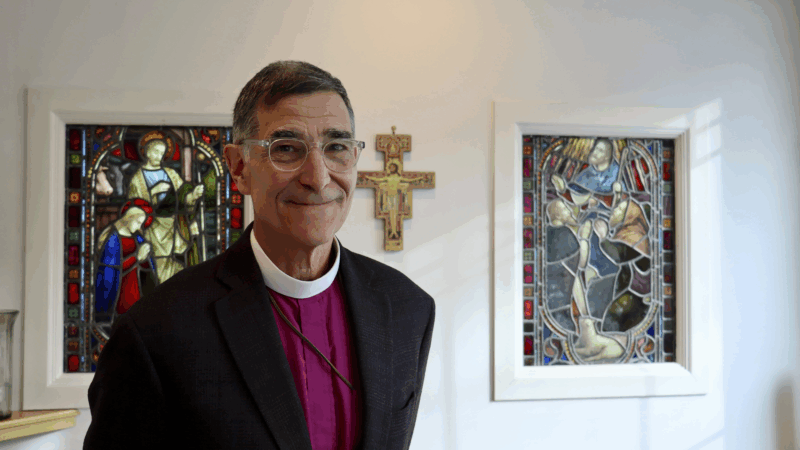
A New Hampshire Episcopal bishop’s stark warning to his clergy is resonating across the nation, drawing fervent praise from some and rebukes from others.
Bishop Rob Hirschfeld was one of several community and faith leaders gathered in Concord, N.H., for a vigil for Renee Macklin Good just days after she was fatally shot by an Immigration and Customs Enforcement agent in Minneapolis.
Hirschfeld called out the “cruelty, the injustice and the horror … unleashed in Minneapolis,” and warned his clergy to prepare for “a new era of martyrdom.”
“I’ve asked them to get their affairs in order to make sure they have their wills written,” he said, “because it may be that now is no longer the time for statements, but for us with our bodies to stand between the powers of this world and the most vulnerable.”
Hirschfeld’s comments quickly went viral.
“I was actually quite surprised to open up my phone and find my social media blowing up with my own bishop on it,” said Reverend Jason Wells of St. Matthews Epsicopal Church in Goffstown, N.H.
Wells, a community organizer who regularly prays outside ICE offices, said he and many others took it as a great relief – and a validation of sorts – to hear the bishop speaking openly about the mounting anxiety felt by faith leaders around the nation who’ve been stepping up their public prayers and protests against ICE, and getting pelted with pepper rounds, roughed up and arrested.
“People feel like he’s giving voice to a feeling in the pit of their stomach about what is going on,” said Wells. “It’s a relief to hear him naming a concern that I’ve had on my mind for a while.”
The Reverend Betsy Hess of St. Barnabas Episcopal Church in Berlin, N.H. added her voice to the chorus of “amens” and immediately emailed the bishop to thank him.
Hess believes clergy “need to quit just being polite Episcopalians, and get out there and do stuff.” But exactly what she would do, and what level of risk she’s willing to take, is something she’s still figuring out.
“It used to be that … you might go to jail, and now you might get shot! So it makes us need to be a lot more brave,” she said. “I hope I would be brave, but I can’t promise that I would be able to. But definitely, it’s time to move beyond ‘I won’t do anything that has any risk whatsoever.'”
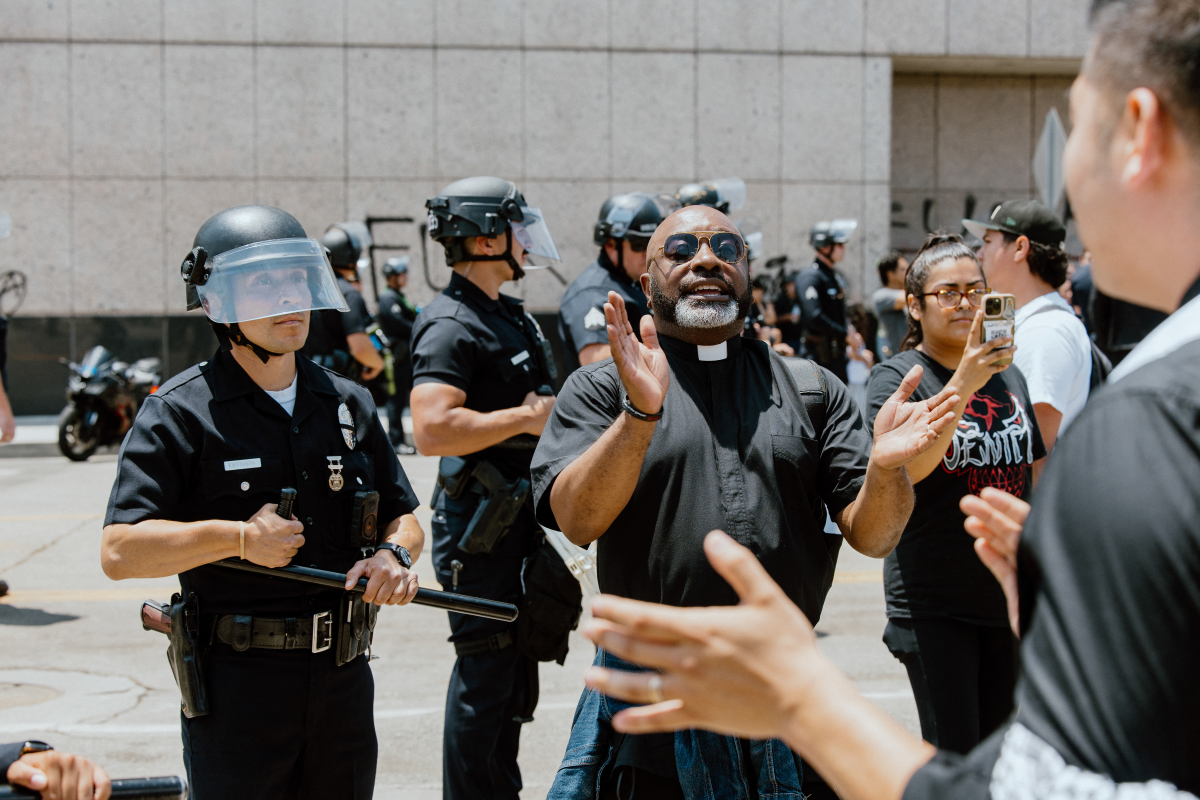
Others, however, took issue with the bishop’s words.
“My initial reaction is ‘Oh boy, this isn’t diffusing tension at all. This feels like a war cry,” said the Reverend Tom Gartin of Faith Episcopal Church who heard about the bishop’s comments from his parish in Cameron Park, California.
“I didn’t sign up to be a martyr,” he said. “I have a family and a congregation who rely on me. If I was gone tomorrow what would happen to them?”
Gartin also bristled at the idea of a preacher making the case for physical resistance. Based on his assessment, mere statements have not “moved the needle one bit.” He sees the bishop’s message as “inflammatory,” and at odds with one of Episcopalians’ guiding tenets – Via Media – that calls for finding a middle path between extremes.
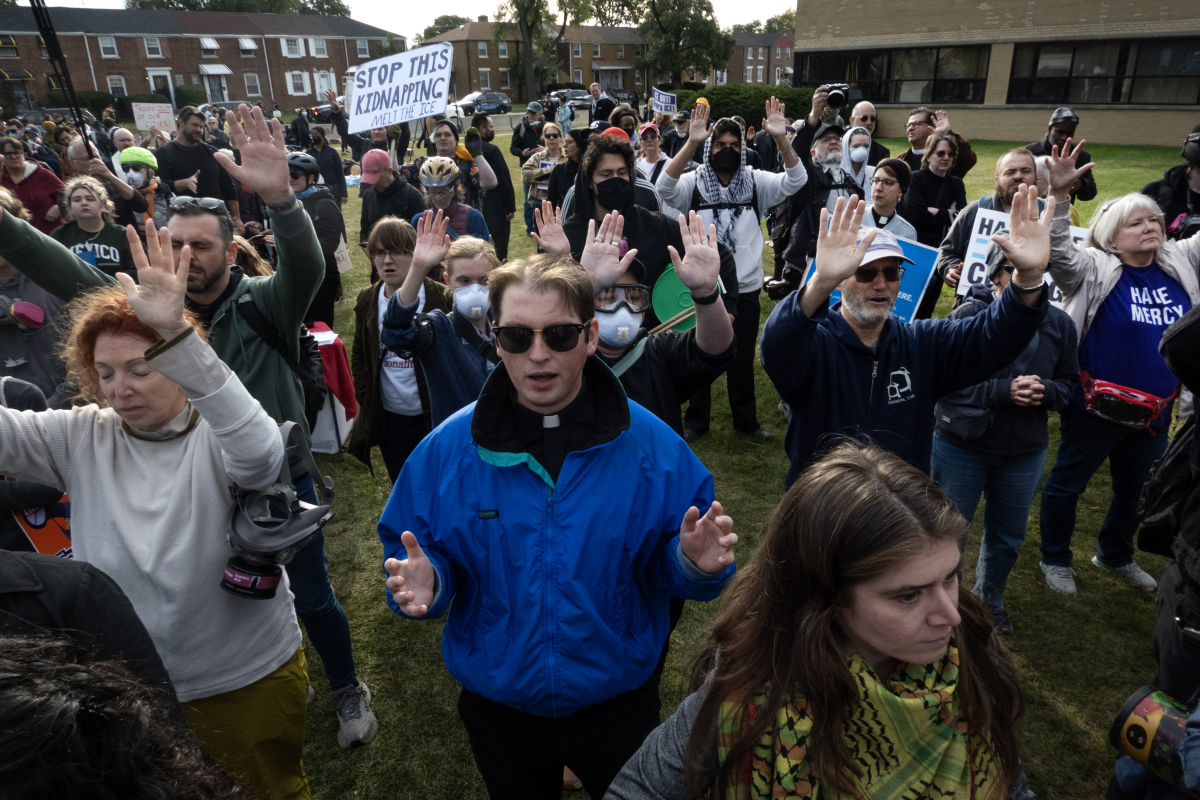
Gartin said the focus of church leadership should be “to do the work of peacemaking and to deescalate the tension we’ve seen all around us.”
“We’re called to do the work of peacemaking and to deescalate the tension we see all around us because it doesn’t serve anyone to become the next victim,” he said, “but it does serve everyone to build the next bridge.”
Hirschfeld said he was surprised by the stir his comments created.
“I don’t feel like I said anything that was new,” he said in an interview with NPR. “In no way did I intend anything I said to be inciteful of violence or to invite it.”
Hirschfeld said he understands how some may be hearing his words in ways he didn’t intend, but he stands by his message.
“What I said to the clergy (was) ‘I’m just asking you to live your life without fear of death. Be prepared. I’m not asking you to go look for that bullet,'” He said. “I’m simply saying be ready, have your affairs in order, have your soul ready, in case you find yourself in trouble.”
That, Hirschfeld said, is the Episcopal tradition. At the vigil where he made his initial remarks, he listed several church activists who became martyrs, including Jonathan Daniels, a New Hampshire native and seminary student who travelled to Alabama in 1965 to help integrate public places and register Black voters. He took a bullet to protect a black teenager he accompanied.
“Not everyone can be a Jonathan Daniels,” Hirschfeld said, but “we’re increasingly called to go into places that feel dangerous.”
That could be anything, he said, from his venture into the home of a neighbor whose political yard signs made him feel unsafe, to attending public demonstrations against ICE.
“I increasingly wonder when I go to these rallies or even a peaceful vigil. There are people driving by, honking their horns,” he said. “I see people with guns in New Hampshire, this is an open-carry state, and it doesn’t necessarily lend itself to a feeling of security and safety. But does that mean I shouldn’t show up? I don’t think so. I think it means I go and I should be prepared for whatever happens.”
In a statement to NPR, White House spokeswoman Abigail Jackson said interfering with federal law enforcement is a crime and will be prosecuted to the fullest extent of the law. The administration maintains the ICE agent who shot Renee Macklin Good was acting in self-defense.
DHS Assistant Secretary Tricia McLaughlin called Hirschfeld’s comments about martyrdom “absurd,” saying if he “really wanted to take a stand for the vulnerable” he would stand by the ICE agents who increasingly are under attack.
Hirschfeld said he does feel compassion for those agents.
“It’s definitely our Christian responsibility to extend love even to our enemies,” he said, and to love all God’s children, even those who may be “swept up in a maelstrom of hatred and fear and power that is not godly.”
Hirschfeld added, “I pray for everyone’s conversion of heart.”
House Dem. Leader Jeffries responds to air strikes on Iran by U.S. and Israel
NPR's Emily Kwong speaks to House Minority Leader Hakeem Jeffries (D-NY), who is still calling for a vote on a war powers resolution following a wave of U.S.- and Israel-led airstrikes on Iran.
Iran’s Ayatollah Ali Khamenei is killed in Israeli strike, ending 36-year iron rule
Khamenei, the Islamic Republic's second supreme leader, has been killed. He had held power since 1989, guiding Iran through difficult times — and overseeing the violent suppression of dissent.
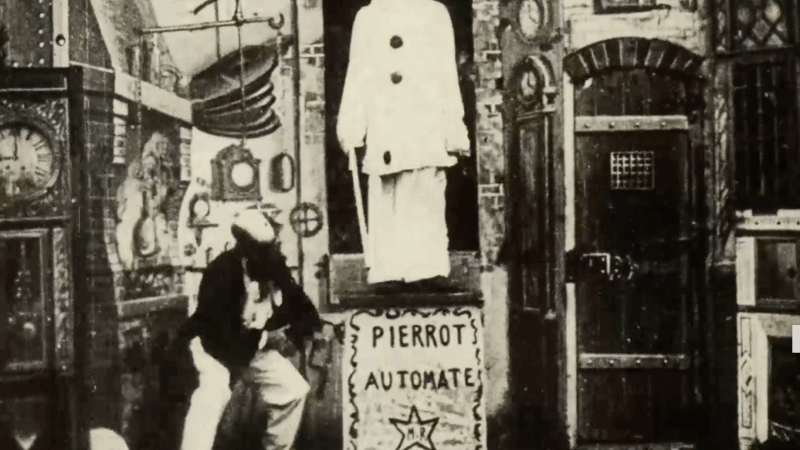
Found: The 19th century silent film that first captured a robot attack
A newly rediscovered 1897 short by famed French filmmaker Georges Méliès is being hailed as the first-ever depiction of a robot in cinema.
‘One year of failure.’ The Lancet slams RFK Jr.’s first year as health chief
In a scathing review, the top US medical journal's editorial board warned that the "destruction that Kennedy has wrought in 1 in office might take generations to repair."
Here’s how world leaders are reacting to the US-Israel strikes on Iran
Several leaders voiced support for the operation – but most, including those who stopped short of condemning it, called for restraint moving forward.

How could the U.S. strikes in Iran affect the world’s oil supply?
Despite sanctions, Iran is one of the world's major oil producers, with much of its crude exported to China.
