
American ‘Bibisitters’ try to keep the Israel-Hamas truce on track

TEL AVIV, Israel — Vice President Vance said Wednesday the Israel-Hamas ceasefire is holding, but he acknowledged the challenges involved in trying to end the war entirely.
“We have a very tough task ahead of us, which is to disarm Hamas but rebuild Gaza,” Vance said after meeting Israeli Prime Minister Benjamin Netanyahu in Jerusalem.
Vance is part of a high-profile U.S. team that’s in Israel this week with the mission of keeping the truce on track and trying to extend it to a more challenging second phase.
Netanyahu is universally known in Israel as “Bibi.” The Israeli media is calling this American contingent the “Bibisitters.”
In addition to Vance, it includes Middle East envoy Steve Witkoff, President Trump’s son-in-law Jared Kushner and Adm. Brad Cooper, the head of U.S. Central Command. Secretary of State Marco Rubio is also expected this week.
For his part, Netanyahu described the meeting with Vance as an “opportunity to make decisions jointly in a very tight-knit and trusted partnership.”
While the Americans are having wide-ranging talks with the Israelis, U.S. officials are not expected to meet Hamas.
The U.S. classifies Hamas as a terrorist group, which prohibits contact.
In a rare exception, Witkoff and Kushner said they met Hamas leaders in Egypt to nail down the final details of the ceasefire, which took effect Oct. 10.
The truce holds, with many steps ahead
The Gaza ceasefire has largely held aside from a flare-up in fighting last Sunday that left two Israeli soldiers and more than 40 Palestinians dead.
However, the so-called Phase 2 of the truce deals with more difficult problems.
Gaza doesn’t have a government, and it’s not clear when it will get one. The Hamas leadership was decimated in the war, and the ceasefire agreement says the group will not take part in a future government.
The agreement says 15 nonpartisan technocrats will take over on an interim basis, but there’s no timetable.
Asked about the lack of government in Gaza, Vance said other needs should be meet first, including food, medicine and security.
“If we get to the point where we’re arguing exactly what the governing structure in Gaza is long term, we should pat ourselves on the back because that’s a very good problem to have. But I won’t anticipate that problem before we actually have it,” Vance said.
Vance made those remarks Tuesday in southern Israel, barely 10 miles from the Gaza border. He visited a civilian-military coordination center built in the last few days by 200 U.S. troops.
This center will include officials from the U.S. and other countries, as well as aid groups and others working in Gaza. The goal is to make sure everyone is operating from the same playbook.
The ceasefire plan also calls for Hamas to “decommission” its weapons, though the group has not publicly stated it will do this. Vance stressed that it should happen, but declined to say exactly how this would work.
In addition, Israeli troops — who still control half of Gaza — are required to pull back as the territory stabilizes.
Foreign troops are supposed to replace the Israelis in Gaza as an international stabilization force. However, there’s no word on what countries will supply the troops, when they might arrive or exactly what their mandate would be.
Israel is already making clear it will have the final say on which troops are allowed to take part in the force.
Trump plays a leading role, but no troops on the ground
Meanwhile, Trump has long said he will keep the U.S. out of “forever wars.”
Yet he also sees himself as a master negotiator who’s able to end wars. He’s widely credited for bringing about the Gaza truce after two years of intense fighting.
His administration also stresses that the 200 U.S. troops in Israel will work at the coordination center in Israel and will not go into Gaza.
Still, U.S. presidents dating back to Harry Truman have sought to resolve the Israeli-Palestinian conflict. And so far, none has managed a full-fledged peace.

Scientists make a pocket-sized AI brain with help from monkey neurons
A new study suggests AI systems could be a lot more efficient. Researchers were able to shrink an AI vision model to 1/1000th of its original size.

U.S. evacuates diplomats, shuts down some embassies as war enters fourth day
The United States evacuated diplomats across the Middle East and shut down some embassies as war with Iran intensified Tuesday while President Trump signaled the conflict could turn into extended war.

College students, professors are making their own AI rules. They don’t always agree
More than three years after ChatGPT debuted, AI has become a part of everyday life — and professors and students are still figuring out how or if they should use it.

North Carolina and Texas have primary elections Tuesday. Here’s what you need to know
The midterm elections are officially underway and contests in Texas and North Carolina will be the first major opportunity for parties to hear from voters about what's important to them in 2026.
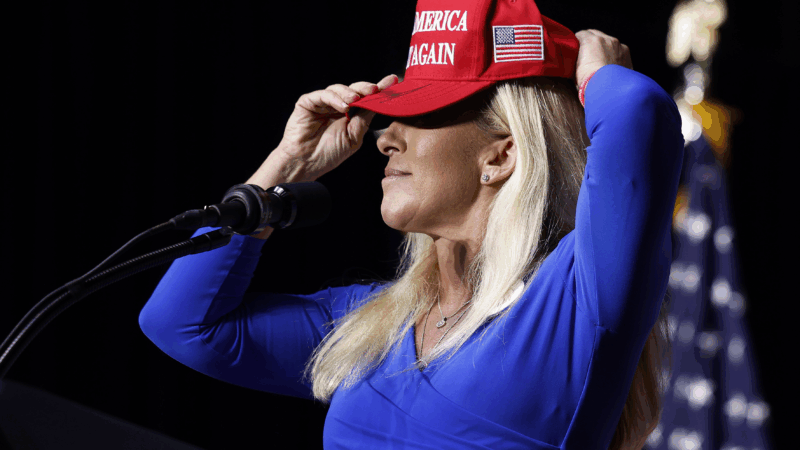
Trump promised the MAGA base no new wars. Then he went to war with Iran
President Trump promised his "Make America Great Again" voters an "America First" foreign policy. With the war in Iran, he's testing MAGA world's willingness to be flexible on one of its core beliefs.

Kristi Noem set to face senators over DHS shutdown, immigration enforcement
The focus of the hearing is likely to be on how Kristi Noem is pursuing President Trump's mass deportation efforts in his second term, after two U.S. citizens were killed by immigration officers.
