
Ahead of this week’s NATO summit, Europe is uncertain about its old ally, the U.S.
This year’s NATO summit opens Tuesday against the backdrop of an increasingly aggressive and unrestrained Russia, combined with an increasingly disengaged United States, which seems willing to turn its back on its traditional allies to engage in new conflicts and threats in the Middle East and Asia.
Writing in French newspaper Le Monde, columnist Sylvie Kauffmann said it was hard to imagine last summer’s NATO Summit in Washington, D.C., when 32 nations came together to celebrate the transatlantic alliance’s 75th anniversary under the motto: “Stronger and safer together, in NATO.”
A year ago, she said, the member nations were “reinvigorated around its leading partner, the United States, [and] by Russian aggression in Ukraine.”
“Six months later,” wrote Kauffmann, “Donald Trump succeeded Joe Biden in the White House, and everything shifted.”
NATO — which stands for North Atlantic Treaty Organization — is a military alliance of 32 member states: 30 European nations, as well as the United States and Canada. This year’s summit is being held for two days in The Hague, in the Netherlands.
Alexandra de Hoop Scheffer, president of the German Marshall Fund of the United States — a nonprofit organization focused on transatlantic affairs — agrees that this year’s summit will be a test for the ruptured alliance.
“What you are seeing today — with the simultaneous crisis on the European continent with the war in Ukraine, the tensions in the Indopacific region, and the escalation in the Middle East — you now have three different theaters that are encountering unprecedented tensions, crisis and war,” de Hoop Scheffer told NPR. “This is obviously going to incentivize the United States to re-prioritize the way it is involved on the European continent.”
De Hoop Scheffer said its something that European allies are going to have to prepare for.
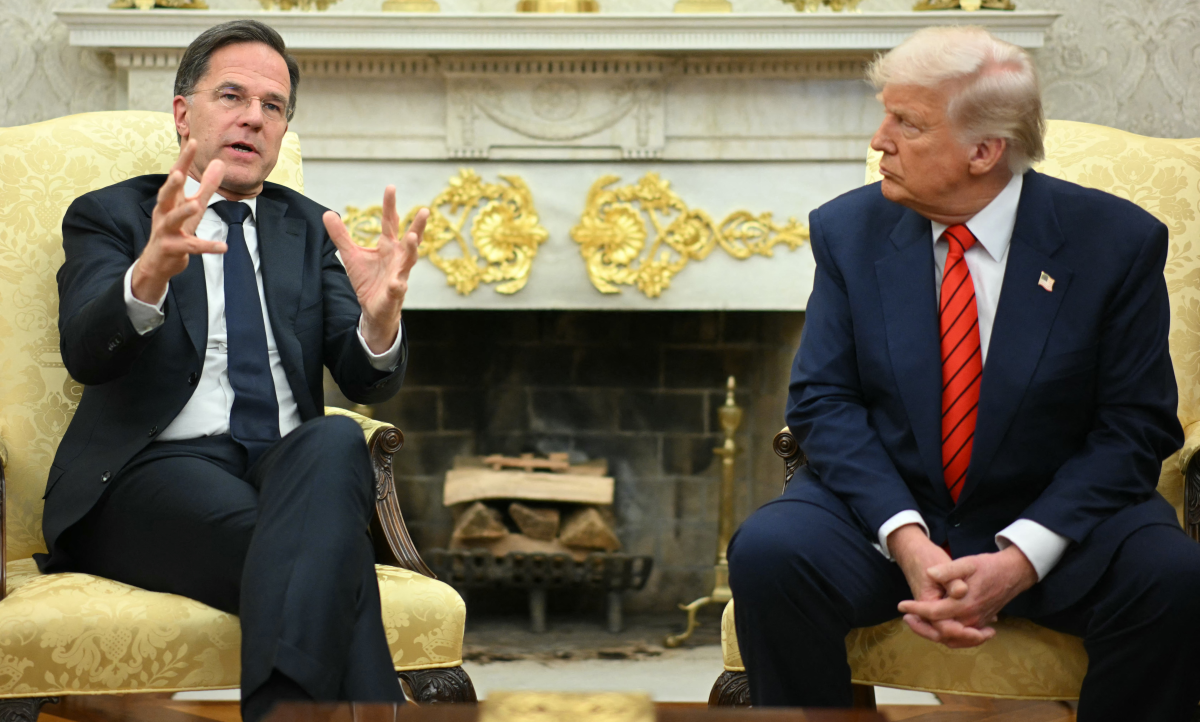
Which is exactly what NATO’s new Secretary General, former Dutch Prime Minister Mark Rutte, is trying to do by pushing NATO members to commit to ramping up defense spending.
Rutte said European nations need to make a “quantum leap” in defense capabilities including a “400-percent increase” in air and missile defense, to shield the alliance against Russia. Since he took over as Secretary General last October, Rutte warned that members should spend “considerably more than 3%” of the value of their economies on defense.
In a recent interview at British think-tank Chatham House, Rutte warned that the danger would not disappear when the Ukraine war ends.
Since the beginning of the Cold War, Europeans have reaped a huge peace dividend by being under the wing of American military protection. That has given them the freedom to invest resources in their societies, building up robust social welfare systems.
Rutte warned that Europe must now make choices. “You could still have your health systems, the pension system… but you better learn to speak Russian,” he said. “I mean, that’s the consequence.”
While the U.S. may be able to look away, de Hoop Scheffer said what’s happening in Ukraine poses an existential threat for Europe, and it cannot afford to lose this war.
“I think this summit is really going to be about one main issue which is defense spending and European members of NATO committing to the new 5% target,” said de Hoop Scheffer.
“The war in Ukraine has been going on for more than three years now, the situation on the ground is very tense and Ukraine still needs substantial support,” she said.
While there will be no discussions of Ukraine becoming a part of NATO this year, paradoxically, said de Hoop Scheffer, the longer the war in Ukraine continues, the more the future of that country is actually intertwined with Europe’s future.
“European countries are looking at Ukraine and realizing that its war fighting capacities and creativity — for example with drones — will obviously have to be part of the future of any European military industrial base.
Writing in Le Monde, Kauffmann said: “Our American ally has became so elusive and hostile that no one dares to imagine how this NATO summit will unfold.”
Plus, U.S. attention has been elsewhere over the past several days. Late Saturday, President Trump announced his country had completed airstrikes against three nuclear sites in Iran, bringing the escalating conflict between Iran and Israel to NATO’s front door.
Given President Trump’s short attention span, it’s good news that the 2025 NATO summit will be short, wrapping up in just two days. And its final communiqué will be limited to one page.
Some European papers speak of reinventing the transatlantic alliance and casting off US guardianship. Whatever happens, everyone seems to agree the NATO as we’ve known it for the last 75 years is finished.
De Hoop Scheffer said this NATO summit is about Europeans staying together. “We must seriously step it up and collectively commit to our own security and defense,” she said. “We don’t have a choice.”
See the Oscars red carpet looks
Stars are arriving for the Academy Awards. The show starts at 7 p.m. ET, 4 p.m. PT on ABC and Hulu.
Selection Sunday is here. Here’s what to know ahead of March Madness
Brackets for the men's and women's NCAA basketball tournaments are set to be revealed. Duke is expected to be the men's top overall seed. The undefeated UConn Huskies will likely lead the women's.

Snow and wind batter parts of US, with threat of thunderstorms and tornadoes
A broad and erratic patchwork of severe weather rumbled across much of the U.S. on Sunday, dumping heavy snow in the Upper Midwest while damaging high winds swept across the Plains.

Crew of fatal US military crash included Alabama father recently deployed
The six U.S. service members who died in the crash of a U.S. military refueling aircraft included an Alabama father who had just been promoted and deployed. The U.S. government released the identities of the deceased service members Saturday.
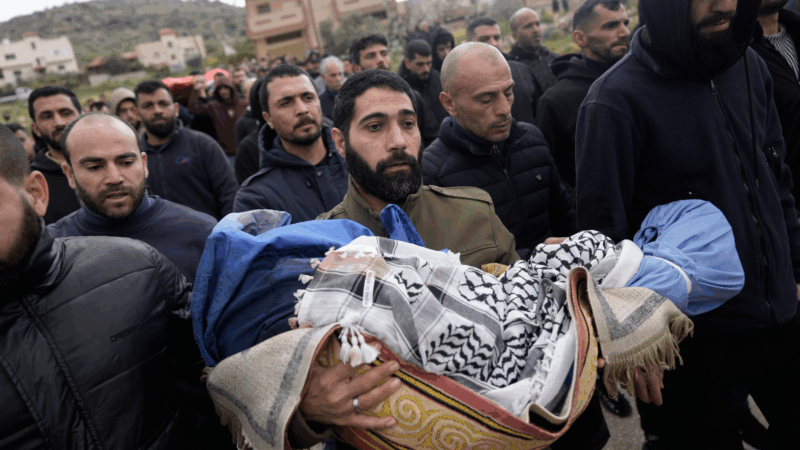
Israeli soldiers fire on family car in occupied West Bank, killing 4
Israeli soldiers fired on a car carrying a family in the northern West Bank, killing four people including two children, the Palestinian Authority's Health Ministry said.

U.S. military names six killed in plane crash as Iran war enters third week
The conflict in the Middle East has entered a third week, with Israel announcing a barrage of new strikes on western Iran on Sunday, while the U.S. defense department released the names of six service members who died when their military refueling aircraft crashed.
