
After NIH grant cuts, breast cancer research at Harvard slowed, and lab workers left

Inside a cancer research laboratory on the campus of Harvard Medical School, two dozen small jars with pink plastic lids sit on a metal counter. Inside these humble-looking jars is the core of Joan Brugge’s current multiyear research project.
Brugge lifts up one of the jars and gazes at it with reverence. Each jar holds samples of breast tissue donated by patients after undergoing a tissue biopsy or breast surgery — samples that may reveal a new way to prevent breast cancer.
Brugge and her research team have analyzed the cell structure of more than 100 samples.
Using high-powered microscopes and complex computer algorithms, they diagram each stage in the development of breast cancer: from the first sign of cell mutation to the formation of tiny clusters, well before they are large enough to be considered tumors.
Their quest is to prevent breast cancer, a disease that afflicts roughly 1 in 8 U.S. women, as well as some men. Their ultimate goal is to relieve the pain, suffering and risk of death that accompany this disease. And their painstaking work, unspooling across six years of the seven-year, $7 million federal grant, has yielded results.
In late 2024, Brugge and her colleagues identified specific cells in breast tissue that contain the genetic seeds of breast tumors.
And they discovered that these “seed cells” are surprisingly common. In fact, they are present in the normal, healthy tissue of every breast sample her lab has examined, Brugge says, including samples from patients who’ve never had breast cancer but had surgery for other reasons such as breast reduction or a biopsy that was benign.

The next research challenge for Brugge’s lab is clear: find ways to detect, isolate and terminate the mutant cells before they have a chance to spread and form tumors.
“I’m excited about what we’re doing right now,” Brugge says. “I think we could make a difference, so I don’t want to stop.”
But this year, work in Brugge’s lab slowed way, way down. In April, her $7 million breast cancer research grant from the National Cancer Institute at the National Institutes of Health (NIH) was frozen, along with virtually all federal money awarded to Harvard researchers.
The Trump administration said it was withholding the funds over the university’s handling of antisemitism on campus.
Some members of Brugge’s lab staff lost federal fellowships that funded their work. Brugge told others funded through the NIH grant that she couldn’t guarantee their salaries. In all, Brugge lost seven of her 18 lab employees.
In September, the funding flow for the NIH grant was restored. But in the intervening months, the Trump administration said Brugge and other Harvard researchers weren’t allowed to apply for the next round of multiyear grants.
A federal judge lifted that ban, but Brugge had missed the deadline to apply for renewal. So her current funding will end in August.

Brugge scrambled to secure private funding from foundations and philanthropists. She was then able to reinstate two positions for at least a year — but job applicants are wary.
Across the United States, the future of federal funding for cancer research is uncertain.
President Trump has proposed cutting the NIH budget by nearly 40% in 2026, the current fiscal year.
In a budget message, the White House said the “NIH has broken the trust of the American people with wasteful spending, misleading information, risky research, and the promotion of dangerous ideologies that undermine public health.”
But Congress has other plans: The House budget plan includes a $48 million increase, which would bring the NIH budget to $46.9 billion. The Senate plan would add $400 million, including an additional $150 million for cancer research.
But differences among all the proposed budgets remain unresolved.

In the meantime, advocates like Mark Fleury with the American Cancer Society are reminding lawmakers that federally funded research is one reason the cancer death rate has declined 34% since the early 1990s and that some of the credit for that goes to federally funded research advances.
“But we still have an incredible ways to go before we can say that we’ve changed the trajectory of cancer,” Fleury told NPR. “There are still cancer types that are fairly lethal, and there are still populations of people for whom their experience of cancer is vastly different from other groups.”
Reductions in research funding will have a direct impact on treatment options for patients, Fleury said. For example, a 10% cut to the NIH budget would eventually result in two fewer new drugs or treatments per year, according to a projection from the Congressional Budget Office.
A recent study looked at drugs that were developed through NIH-funded research and approved by the Food and Drug Administration since 2000. More than half those drugs would probably not have been developed if the NIH was operating with a 40% smaller budget.
“We can’t say, ‘But for that grant, that [specific] drug would not have come into existence,'” says Pierre Azoulay, a study co-author and a professor at the Massachusetts Institute of Technology. But fewer drugs overall would have made it to market, he says. “It makes us at least want to pause and say, ‘What are we doing here? Are we shooting ourselves in the foot?'”
In the midst of all these uncertainties, Brugge has trouble focusing on her goal of finding new ways to prevent breast cancer.

Nowadays, she spends about half her time searching for new sources of funding, managing her remaining employees’ anxieties and monitoring the most recent news about Harvard, the Trump administration, the NIH and other federal agencies that have experienced grant freezes, staff layoffs and other disruptions.
She’d rather return her attention to her ongoing investigations, which she’s confident could eventually save lives.
The breakdown of Brugge’s lab highlights another problem: The U.S. is kneecapping the next generation of cancer researchers. Her employees included staff scientists, postdocs and graduate students. Of the seven who left the lab this year, one left the U.S., one took a job at a health care management company, four went back to school and one person is still looking for work.
One of Brugge’s former staffers is Y, a computational biologist. She helped design and run a tool that analyzes millions of breast tissue cells from those samples in the pink-lidded jars.
Y moved to Switzerland in October to begin a research and Ph.D. program. (NPR agreed to identify her only by her middle initial because she plans to return to the U.S. for scientific conferences and worries that speaking out could affect future visa approvals.)
“I thought the U.S. would be a safe place for scientists to learn and grow,” said Y, who moved to Boston from abroad for Harvard’s master’s degree program in bioinformatics. “I really hope that those who have the opportunities to study this further can fill in those missing pieces in cancer research.”
Brugge is no longer accepting job applicants from outside the U.S., even if they are top candidates, because she can’t afford to pay the Trump administration’s new $100,000 fee on visas for foreign researchers.
The Association of American Universities and the U.S. Chamber of Commerce have filed a legal challenge, claiming the fee is misguided and illegal. The Trump administration said the fee would discourage reliance on foreign workers and improve opportunities for Americans.
Brugge doubts work in her lab will ever return to normal.
“There’ll always be, now, this existential threat to the research,” Brugge says. “I will definitely be concerned because we don’t know what’s going to happen in the future that might trigger a similar kind of action.”
Brugge has thought about shutting down her lab. But she still employs staff members whose future scientific careers are tied to finishing some of the research. And when she looks at those pink-lidded jars, she still sees so much promise.
This story comes from NPR’s health reporting partnership with WBUR and KFF Health News.
Transcript:
SCOTT DETROW, HOST:
The ongoing battle between the Trump administration and top universities has many scientists asking whether they can continue their research – even research that could potentially be lifesaving. From member station WBUR, reporter Martha Bebinger introduces us to one of those researchers – someone whose goal it is to prevent breast cancer.
MARTHA BEBINGER, BYLINE: Joan Brugge’s lab at Harvard Medical School is all bright lights, sterile tubes and sleek microscopes on metal counters. Walking through the lab, Brugge stops in front of about two dozen small plastic jars with pink lids. She lifts one with reverence. Each jar holds samples of breast tissue donated by patients who had a biopsy, a mastectomy or other surgery, like breast reduction.
JOAN BRUGGE: We’re going to section them and look at the architecture of the breast tissue.
BEBINGER: Using the results, Brugge and colleagues have identified cells that contain the seeds for breast tumors. To Brugge’s surprise, they are incredibly common.
BRUGGE: Basically, every breast that we’ve looked at carries a small number of cells that have one or two of the mutations that are among those that are most commonly found in breast tumors.
BEBINGER: So we’re all walking around with the potential for tumors?
BRUGGE: Exactly. Exactly.
BEBINGER: Brugge says her work could be a model for early cancer detection in other parts of our bodies. Now her team is looking for ways to isolate and eliminate those seed cells. She used to employ 18 researchers in this lab, but the Trump administration has upended funding for scientific research across the country and threatened ongoing research at Harvard in particular. Amid all of this disruption, Brugge lost a third of her staff and the breast cancer research slowed way, way down.
BRUGGE: We had to look at what we were originally planning on doing and look at the people that are left to do it, and just basically had to cut back.
BEBINGER: Brugge has found private funds to replace some lab members, but she says job candidates are wary because there is so much uncertainty about federal funding for cancer research. President Trump has proposed a 40% cut in the budget for the National Institutes of Health. In Congress, there’s been pushback on those cuts, but there’s still no final research budget for the current year.
Mark Fleury with the American Cancer Society Cancer Action Network is reminding lawmakers why federal research funding matters. The cancer death rate, he says, is down 34% since the early ’90s.
MARK FLEURY: But we still have an incredible ways to go before, you know, we can say we’ve really changed the trajectory of cancer.
BEBINGER: At least two reports have found that cutting grants like Brugge’s would mean fewer drugs to treat cancer and other diseases. One of those reports was coauthored by MIT Professor Pierre Azoulay. It shows nearly 60% of drugs approved by the FDA since 2000 used research funded by the National Institutes of Health.
PIERRE AZOULAY: We can’t say, but for that grant, that drug wouldn’t have come into existence. But it makes us at least want to pause and say, OK, what are we doing here? Are we shooting ourselves in the foot?
BEBINGER: Instead of research, Brugge spends at least half of her time these days searching for funding, managing employees’ anxieties and trying to plan ahead when the news keeps changing. She worries work in her lab will never return to normal.
BRUGGE: There’ll always be now this existential threat to research. And I will definitely be concerned because we don’t know what’s going to happen in the future that might trigger a similar kind of action.
BEBINGER: Brugge has thought about winding down the work and closing the lab, but she still sees so much promise in those pink-lidded jars.
For NPR News, I’m Martha Bebinger in Boston.
DETROW: That story comes from NPR’s partnership with WBUR and KFF Health News.
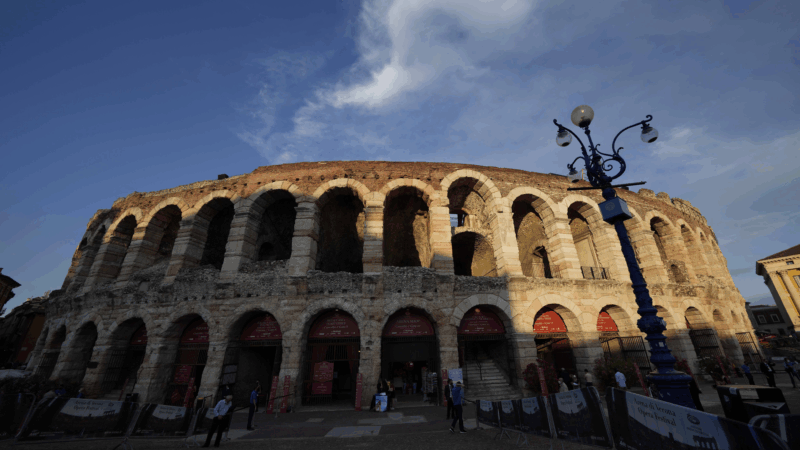
Mideast clashes breach Olympic truce as athletes gather for Winter Paralympic Games
Fighting intensified in the Middle East during the Olympic truce, in effect through March 15. Flights are being disrupted as athletes and families converge on Italy for the Winter Paralympics.

A U.S. scholarship thrills a teacher in India. Then came the soul-crushing questions
She was thrilled to become the first teacher from a government-sponsored school in India to get a Fulbright exchange award to learn from U.S. schools. People asked two questions that clouded her joy.

Sunday Puzzle: Sandwiched
NPR's Ayesha Rascoe plays the puzzle with WXXI listener Jonathan Black and Weekend Edition Puzzlemaster Will Shortz.

U.S.-Israeli strikes in Iran continue into 2nd day, as the region faces turmoil
Israel said on Sunday it had launched more attacks on Iran, while the Iranian government continued strikes on Israel and on U.S. targets in Gulf states, Iraq and Jordan.

Trump warns Iran not to retaliate after Ayatollah Ali Khamenei is killed
The Iranian government has announced 40 days of mourning. The country's supreme leader was killed following an attack launched by the U.S. and Israel on Saturday against Iran.
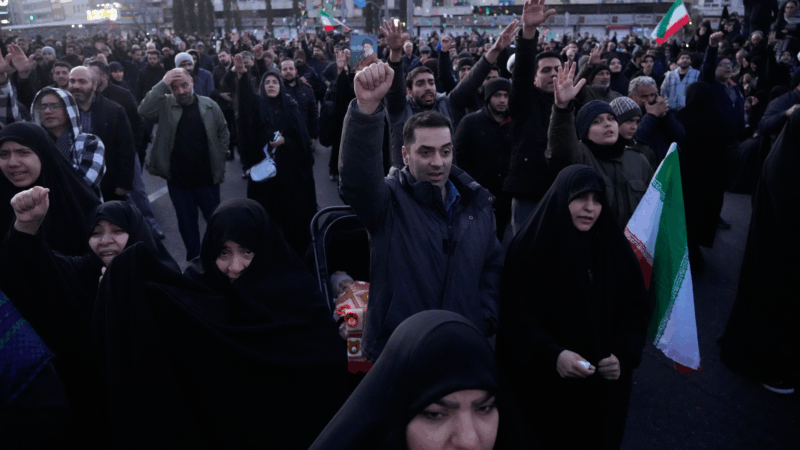
Iran fires missiles at Israel and Gulf states after U.S.-Israeli strike kills Khamenei
Iran fired missiles at targets in Israel and Gulf Arab states Sunday after vowing massive retaliation for the killing of Supreme Leader Ayatollah Ali Khamenei by the United States and Israel.
