
After Iran’s war with Israel, questions return about Khamenei’s potential successors

In the aftermath of the 12-day war in June between Israel and Iran, questions have arisen about Iran’s Supreme Leader Ayatollah Ali Khamenei. He is 86 years old and was a potential Israeli target during the conflict, leading to speculation about who might succeed him.
There has only been one previous time when Iran went through a process of naming a new supreme leader — in 1989, when Khamenei was chosen to succeed Ayatollah Ruhollah Khomeini, the towering figurehead behind the 1979 Islamic revolution.
Now, nearly four decades on, that process is once again unfolding, says Vali Nasr, an Iran expert at Johns Hopkins University and the author of Iran’s Grand Strategy: A Political History.
“Everything in Iran in the past four or five years has really been about succession,” he says.
Khamenei has periodically handed names of potential successors to the so-called Assembly of Experts, a group of roughly 80 clerics who decide the next leader — though, in effect, serve as a rubber stamp for whatever the supreme leader wishes. Nasr says after the recent war with Israel and the U.S. bombing of key Iranian nuclear sites, the selection of a successor has become more urgent.
“I think in the interest of preservation of the state and ensuring its continuity, [Khamenei] created contingency plans to make a transfer of power much more smooth and quick,” he says.
Speculation over who may succeed Khamenei veers from hardliners like his 55-year-old son Mojtaba Khamenei and 52-year-old Hassan Khomeini, the grandson of Ayatollah Khomeini, to past reform-minded presidents such as Hassan Rouhani and Mohammad Khatami.
Afshan Ostovar, an Iran expert at the Naval Postgraduate School in Monterey, Calif., says Khamenei has good reasons not to tip his hand as to who may succeed him.
“Khamenei is going to lose status because he’s going to have a successor,” he says, adding that the successor is likely going to be a target for political attacks. “So, the longer that successor is known, the longer opponents are going to have to sort of tarnish his brand.”
Ostovar says the successor will have to be a cleric.
“If you didn’t have a cleric succeeding Khamenei, you would no longer have an Islamic revolution. You no longer have an Islamic republic,” he says. “It would be a completely different system.”
But Ali Vaez, who heads the Iran project at the International Crisis Group think tank, says the next leader may not in fact be a religious figure. He notes that Iran has suffered deep setbacks under Khamenei: the economy is battered, there’s serious discontent in society, it lost key proxies such as Hezbollah in the region and its military was decimated last month by Israel. Vaez says Iran’s Islamic Revolutionary Guard Corps — a dominant, multipronged military force — may see this as an opportunity for change.
“It is quite possible that Ayatollah Khamenei is the last supreme leader of Iran,” he says. “It is hard to imagine that the military, the Revolutionary Guards, which has paid the highest price for Ayatollah Khamenei’s strategic mistakes, would continue seeing the clerical establishment as an asset and not as a liability.”
Whoever that successor is, the question becomes what kind of leader he will be — what qualifications and character does he (and it undoubtedly will be a he) have to have?
Ostovar says he will likely be seen as weak by Iran’s powerbrokers, including clerics, politicians and business leaders.
“None of the institutions of power within the Islamic Republic already are going to want to just hand over the kingdom to somebody who’s going to become a dictator,” he says. “The weaker a person is, the more influence that all the factions can potentially exercise over that person.”
Khamenei himself was seen as weak when he was named supreme leader. But he was also cunning and aligned himself with the Islamic Revolutionary Guard Corps, says Nasr. For all practical purposes, he says, the revolutionary guards are already running the country.
“They are in the government. They control media. They control vast areas of the economy. They are in decision making circles in a way,” he say. “They are operating the way the Egyptian or the Pakistani military operate, behind a civilian facade.”
Nasr says there is a realization among many power brokers that things have to change — that Iran’s virulent anti-West stance has hit its limit.
“There [are] powerful voices that are not saying we should tomorrow morning become absolute friends of the West,” he says. “But basically, they’re saying we should end the war with the West and we should go down the path of de-escalation.”
Nasr says after de-escalation can come normalization.
But how Khamenei dies could also affect the decision about who next runs Iran.
If he dies naturally, Nasr says, a moderate could become supreme leader. If, however, Khamenei is assassinated, most likely a hardline cleric will take control — to maintain continuity after a violent end to Khamenei’s rule.
One week into the Iran war, the fallout is global
The war is no longer just about the U.S., Israel and Iran. More countries are getting caught in the political crossfire or being drawn into the fighting themselves.
Iran’s president defies U.S. demands while apologizing for strikes on neighbors
President Masoud Pezeshkian said Saturday that a demand by the U.S. for an unconditional surrender is a "dream that they should take to their grave." He also apologized for Iran's attacks on regional countries.
What the Trump administration says about why it went to war with Iran
The Trump administration says it is "laser focused" and mission driven, but the messaging has been varied. The range of cited motivations for striking Iran now are sometimes at odds with each other.
Trump looks to turn attention to Western Hemisphere at Americas summit
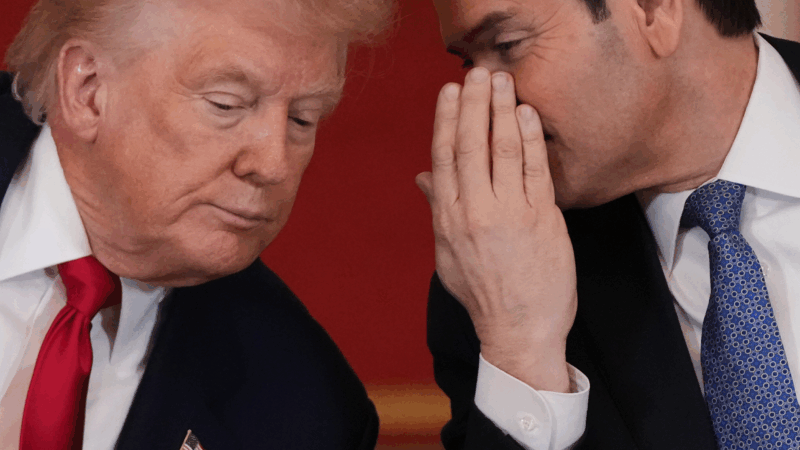
President Trump is set to gather with Latin American leaders on Saturday at his Miami-area golf club as his administration looks to turn attention to the Western Hemisphere, at least for a moment.
Trump administration’s embattled FDA vaccine chief is leaving for the second time
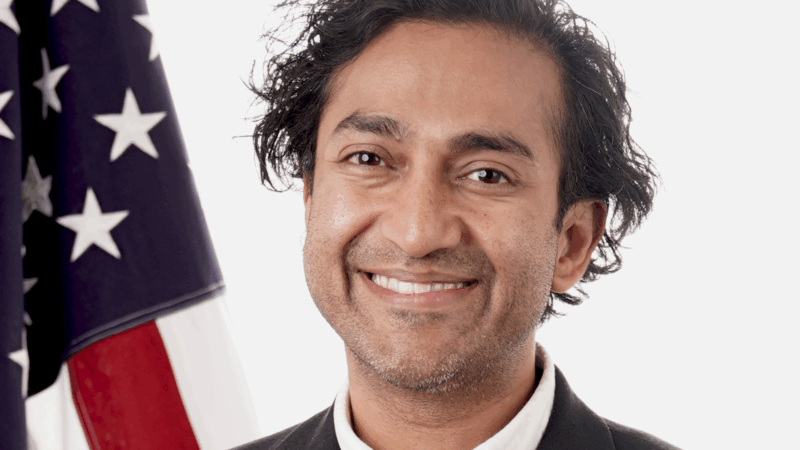
The FDA's controversial vaccine chief, Dr. Vinay Prasad, is leaving the agency. It's the second time he has abruptly departed following decisions involving the review of vaccinations and specialty drugs.
Family, former presidents and a Hall of Famer give Rev. Jesse Jackson a final sendoff
Several speakers at Jackson's funeral invoked his hallmark catchphrases: "Keep hope alive" and "I am somebody."
