
Actor Robert Duvall has died — he brought a compassionate center to edgy hard roles
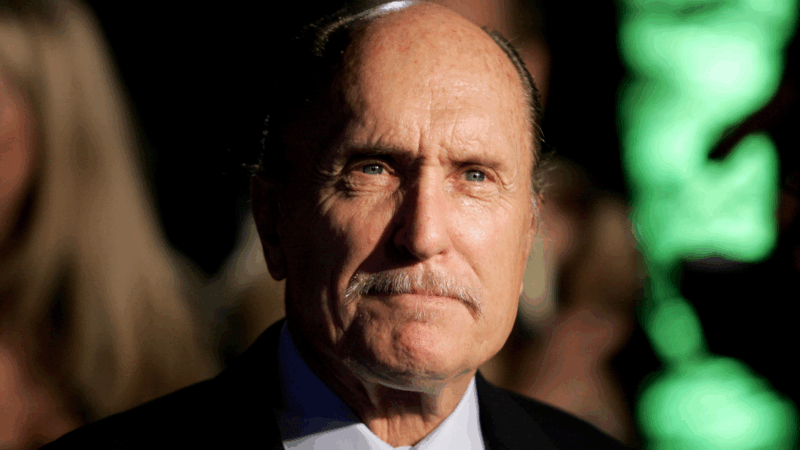
Over his long career, Robert Duvall brought a wide range of characters to life, from tough Marines to wistful, tender-hearted cowboys.
Duvall died on Sunday. His wife Luciana posted on Facebook on Monday, “Yesterday we said goodbye to my beloved husband, cherished friend, and one of the greatest actors of our time. Bob passed away peacefully at home, surrounded by love and comfort.”
He was 95 years old.
In his first major movie role, in 1962, Robert Duvall appeared in only a handful of scenes. He didn’t have a single word of dialogue. Yet the actor managed to make an indelible, star-making impression. The film was To Kill a Mockingbird. The role was Boo Radley.
Boo is the small town’s recluse; he spends the movie as little more than a mysterious shape, cloaked in shadows. But in the film’s final moments, he steps out nervously, into the light.
Duvall’s features soften, he smiles slightly — and the menacing presence of Boo Radley transforms before our eyes into a figure radiating kindness and concern. The pure, elegantly nuanced physicality of that moment launched his career.
Robert Duvall came from a military family. He told NPR’s All Things Considered in 2010 that he didn’t so much discover acting as have it thrust upon him by his parents.
“I was at a small college in the Midwest,” he said. “It was the end of the Korean war. I did go in the army eventually but [only] to get through college, to find something that would give me a sense of worth, where I got my first ‘A’. It was my parents I had to thank for that.”
As a young actor, he ended up in New York City, where he palled around with Gene Hackman, James Caan and his roommate Dustin Hoffman. It was over many coffees and conversations with them at Cromwell’s Drug Store on 50th and 6th Avenue that he struck upon his personal philosophy of acting. His approach was direct and unpretentious, as he explained to the TV series Oprah’s Masterclass in 2015: “Basically just talk and listen, and keep it simple. And however it goes, it goes.”
After Mockingbird, his parts grew bigger: Films like Bullitt, True Grit, and M*A*S*H, in which he originated the role of the uptight Major Frank Burns.
But it was his role in 1972’s The Godfather, as Tom Hagen, the Corleone family lawyer, that changed everything. Amid the film’s operatic swirl of emotion, Tom Hagen was an island of calmness and restraint, so it might seem odd that Duvall often said it was one of his favorite roles of his career.
But his strength as an actor was always how unforced he seemed, how true. Others around him emoted, showily and outwardly — he always directed his energy inward, to find a character’s heart. This was true even when he played roles with a harder edge.
In two films that came out in 1979 — The Great Santini and Apocalypse Now, both of which earned him Oscar nominations — Duvall played military men. In Santini, he was a bluff, belligerent Marine who bullied his sensitive son in an attempt to harden him into a man.
In Francis Ford Coppola’s epically trippy Vietnam War film Apocalypse Now, Duvall was all charismatic swagger as Lieutenant Colonel Kilgore, who calls down an airstrike and delivers one of the most quotable lines in film history: “I love the smell of napalm in the morning. … It smells like … victory.”
As he told Terry Gross on Fresh Air in 1996, the words followed him for the rest of his life.
“Yeah, that was a wonderful line,” he said. “People come up to me and quote it to me like it’s this in thing between me and them. Like they’re the only ones who ever thought of it, but it happens with everyone in the same way.”
He finally won the Oscar for 1983’s Tender Mercies. He played a recovering alcoholic country singer trying to start his life over. Duvall did his own singing in that film.
He directed 1997’s The Apostle, which he also wrote, produced and starred in, as an evangelical preacher on the outs with God. It earned him his fifth Oscar nomination for acting.
Over the course of an acting career that spanned decades, Duvall appeared in over 90 films. He took traditional, old Hollywood archetypes of masculinity — soldiers, cops and cowboys — and imbued them with notes of melancholy, a vulnerability that made them come alive onscreen.
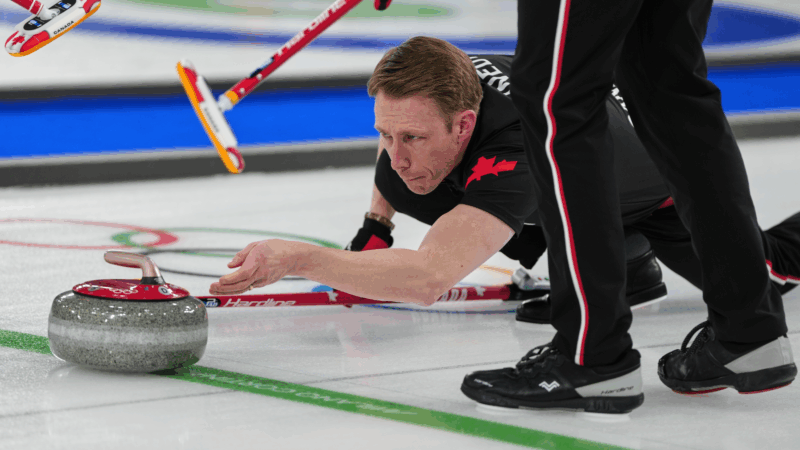
A Curling Scandal Rocks Olympic Ice
Allegations of cheating, and swearing, on the curling ice have rocked the wholesome sport after the Swedes accused the Canadians of "double touching" in a match on Friday. What happened then, and what's happened since?
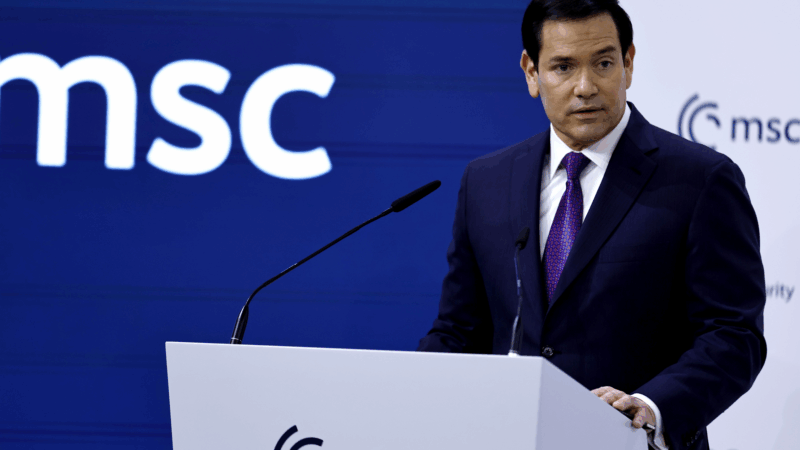
The U.S. ready to make up, Europe ready to break up in Munich
Secretary of State Marco Rubio tried to reassure Europe at the Munich Security Conference, but European leaders are skeptical.
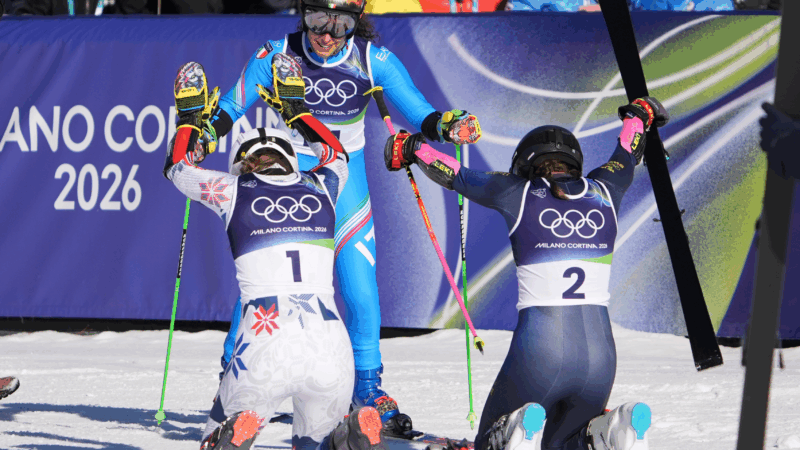
Italy’s athletes shine at the Milan Cortina Olympics
Call it homefield advantage, call it national pride. Italy's athletes are shining in the Winter Olympics underway in Milan and the Alps.

Primary care is in trouble. Doctors are banding together to increase market power
As costs increase, primary care practices are joining forces in Independent Physician Associations. The goal is to leverage better insurance contracts, while ensuring doctors still call the shots.

One Olympic sport still excludes women. This week’s viewing numbers could change that
Nordic combined is the only Olympic sport that doesn't allow women to compete, despite athletes' efforts to change that. They say their odds for 2030 hinge on people watching men's events this week.
Netflix’s ‘America’s Next Top Model’ docuseries doesn’t let Tyra Banks off easy
Netflix's new docuseries unpacks how the hit modeling show made for "good TV" for its creators and devastating consequences for its participants.
