
A walking challenge to start 2026 on your feet — and off your screens

[This piece by Manoush Zomorodi also appeared in the Body Electric newsletter. Sign up here for a biweekly guide to move more and doomscroll less.]
Like many of you, one of my New Year’s resolutions will be to take better care of my body … again. I’m not sure how many times this goal has made it onto my resolutions list — not because I fail each time but because it’s an ongoing process that I need to recommit to over and over again.
So this year, will you take the Body Electric challenge with me, perhaps for the first or second time?
Our mission? For two weeks, take a five-minute movement break every 30 minutes.
The science behind five-minute movement breaks
In January 2023, Columbia University Medical Center researchers found that walking for five minutes every 30 minutes was the most effective strategy to mitigate the harms of prolonged sitting. These short, spread-out movement breaks boosted participants’ mood and focus, while also lowering their glucose levels and blood pressure.
Our Body Electric series had thousands of listeners test out this five-minute movement strategy, and they reported higher productivity and lower fatigue. In my upcoming book, I dive deeper into the data that 20,000 of you contributed to pinpoint exactly how you made these strategies work outside the lab.
Five minutes of movement sounds simple, but it’s not easy. There’s a reason it needs some commitment and recommitment. These tips will help you get started and stick with it.
Step 1: Set a clear — and realistic — movement goal
Movement breaks fall to the wayside when our calendars fill up. So make moving a priority by building it into your schedule.
Five minutes every 30 minutes is ideal, but if that’s not realistic for you, aim for every hour or every two hours.
Step 2: Track your progress and celebrate your success, even when it’s imperfect
We created this document to help you track your breaks, but you can tally your movement in a journal, on sticky notes or in any way that keeps you motivated.

Keeping track of your movement breaks isn’t about doing the challenge perfectly. We recommend tracking your breaks because it will help you check in with how the movement affects your mood and energy level. Remember: Any amount of movement is better than none! So be proud of yourself for trying, even on your slower days.
Step 3: Pace yourself
Slow and steady wins the race. It can feel counterintuitive to split your movement breaks into small chunks, instead of getting all your steps at once. But studies show that one longer workout can’t offset the harm of prolonged sitting as effectively as short bursts of movement throughout the day.
Step 4: When you get bored, shake up your movement breaks
There’s no need to march in place or walk the same loop over and over for every movement break.
Get creative! We’ve gotten letters from folks who turned their five-minute break into a solo dance party. Our guest Kelly Corrigan says she likes to use her five minutes of movement to spruce up her workspace and do a quick chore.

And if standing isn’t an option, check out these chair-based exercises.
Step 5: Embrace the good, the bad and the embarrassing of movement breaks
Sometimes you’ll be in the mood to get up and move, and sometimes YOU WILL NOT.
But this challenge is about taking care of your body even when it’s inconvenient or awkward.
SHARE YOUR THOUGHTS: If you have any tips for overcoming the (slightly embarrassing) challenge of taking movement breaks in public spaces, we’d love to hear from you! Send us a video or an email to [email protected].
If you feel awkward taking a movement break around your co-workers, invite them to join you! Once you explain the benefits of movement, you might be able to get a group to move together. This brings us to Step 6 …
Step 6: Find an accountability buddy
Movement is more fun with others! And accountability buddies can help you stick to your goals. You don’t even have to be together in person. Send a long-distance friend pictures from your movement break and ask that friend to send you some too, so that you can keep each other inspired!
Need to recruit an accountability buddy? Send this article to a friend and see whether they’ll accept your challenge.
Tell us how it goes!
Send us a video of yourself or email us at [email protected] to tell us about your movement breaks! Share your thoughts on how to keep moving.
Sign up for our Body Electric newsletter, or share it with a friend.
Read more details about the findings from our research study with Columbia University Medical Center here.
Didn’t hear the Body Electric series? Listen on Apple Podcasts, Spotify or the NPR App.
This story was written by Manoush Zomorodi and Fiona Geiran and edited by Sanaz Meshkinpour.

Bill making the Public Service Commission an appointed board is dead for the session
Usually when discussing legislative action, the focus is on what's moving forward. But plenty of bills in a legislature stall or even die. Leaders in the Alabama legislature say a bill involving the Public Service Commission is dead for the session. We get details on that from Todd Stacy, host of Capitol Journal on Alabama Public Television.

Baz Luhrmann will make you fall in love with Elvis Presley
The new movie is made up of footage originally shot in the early 1970s, which Luhrmann found in storage in a Kansas salt mine.
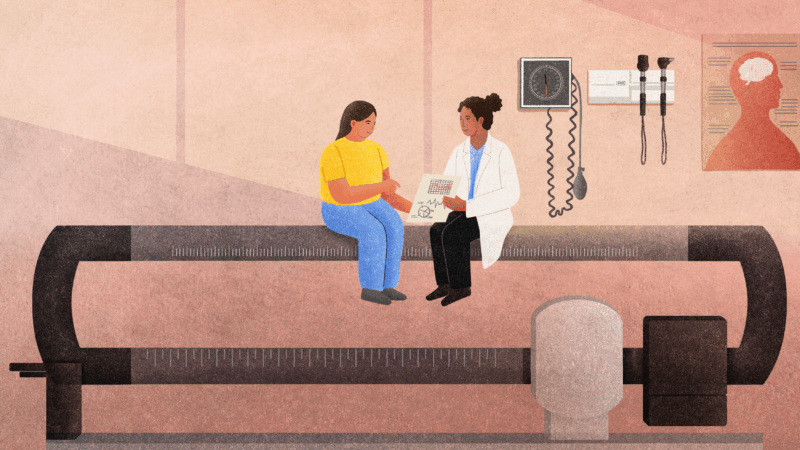
My doctor keeps focusing on my weight. What other health metrics matter more?
Our Real Talk with a Doc columnist explains how to push back if your doctor's obsessed with weight loss. And what other health metrics matter more instead.

Forget the State of the Union. What’s the state of your quiz score?
What's the state of your union, quiz-wise? Find out!

SNL mocked her as a ‘scary mom.’ In the Senate, Katie Britt is an emerging dealmaker
Sen. Katie Britt, Republican of Alabama, is a budding bipartisan dealmaker. Her latest assignment: helping negotiate changes to immigration enforcement tactics.

As the U.S. celebrates its 250th birthday, many Latinos question whether they belong
Many U.S.-born Latinos feel afraid and anxious amid the political rhetoric. Still, others wouldn't miss celebrating their country
