
A team of midlife cheerleaders in Ukraine refuses to let war defeat them
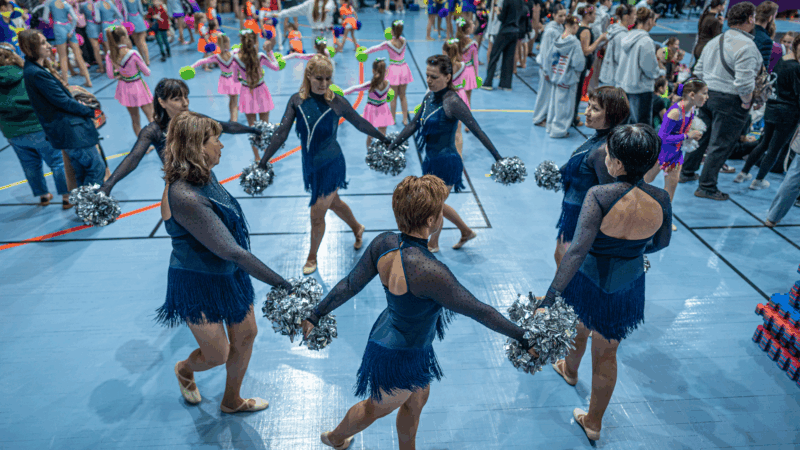
KHARKIV, Ukraine — In a mirrored basement studio in this front-line city, seven women are practicing jumping splits.
They’re in their 50s and 60s — some have grandchildren. They wear matching Ukraine T-shirts and shake silvery pompoms to the beat of “She’s A Lady” by Tom Jones.
This is Sunrise, a competitive cheerleading squad. They have embraced this feel-good American sport as a way to cope with extreme stress and anxiety during four years of Russia’s all-out war on Ukraine.
“We train no matter what,” says Iryna Nesterenko, the squad’s captain. “When it’s dark, and we’re walking through the street while everything is burning. When there’s no light. I tell my girls: ‘We are the light.'”
Nesterenko, the squad’s captain, explains why they chose Sunrise as their name.
“We used to be fearful of the sunrise,” she says. “The war began at dawn. We were often bombed at dawn. But I did not want us to be afraid. I wanted us to find a way to rejoice.”

Since Ukraine became a modern independent state in 1991, after the fall of the Soviet Union, it has embraced American culture. Cheerleading began its rise 20 years ago and has surged in popularity since the full-scale war, says Andriy Bolyak, president of the Cheerleading and Cheer Sport Federation of Ukraine.
He says many squads fled the country after the 2022 Russian invasion.
“As of today, though, we are back to prewar numbers. That’s because we have a lot of new teams,” he says.
Bolyak attributes the rise in cheerleading’s popularity to Ukrainians seeking emotional respite from wartime stress and terror. Only 4% of Ukrainians describe their mental health as good, according to a January survey by Helsi, the largest medical information system in Ukraine.
Bolyak says that though children make up most of the teams, several new ones are composed of women over 50, including Nice Ladies, a team profiled in a 2024 documentary. Like Sunrise, Nice Ladies also hail from Kharkiv, Ukraine’s second-largest city, where Bolyak says some of the first national cheerleading competitions were held.

(Anton Shtuka for NPR)
The city is just 20 miles from the Russian border.
“We were bombed every night”
Nesterenko has lived in Kharkiv nearly all her life. She’s 63, a lifelong athlete who used to be a competitive gymnast.
She meets NPR at a Kharkiv tea house, along with two other Sunrise cheerleaders and the team choreographer.
“How can you distract yourself during a war?” Nesterenko asks. “How about exercising with pompoms?”
She sounds lighthearted but the truth is more painful. The war has traumatized every member of the team.
Nesterenko recalls the terrifying first days of the Russian invasion in February 2022. Her home was bombed.
“We hid in the basement for five days,” she says. “Then our food ran out, our cat food ran out, everything ran out.”
She and her husband grabbed their cats and drove west. When they returned in 2023, after Ukrainian troops drove Russian forces out of the Kharkiv region, the city was no longer under imminent threat of occupation. Russia, however, was still constantly attacking.
Nesterenko’s friend Inna Skryl, a chemistry teacher, told her the strikes came like clockwork.
“We were bombed every night at the same time,” Skryl says. “We huddled in the hallways. That pushed me into depression.”
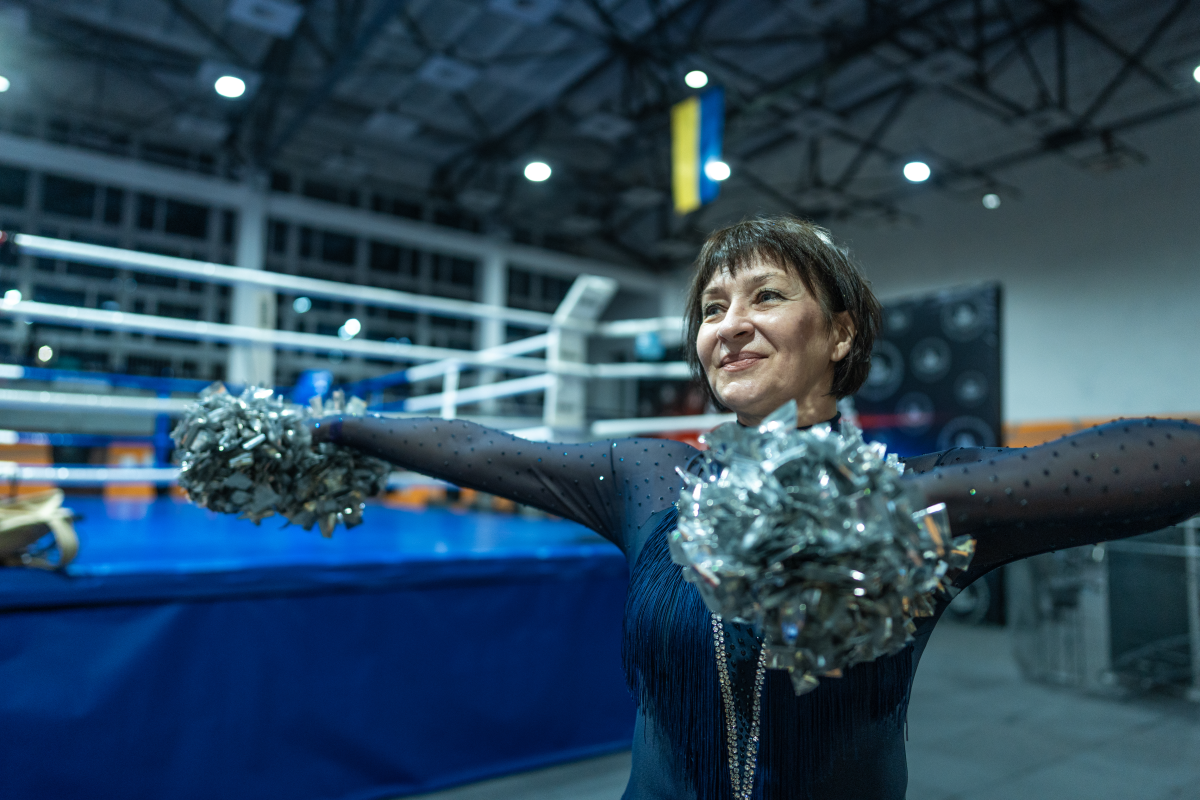
The two friends soon realized everyone in their circle was struggling with extreme stress. Nesterenko saw no end to it.
“You think, tomorrow the war will be over, or in a month, or soon but no no no, we are living with this war.” she says. “So we decided to stop waiting and start living.”
“We will heal you”
In 2024, Nesterenko brought pom-poms to an aerobics class she was teaching to friends. Something clicked.
“We moved as one, like a united Ukraine, everything synchronized,” she says. “And suddenly cheerleading was the only choice.”
Cheerleading became more than a wartime sport to distract Nesterenko and her friends from the war. The team’s first name was Best Friends, Nesterenko says, because the women lifted each other up, sometimes literally.
Halyna Plakhuta, a 63-year-old economist, had been a full-time caretaker during the war and had grown physically fragile. She told Nesterenko she had a bad arm and shaky knees and would make a lousy cheerleader.
“I said, look, is there anything you can do about that?” Plakhuta says. “And she made a star out of me.”

Plakhuta says she can now jump high enough now to impress her young granddaughter, who made good-luck amulets for the team when they competed in the European championships.
Every Monday, Plakhuta joins the other cheerleaders in the basement studio. They include a doctor, an accountant and a beautician who makes the team’s costumes.
Natalia Pivovarova is a 59-year-old accountant. She cared for her bedridden mother as Russian attacks blew out their windows.
Cheerleading, she says, has been the best therapy.
“My friends abroad call me, saying they’re depressed,” she says. “And I say, come to Kharkiv. We will heal you.”
“Our best life”
During a recent rehearsal, the cheerleaders line up behind Nesterenko, who cues a medley for their routine. The first song is by ABBA. The women smile and step forward.
“We are living our best life,” Nesterenko declares. “We may train underground, we may huddle in shelters from bombs, but no matter what, this is going to be our best life.”
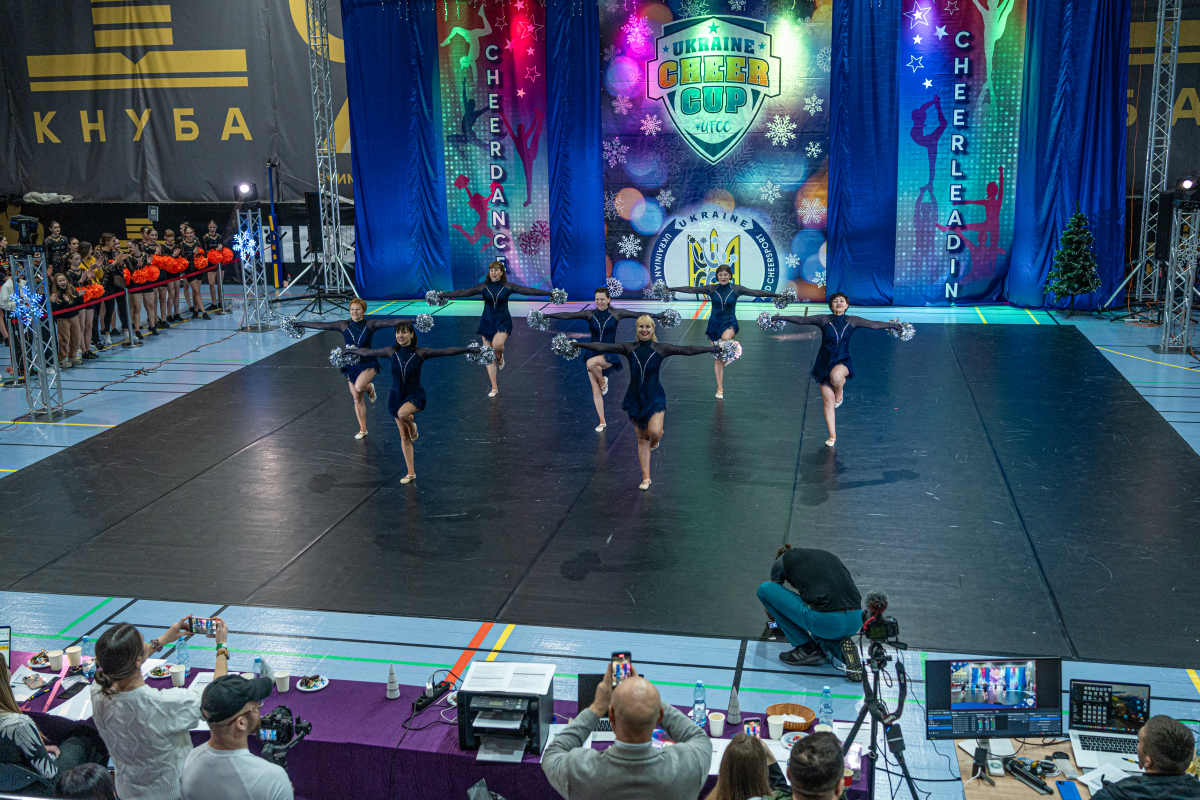
A few weeks later, the Sunrise cheerleaders arrive in the capital, Kyiv, for a national competition.
They wear navy-blue leotards and rub glitter on their faces.
“We always compete to win,” Nesterenko says. “But really, we have already won.”
It’s a bit of a joke, since Sunrise is the only team in the over-25 age group competing today. Nesterenko, however, is talking about a symbolic victory, one that helped a group of friends in one of Ukraine’s most bombed cities to flex optimism like a muscle.
“Look around,” she says. “Listen to all that joy.”
The auditorium is filled with cheerleaders who are all decades younger, some as young as the Sunrise squad’s own grandchildren. The cheerleaders shriek and clap loudly as the women of Sunrise run to center stage, ready to shine.
Transcript:
AYESHA RASCOE, HOST:
Nearly four years of all-out war has left most Ukrainians exhausted, anxious and depressed. As an escape, some are turning to a feel-good American sport, and even grandmothers are signing up. NPR’s Joanna Kakissis reports from Kharkiv, a frontline city in Ukraine’s northeast.
(SOUNDBITE OF ARCHIVED RECORDING)
IRYNA NESTERENKO: (Non-English language spoken).
JOANNA KAKISSIS, BYLINE: Seven women are practicing jumping splits in a mirrored rehearsal studio that’s underground to protect against Russian attacks. The women wear matching black Ukraine T-shirts. They shake silvery pompoms to the beat of “She’s A Lady” by Tom Jones. They’re in their 50s and 60s. Some have grandchildren.
(SOUNDBITE OF ARCHIVED RECORDING)
NESTERENKO: (Non-English language spoken).
KAKISSIS: And during the war, they have formed a competitive cheerleading team. Iryna Nesterenko (ph) is the captain. She shouts out directions…
NESTERENKO: (Non-English language spoken).
KAKISSIS: …As her teammates whoop and clap.
(SOUNDBITE OF ARCHIVED RECORDING)
UNIDENTIFIED PEOPLE: Whoo.
KAKISSIS: Later, over tea at a restaurant in Kharkiv, she tells me the team is called Sunrise and explains why.
NESTERENKO: (Non-English language spoken).
KAKISSIS: “We used to be fearful of the sunrise,” she says, “because the war began at dawn. We were often bombed at dawn, but I do not want us to be afraid. I want us to find a way to rejoice.”
Nesterenko is 63, a lifelong athlete who used to be a gymnast. When Russia launched its full-scale invasion four years ago this month, her home was bombed. Kharkiv is just 20 miles from the Russian border.
NESTERENKO: (Non-English language spoken).
KAKISSIS: “We hid in the basement for five days,” she says. “Then our food ran out, our cat food ran out, everything ran out.”
She and her husband took their cats and drove west. When they returned home in 2023, Kharkiv was no longer under imminent threat of occupation, but Russia was still attacking it. Nesterenko’s friend Inna Skrylae (ph), a chemistry teacher, told her the Russian strikes came like clockwork.
INNA SKRYLAE: (Non-English language spoken).
KAKISSIS: “We were hit every night at the same time,” Skrylae says. “We huddled in the hallways that pushed me into depression.”
As the war dragged on, Nesterenko noticed everyone she knew was struggling with extreme stress and anxiety.
NESTERENKO: (Non-English language spoken).
KAKISSIS: She says, “You used to think that tomorrow the war will be over, in a month or soon, but no, no, no.”
NESTERENKO: (Non-English language spoken).
KAKISSIS: “We are living with this war.”
In 2024, Nesterenko brought pompoms to an aerobics class she was teaching to friends. It was just for fun, but something clicked.
NESTERENKO: (Non-English language spoken).
KAKISSIS: “We moved as one,” she says, “like a United Ukraine. Everything was synchronized.”
NESTERENKO: (Non-English language spoken).
KAKISSIS: “So there was no other choice,” she says, “only cheerleading.”
It’s a feel-good sport born in the United States, but like many things American, cheerleading has been popular in Ukraine for years. Andrii Boliak (ph), president of the Cheerleading and Cheersport Federation of Ukraine, says many squads fled when Russia invaded.
ANDRII BOLIAK: (Non-English language spoken).
KAKISSIS: “But today,” he says, “we are back to pre-war numbers. We have a lot of new teams. It’s good for mental health. Most teams,” he says, “are for children, but several new ones include women over 50.”
(CROSSTALK)
KAKISSIS: And these teams are good, he says. The Sunrise cheerleaders have competed in European championships. Halyna Plakhuta (ph), a 63-year-old economist and Sunrise team member, says her granddaughter is proud.
HALYNA PLAKHUTA: (Non-English language spoken).
KAKISSIS: “She even made some amulets for us,” Plakhuta says, “so we would always have victory and happiness.”
(SOUNDBITE OF ARCHIVED RECORDING)
UNIDENTIFIED PERSON #1: (Non-English language spoken).
UNIDENTIFIED PERSON #2: (Laughter).
KAKISSIS: Plakhuta joins the other cheerleaders in the basement studio. They include a doctor, a music teacher and a beautician who makes the team’s costumes. Natalia Pivovarova (ph) is a 59-year-old accountant. She cared for her bedridden mother as Russian attacks blew out the windows in her home. Cheerleading, she says, saved her sanity.
NATALIA PIVOVAROVA: (Non-English language spoken).
KAKISSIS: “My girlfriends living abroad call me and say they’re depressed,” she says, “and I say, come back to Kharkiv. We will heal you.”
PIVOVAROVA: (Non-English language spoken).
(SOUNDBITE OF MUSIC)
KAKISSIS: The cheerleaders line up behind Iryna Nesterenko to practice their competition routine. She cues a music medley that starts with an ABBA song.
NESTERENKO: (Non-English language spoken).
KAKISSIS: “We are living our best life,” Nesterenko says. “We may train underground, we may huddle in shelters from bombs, but no matter what, this will be our best life.”
(CHEERING)
KAKISSIS: A few weeks later, the Sunrise cheerleaders are competing in Ukraine’s capital, Kyiv. They wear navy blue leotards and rub glitter on their faces.
(SOUNDBITE OF ARCHIVED RECORDING)
UNIDENTIFIED CROWD: (Chanting in non-English language).
KAKISSIS: The auditorium is packed with cheerleaders all decades younger.
(CHEERING)
KAKISSIS: And they are shrieking with joy as the Sunrise squad runs to center stage, about to shine.
(SOUNDBITE OF SONG, “MONEY, MONEY, MONEY”)
ABBA: (Singing) Money, money, money.
(CHEERING)
KAKISSIS: Joanna Kakissis, NPR News, reporting from Kharkiv and Kyiv, Ukraine.
(SOUNDBITE OF TOM JONES SONG, “SHE’S A LADY”)

Bill making the Public Service Commission an appointed board is dead for the session
Usually when discussing legislative action, the focus is on what's moving forward. But plenty of bills in a legislature stall or even die. Leaders in the Alabama legislature say a bill involving the Public Service Commission is dead for the session. We get details on that from Todd Stacy, host of Capitol Journal on Alabama Public Television.

My doctor keeps focusing on my weight. What other health metrics matter more?
Our Real Talk with a Doc columnist explains how to push back if your doctor's obsessed with weight loss. And what other health metrics matter more instead.

Baz Luhrmann will make you fall in love with Elvis Presley
The new movie is made up of footage originally shot in the early 1970s, which Luhrmann found in storage in a Kansas salt mine.

Forget the State of the Union. What’s the state of your quiz score?
What's the state of your union, quiz-wise? Find out!

SNL mocked her as a ‘scary mom.’ In the Senate, Katie Britt is an emerging dealmaker
Sen. Katie Britt, Republican of Alabama, is a budding bipartisan dealmaker. Her latest assignment: helping negotiate changes to immigration enforcement tactics.
As the U.S. celebrates its 250th birthday, many Latinos question whether they belong
Many U.S.-born Latinos feel afraid and anxious amid the political rhetoric. Still, others wouldn't miss celebrating their country
