
A tale of two U.S. interventions and why Venezuela is not Panama 2.0
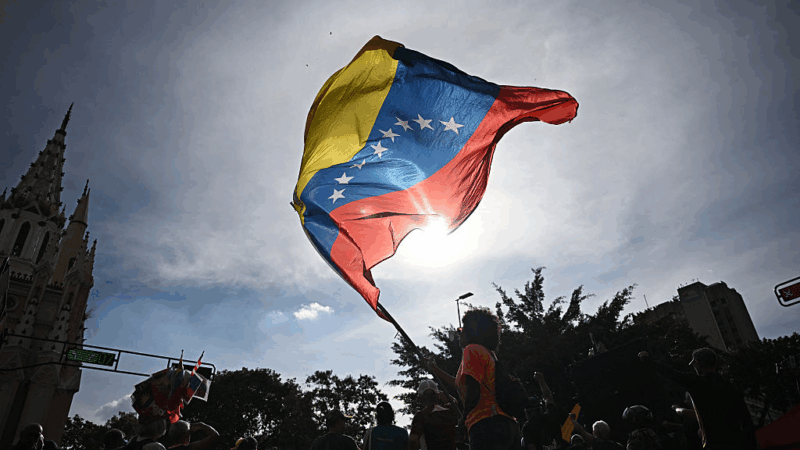
WASHINGTON — It is a case of geopolitical déjà vu. On the same day thirty-six years apart, U.S. forces seized a deeply unpopular, Latin American dictator and brought him to the United States to face drug charges.
In 1990, soldiers sent by President George H.W. Bush detained Panamanian President Manuel Noriega. On Saturday, it was troops sent by President Trump who captured Venezuelan President Nicolás Maduro.
In both instances, analysts said the United States was using force to secure strategic assets in the Western hemisphere, namely the Panama Canal and Venezuela’s oil fields.
“We’ll be selling oil,” President Trump said at a news conference Saturday, “probably in much larger doses because they couldn’t produce very much because their infrastructure was so bad.”
Despite some similarities, analysts and former diplomats also see big differences between the interventions in Panama and Venezuela and worry about where the latter could be headed.
Panama is widely seen as a bright spot in a history of U.S. operations in Latin America that have included CIA-backed coups in Guatemala and Chile. John Feeley, a career diplomat who served as U.S. ambassador to Panama during the second Obama administration, said the U.S. invasion in 1989 had a positive impact on the country.
“The major result was a democratic system with self-determination, peaceful transfer of governance, and an economy that actually took off and did very, very well,” said Feeley.
One reason the Panama operation worked, said Feeley, is because a political opposition there was ready to take over and American troops — thousands of whom were already stationed in the canal zone — were quickly in and out of Panama-proper.
By contrast, President Trump declared the United States would “run” Venezuela for now in advance of what he called a “safe, proper and judicious transition.” Trump said Venezuela’s Vice-President, Delcy Rodríguez, had been sworn in as the new president.
“She’s essentially willing to do what we think is necessary to make Venezuela great again,” Trump told reporters.
But speaking to Venezuelans in a televised address, Rodríguez pushed back against Trump, saying what the U.S. had done to her homeland was “a barbarity.”
Trump seemed to dismiss the notion that Venezuelan opposition leader and 2025 Nobel Peace Prize winner María Corina Machado could lead the country, saying she didn’t have enough support or respect inside Venezuela.
Feeley called Trump’s statement about Machado the “saddest” of his press conference.
“Maduro is not even remotely popular, and he stole the (2024) election,” said Feeley, “so there seems to be popular will to get rid of him. What there does not seem to be, in my view so far, is any kind of transition plan.”
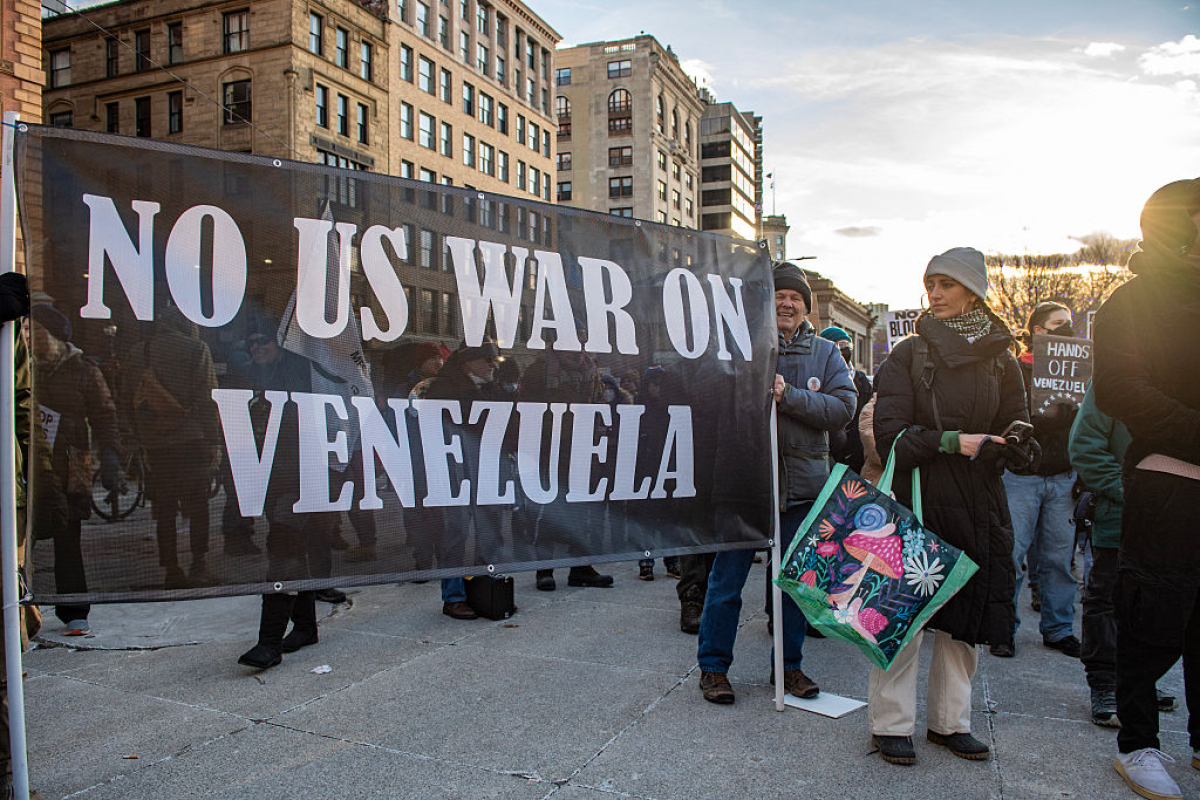
The failure to map out a transition so far also worries Douglas Farah, the president of IBI Consultants who spent a decade advising the Pentagon. In 2019, Farah worked with Trump administration officials running war games to determine what a post-Maduro Venezuela might look like. The group looked at several scenarios.
“The conclusion of every one was that unless you had some sort of managed transition from the regime to a democratic or some semi-functional democratic system, you would have absolute chaos for a long period of time,” Farah said.
That risks a power vacuum that Farah said various armed groups — including guerillas from Colombia — would swiftly move to fill, leading to more violence.
During his news conference, President Trump declined to rule out deploying American troops to Venezuelan soil.
“We’re not afraid of boots on the ground,” the president told reporters.
But Farah said occupying Venezuela would be far more difficult than the intervention in Panama. Venezuela has seven times as many people and a land mass twelve times larger.
“In Venezuela, you have mountains, you have jungles, you have ocean fronts,” Farah said. “How do we talk about taking over a country when we have no functional presence there?”
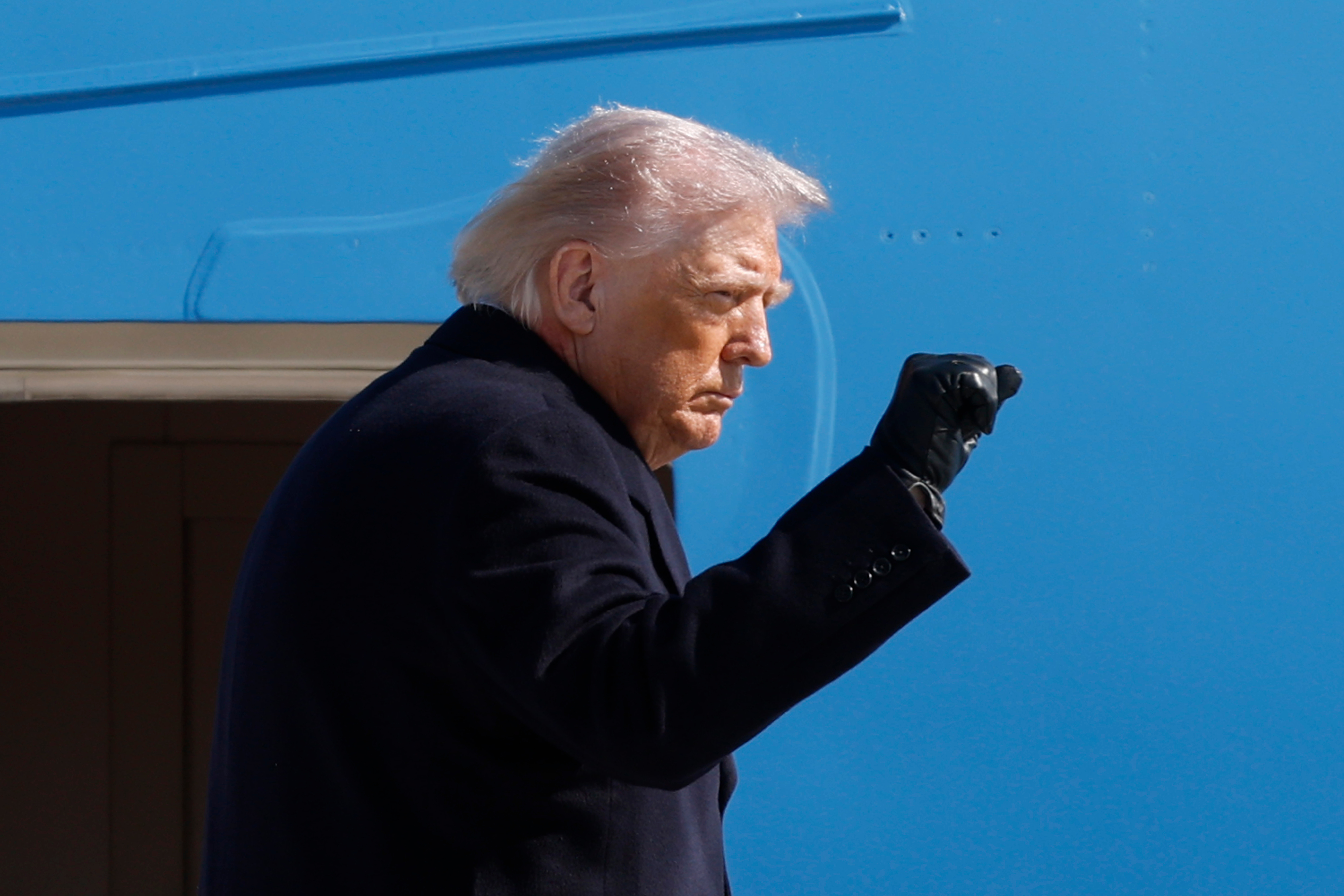
Trump says he is ‘not happy’ with the Iran nuclear talks but indicates he’ll give them more time
U.S. President Donald Trump said Friday he's "not happy" with the latest talks over Iran's nuclear program but indicated he would give negotiators more time to reach a deal to avert another war in the Middle East.
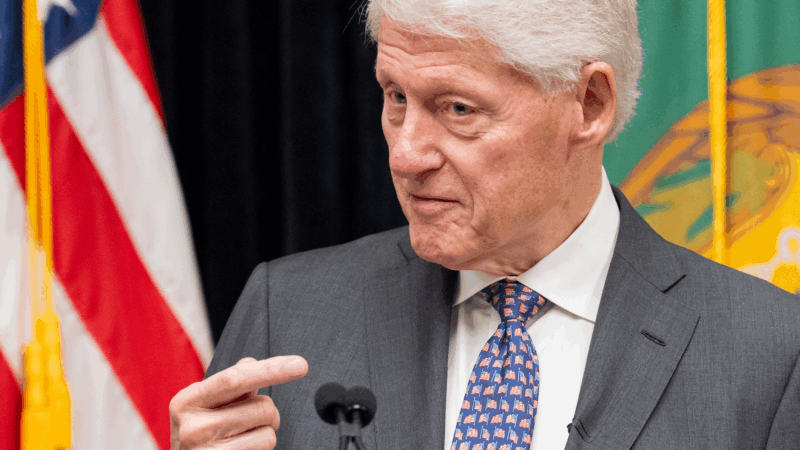
Bill Clinton says he ‘did nothing wrong’ with Epstein as he faced grilling over their relationship
Former President Bill Clinton told members of Congress on Friday that he "did nothing wrong" in his relationship with Jeffrey Epstein and saw no signs of Epstein's sexual abuse as he faced hours of grilling from lawmakers over his connections to the disgraced financier from more than two decades ago.
Pentagon puts Scouts ‘on notice’ over DEI and girl-centered policies
After threatening to sever ties with the organization formerly known as the Boy Scouts, Defense Secretary Hegseth announced a 6-month reprieve
President Trump bans Anthropic from use in government systems
Trump called the AI lab a "RADICAL LEFT, WOKE COMPANY" in a social media post. The Pentagon also ordered all military contractors to stop doing business with Anthropic.
HUD proposes time limits and work requirements for rental aid
The rule would allow housing agencies and landlords to impose such requirements "to encourage self-sufficiency." Critics say most who can work already do, but their wages are low.
Paramount and Warner Bros’ deal is about merging studios, and a whole lot more
The nearly $111 billion marriage would unite Paramount and Warner film studios, streamers and television properties — including CNN — under the control of the wealthy Ellison family.
