
A radio station in Amsterdam is a lifeline for Sudan. After USAID cuts, it’s faltering
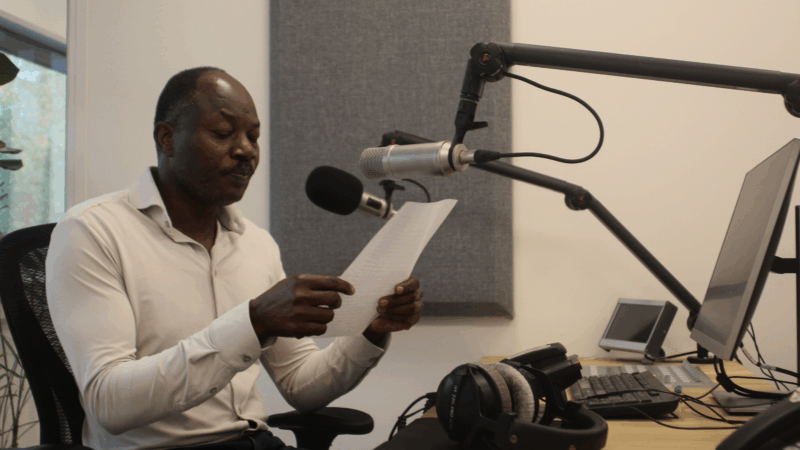
AMSTERDAM — When Radio Dabanga abruptly cut its morning broadcast earlier this year because of budget shortfalls, the station’s editor-in-chief, Kamal Elsadig, knew the consequences would go far beyond the walls of the modest office in Amsterdam.
Messages began pouring in almost immediately from Sudanese listeners who rely on the exile-run station as their only reliable link to the outside world.
“We don’t know what is happening to our families and we depend very much on Radio Dabanga,” one listener wrote to the station from a refugee camp in eastern Chad. Another in war-torn Sudan made a plea: “We hope that the morning service is resumed soon. It is important to us in Northern Sudan.”
Radio Dabanga is the last independent Sudanese news station, broadcasting from exile some 3,000 miles away in Amsterdam since 2008. For millions of Sudanese living through a deadly civil war, it is a rare source of verified information. But its future is in doubt.
Early this year, President Trump slashed most U.S. foreign assistance programs. As U.S. aid has made up more than half of the radio’s budget of almost $3 million, the radio had to cut staff, freelancers and even its morning news service for a short time.
“They saying, what’s going on? We didn’t hear Dabanga today,” Elsadig recalled. “Is there any problem happening? Please tell us, because this is the only way we get information.”
A country in the dark
Sudan’s war has created one of the world’s greatest humanitarian crises. In 2023, fighting erupted between the Sudanese army and the paramilitary group Rapid Support Forces. Since then, the fighting has killed 150,000 people and forced about 14 million Sudanese to leave their homes, according to the Norwegian Refugee Council. Statistics are hard to obtain as fighting continues and severe hunger grips part of the country.
And amid the crisis, access to information is scarce. According to a report from Free Press Unlimited, an Amsterdam-based international press freedom organization, about 90% of media infrastructure has been destroyed in Sudan. More than 400 journalists have fled the country. And according to the Committee to Protect Journalists, more than a dozen journalists and media workers have been killed or kidnapped. “So the Sudan is become completely in a darkness of access to information,” Elsadig said.
From Amsterdam, the journalists at Radio Dabanga try to shed some light on the dire situation. They report on where fighting has erupted, on disease outbreaks in refugee camps, and the aftermath of recent atrocities, such as those in the Sudanese city of el-Fasher.
“Radio Dabanga has become a lifeline for all Sudanese,” Elsadig said.
Radio in exile

The soft-spoken Elsadig, who is in his early 60s, came to the Netherlands in 2008 from el-Fasher to found Radio Dabanga as an independent radio station for Darfur, an arid region in western Sudan.
Darfur was at the epicenter of a conflict between the government-backed Arab Janjaweed militia and African ethnic groups in 2003 and 2004. The violence led to genocide, according to the U.S. government and human rights groups; in October, the International Criminal Court in the Hague convicted Ali Muhammad Ali Abd–Al-Rahman, a Janjaweed leader, of war crimes and crimes against humanity, two decades after the atrocities.
Many Sudan watchers fear history is repeating itself. The Rapid Support Forces, which evolved directly from the Janjaweed, now stand accused of mass killing, sexual violence and starvation sieges in communities across western and central Sudan.
With the war unfolding in an environment where information is hard to come by, Radio Dabanga’s survival appears all the more critical to its listeners.
Raising money far from home

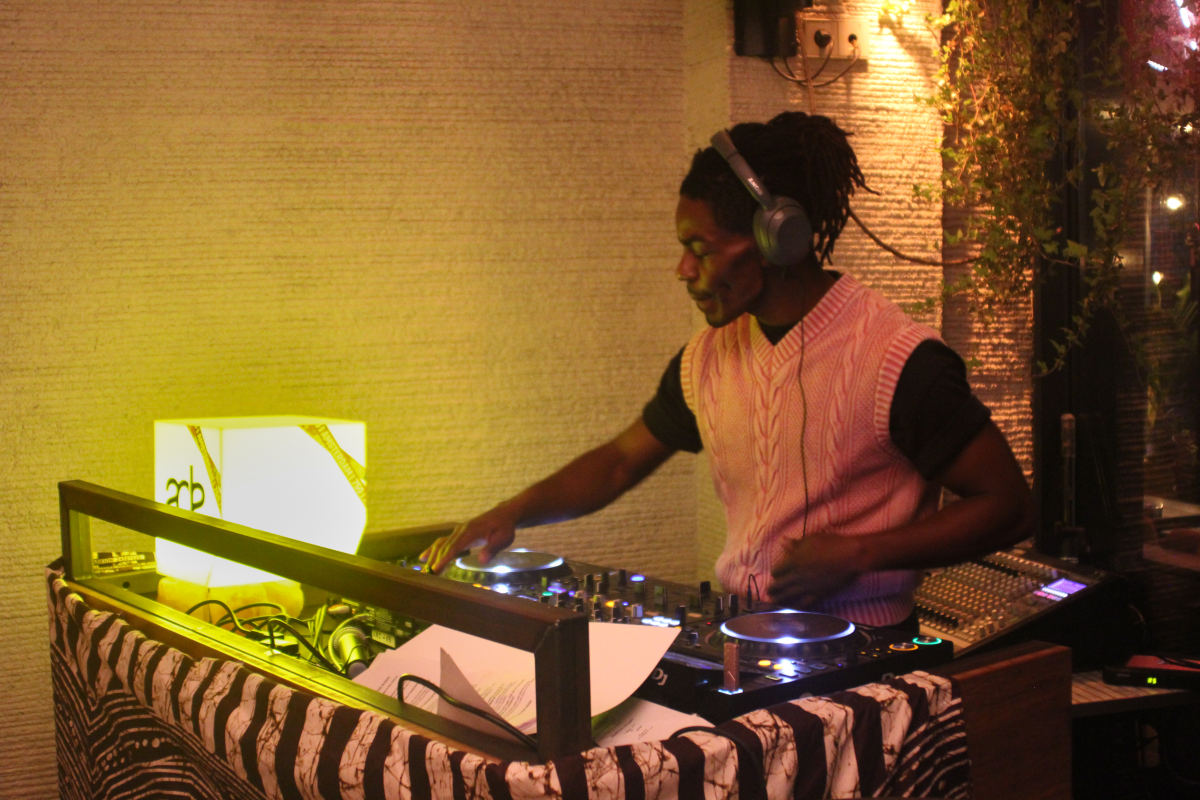
On a recent evening in the industrial northern part of Amsterdam, the contrast was stark. The air was filled with laughter, chatter and techno music. It was the first day of Amsterdam Dance Event, or ADE: one of the world’s largest annual electronic music events, for which thousands of people traveled to the city, slaloming their bicycles to their various destinations.
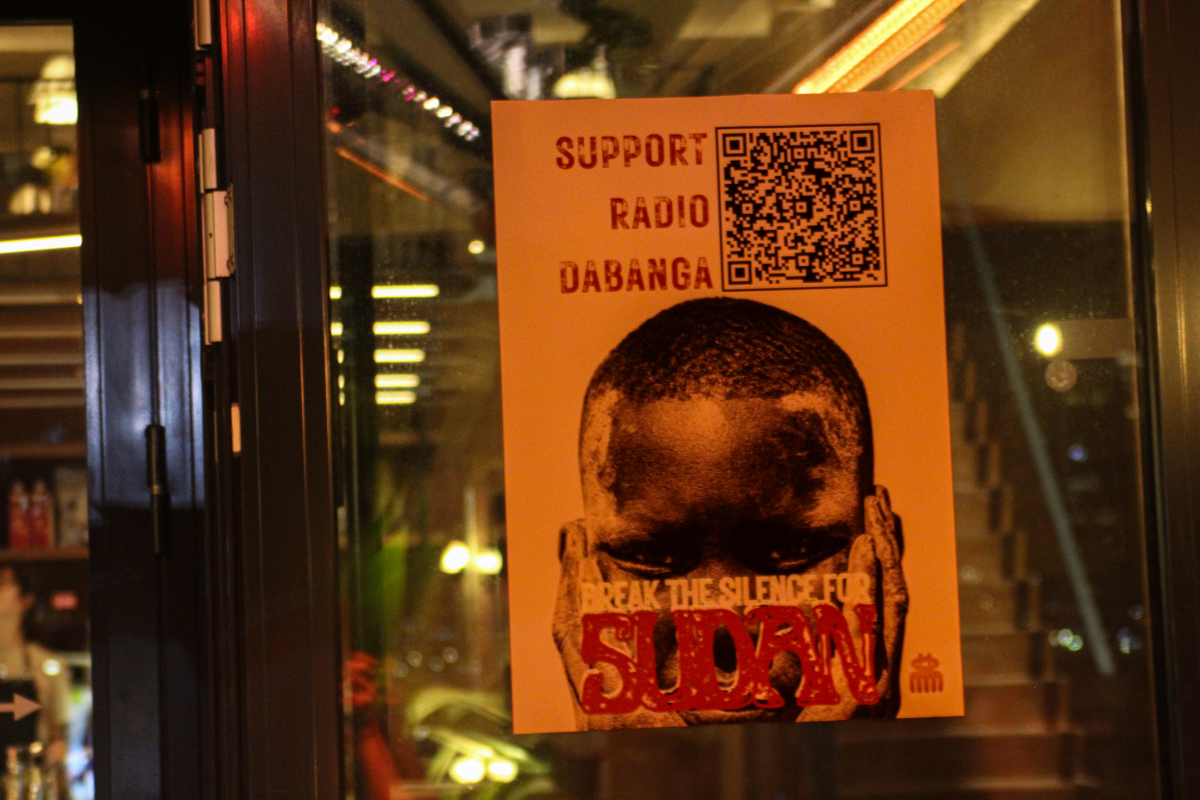
But in a nearby river-side café Jean-Pierre Fisher, 32, hosted a fundraiser for Radio Dabanga. Fisher is a co-founder of Marimba Amsterdam, an organization that focuses on the city’s African diaspora. “Each ADE, the first day of the ADE, we choose a subject,” Fisher said. “Something that we think that awareness needs to be created for.” This time it was Sudan.
A panel with a reporter from Radio Dabanga, activists from Amsterdam, and the co-founders of Marimba discussed the latest news from Sudan, and why it is important to keep Dabanga on air.
Among the attendees were Maaza and Amany Altareeh, Sudanese sisters who came to the Netherlands to apply for asylum three years ago. Although they both have a life and jobs here, their family remains in Sudan, increasingly cut off as communications networks collapse.
“It is really difficult to reach them because there is no internet, there are no satellites,” said Maaza Altereeh, 33. The only way to reach people in Sudan is through Starlink satellite internet, which is only possible if someone in the neighborhood happens to have one, she said.
Maaza Altareeh gets most of her news from the social media platform X. But she is never sure what is real. That is why Radio Dabanga is different, she said.
“Anytime that we see any type of news, we try to hold [onto] that,” she said. “This is still happening in Sudan: People are starving and dying and being killed, kidnapped, assaulted, all of these things. And it is important for the radio as the last stand, since there are no televisions now, there are no newspapers…”
The fundraiser gave the sisters some hope. “Honestly, I was so happy to know that there are people who are not even Sudanese who care about it, it’s very special to me,” Maaza Altareeh said. Her 27-year-old sister Amany couldn’t wait to message their father — who is still in Sudan — about the fundraiser. “Honestly, I took plenty of pictures, and I can’t wait to go and show him and be like: Look, all of this is happening, a lot of people still care.”
A few thousand dollars have been raised so far. The radio’s budget shortfall is around $1.5 million. Dabanga’s budget runs out in April. The radio station believes its online website could continue operating. But as most Sudanese listeners are dependent on the radio, editor-in-chief Elsadig said, much more is at stake than the future of the dozen journalists who work in the Amsterdam studio. Many Sudanese people may die, he said, if they lose reliable information in a time of war.
But Elsadig is determined. “We will continue fighting on this, and we will keep hoping,” he said.
Homeland Security suspends TSA PreCheck and Global Entry airport security programs
The U.S. Department of Homeland Security is suspending the TSA PreCheck and Global Entry airport security programs as a partial government shutdown continues.
FCC calls for more ‘patriotic, pro-America’ programming in runup to 250th anniversary
The "Pledge America Campaign" urges broadcasters to focus on programming that highlights "the historic accomplishments of this great nation from our founding through the Trump Administration today."

NASA’s Artemis II lunar mission may not launch in March after all
NASA says an "interrupted flow" of helium to the rocket system could require a rollback to the Vehicle Assembly Building. If it happens, NASA says the launch to the moon would be delayed until April.
Mississippi health system shuts down clinics statewide after ransomware attack
The attack was launched on Thursday and prompted hospital officials to close all of its 35 clinics across the state.
Blizzard conditions and high winds forecast for NYC, East coast
The winter storm is expected to bring blizzard conditions and possibly up to 2 feet of snow in New York City.

Norway’s Johannes Klæbo is new Winter Olympics king
Johannes Klaebo won all six cross-country skiing events at this year's Winter Olympics, the surpassing Eric Heiden's five golds in 1980.
