
A prickly Ralph Fiennes uplifts a town through music during WWI in ‘The Choral’
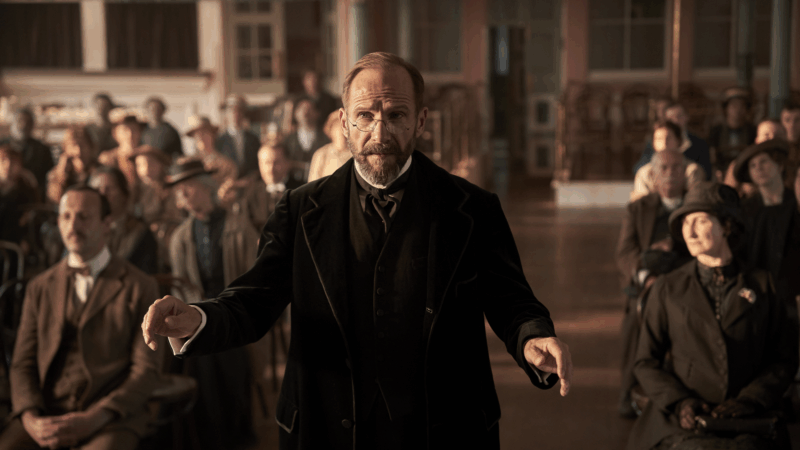
The year is 1916. The fictional northern England town of Ramsden offers such a bucolic setting in The Choral, with lush hills, singing birds and polite humor exchanged between locals that one could forget there’s a war raging on. But young men are getting conscripted, including some of the best singers from the local choir.
The choral society turns to Henry Guthrie, played by Ralph Fiennes, an uncompromising musician who’s built a career in Germany, to become their new chorus master. He recruits women and men either too young or too old to fight.
Faced with the brutality of war, the town grieves as its young men are taken to be sent to their likely deaths. What it finds in music is more than consolation, director Nicholas Hytner told NPR’s Michel Martin.
“Music is an expression of community. It’s a way to survive. But it’s also a way to insist that in spite of this terrible disaster, this catastrophe that is being visited upon them,” Hytner added. “There is an insistence that there are ways of getting to the other side without collapsing into complete despair. And I suppose that’s what music does in this film.”
World War I is well underway and in a few months, the Battle of the Somme will leave more than a million casualties across German and Allied forces, making it one of history’s bloodiest battles.

German music thus being unacceptable to the town, Guthrie trains up the choir — which evolves musically from dreadful to majestic — in performing an English work that lifts the town’s spirits. It’s Edward Elgar’s The Dream of Gerontius.
The oratorio was written for orchestra and voices. But due to wartime limited means, Guthrie arranges the piece for a string trio, choir and three soloists. He has a young wounded veteran playing the part of a man dying and journeying through purgatory, causing Elgar himself, who is played by Simon Russell Beale, to storm out of a rehearsal.
Fiennes, who’s directing his first opera early next year — Tchaikovsky’s Eugene Onegin in Paris, years after his turn playing the title role in a 1999 film — said there’s something about the collective focus of making music together that can take people to another plane.

“The music is not about words, it’s about other elements and energies running through the singers and into the audience. And there’s a mystery there,” he said, comparing it to the “endlessly fascinating and compelling” experience of creating theater.
Hytner said instinct told him this story was made for the big screen.
“It felt cinematic in structure, and it felt like the community in the town needed to be present in a way that only film can really do,” he said.
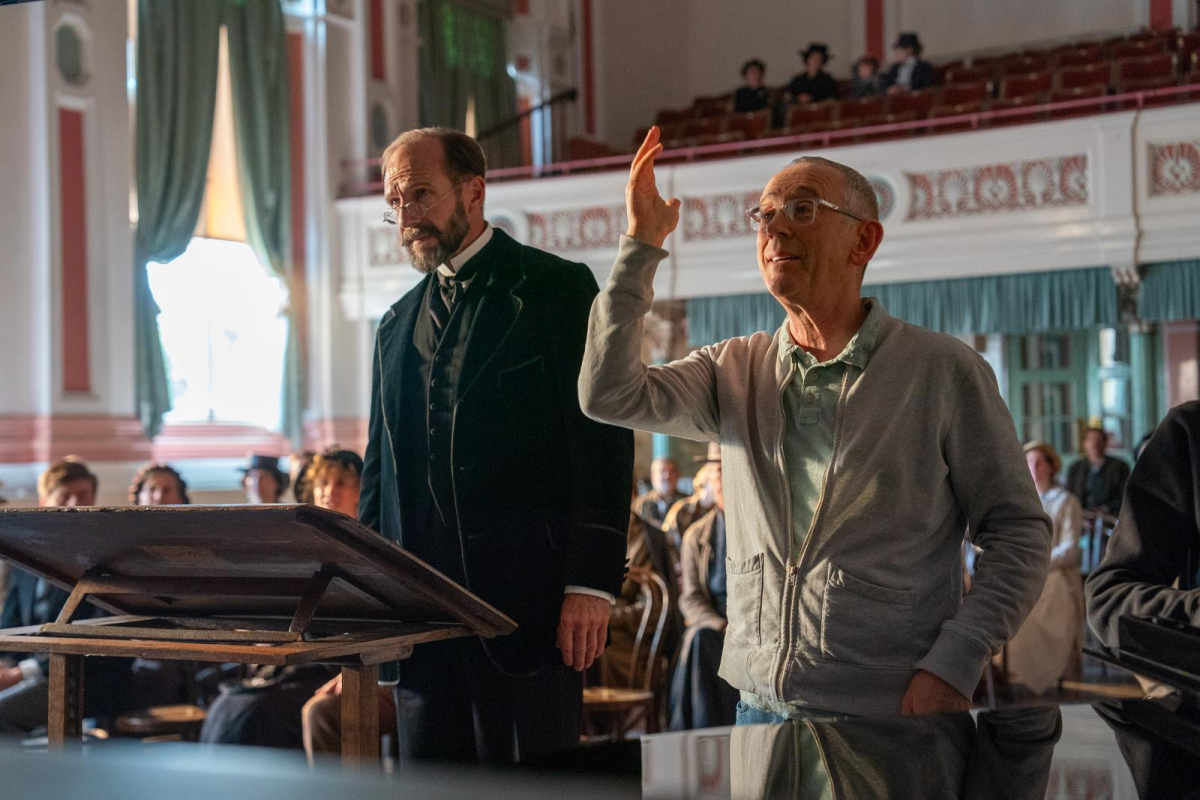
The Choral marks the fourth screen collaboration between director Hytner and writer Alan Bennett, but the first intended as a film from the start. Hytner and Bennett have worked closely since 1990, with Hytner directing all of Bennett’s plays and films, but the other joint projects began as plays.
They began developing The Choral in March 2020, just as businesses were closing their doors and theaters were going dark. It’s Hytner’s first film in a decade after The Lady in the Van and the playwright’s first original screenplay in more than 40 years after the 1984 comedy A Private Function.
“The First World War, because the scale of the slaughter was so extreme and in the end the sense of waste was so extreme, it kind of serves as a template for everything I think that artists have wanted to say since about what war does to us,” Hytner said.
The broadcast version of this story was produced by Taylor Haney.

U.S-Israeli strikes continue across Iran, Iranian drones hit Azerbaijan
The U.S. and Israel said they conducted new strikes inside Iran overnight, targeting ballistic missile launchers. Iran claimed it struck a U.S. oil tanker in the northern Persian Gulf.
In lawsuit, Minnesota accuses Trump administration of ‘weaponizing’ Medicaid funding
The federal government said the state should do more to fight fraud and is holding back funds. Minnesota officials say the attack is unfair as the state's fraud rate is well below national averages.

Wall Street is betting on tariff refunds after Supreme Court ruling
When the Supreme Court struck down many of President Trump's tariffs, it left importers wondering how long they'd have to wait to get their money back. Hedge funds are offering to help out.

Announcing the 2025 NPR College Podcast Challenge Honorable Mentions
Here are some of the best entries in NPR's 2025 College Podcast Challenge.

A run for their money: Young candidates rival older incumbents in midterm fundraising
As a growing crop of young candidates challenge longtime Democratic incumbents, some are not just breaking through in the money race, but outraising their opponents altogether.

When ICE came, Minneapolis created underground health networks. Should other cities?
The Trump administration's immigration crackdown in Minneapolis forced some families into hiding and catalyzed informal medical networks to deliver critical health care services inside homes.
