
A major census test begins recruiting workers as some warn about delays
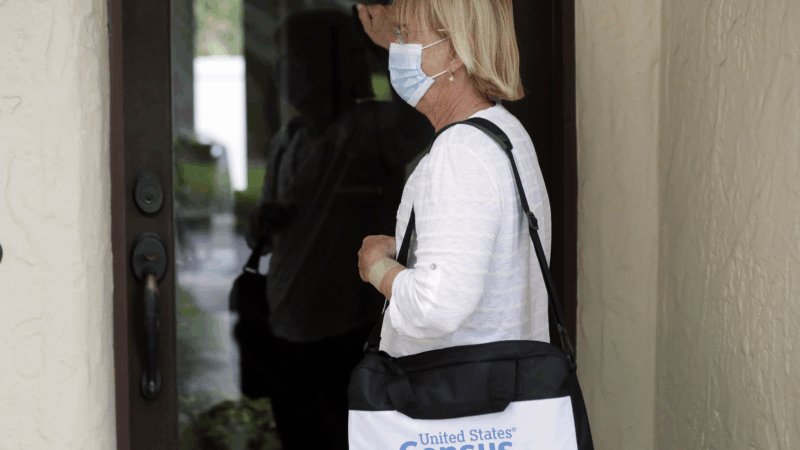
The next U.S. census isn’t scheduled to be taken until 2030, but the federal government says help is wanted well before then in six states for the national head count’s major field test.
Recruiting to hire about 1,500 door knockers and other temporary workers for the “2026 Census Test” starts Monday in parts of Alabama, Arizona, Colorado, North Carolina, South Carolina and Texas, the Census Bureau announced on its website. The agency says it received a temporary exemption from President Trump’s freeze on hiring federal civilian workers.
The census test is supposed to help the bureau develop better ways of getting complete and accurate population counts and demographic data, especially of historically undercounted populations such as children under the age of 5, people of color and renters.
Some people living outside of the test sites may also receive invitations in the mail to participate starting in March 2026 as part of what the bureau calls a “nationally representative sample of households.”
While the ongoing federal shutdown has put a halt to work on new government statistics, test preparations have continued because Commerce Department officials supervising the bureau have deemed it a “mission critical priority” ahead of the constitutionally required tally in 2030.
Last month, however, the Commerce Department inspector general’s office raised concerns that the bureau may not be able to recruit enough workers for the test. Uncertain funding from Congress and Trump’s hiring freeze led to the bureau putting off finalizing a staffing plan, an audit by the inspector general found.
At a September hearing on Capitol Hill, Democratic Sen. Gary Peters of Michigan flagged that the bureau’s hiring for the test is “behind the curve of what we’ve seen in the past.”
“The Census Bureau has refused to provide updates to me on the status of preparation for this test,” added Peters, the top Democrat overseeing the bureau on the Senate Homeland Security and Governmental Affairs Committee.
The bureau’s public information office did not respond to NPR’s requests for comment.
Monday’s announcement from the bureau also comes after the agency made the rare move of withdrawing a public update on the test that was set to be published in the Federal Register. The since-removed version of the notice said the bureau plans to try using U.S. Postal Service mail carriers to conduct census interviews at two census test sites, while reducing its estimate of test participants by about 30% and scaling back plans for counting people in group-living quarters such as college dorms.
“The whole operation is very complex,” says Allison Plyer, a former adviser to the bureau, who now co-chairs the Census Quality Reinforcement Task Force at the National Conference on Citizenship. “They need to be able to test a lot of these procedures, and they haven’t gotten the budget increases that they would need and they normally get at this point in the 10-year cycle. So there’s a lot of concern and also a lot of mystery. We’re just not seeing the kind of transparency about how they’re going to do this work that we have in previous decades.”
Local officials at two of the six census test sites, which were announced last year, told NPR they have also been in the dark. The bureau had said efforts to raise “awareness in the test sites about the importance of participating” would begin this past summer. But Lottie Barker, manager of western North Carolina’s Swain County, and Curtis Evans, judge of western Texas’ Jeff Davis County, said no one from the agency has talked to them or their staff about the test as of last week.
“I am hopeful that it will be easy to recruit those temporary workers,” Barker said in an email, “but many times this is hard depending on what commitments community members already have.”
Changes the Trump administration has made at the bureau in recent months — including slashing its permanent workforce and installing a new acting director with no obvious qualifications for the role — are also prompting questions about its ability to produce reliable statistics.
Official 2030 census numbers are set to be used to determine each state’s share of congressional seats and Electoral College votes in the next decade.
According to the 14th Amendment, the “whole number of persons in each state” must be included in the census apportionment counts. But Trump and a growing number of Republican lawmakers in Congress are calling for the exclusion of some or all non-U.S. citizens living in the states — an unprecedented change that, if carried out, would likely spark new lawsuits.
Data from the census are also used to distribute federal funding for public services in local communities and redraw maps of voting districts for every level of government across the country.

Between Megan Moroney and Ella Langley, country women rule the charts
It's a big week for women in country music — and, it turns out, for women whose songs are favored by women in figure skating.
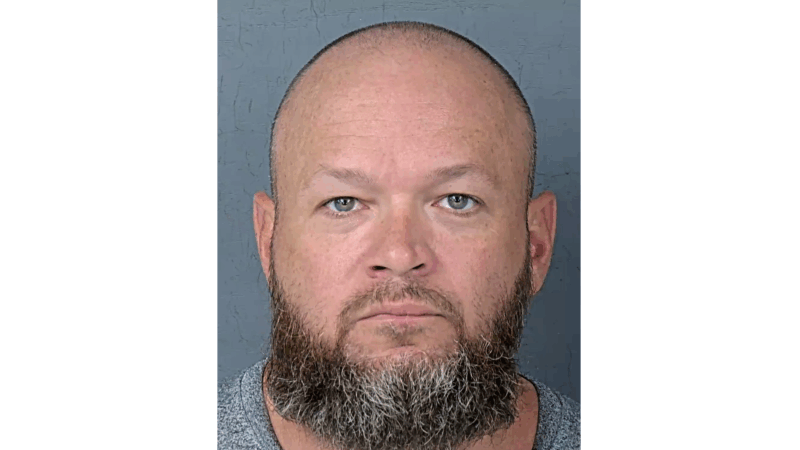
A Jan. 6 rioter pardoned by Trump was sentenced to life in prison for child sex abuse
Since receiving presidential pardons, dozens of former Capitol rioters have gotten into more legal trouble. In Florida, Andrew Paul Johnson was sentenced to life in prison for child sex abuse.
President Trump, Pam Bondi sued over sale of TikTok assets
The case, filed in a federal court in Washington, D.C., accuses the Trump administration of ignoring legislation designed to stop the spread of Chinese propaganda — and instead helping to broker a partial sale to businessmen close to Trump.

A rift between Spain and Trump widens over Spanish opposition to the Iran war
The Spanish government reiterated it would not let U.S. forces use two joint military bases in Spain as the U.S.-Israeli war in Iran escalates, widening a rift with the Trump administration.
Blackpink, modern K-pop’s trailblazing group, tries to find its way home
A new mini-album finds the world's biggest girl group in a tight spot: competing with its own legacy.
If you loved ‘Sinners,’ here’s what to watch next
So you loved best picture nominee Sinners. What should you watch next? We asked our audience to share their recommendations. They suggested Near Dark, The Wailing and other vampire horror films.
