
A kids’ guide to phone-free fun, from the author of ‘The Anxious Generation’
If you’re the parent of a child or teenager, chances are you’ve heard of social psychologist Jonathan Haidt, or at the very least his wildly influential, bestselling 2024 book, The Anxious Generation.
In sum, the book argues that the rise of smartphones and social media over the past decade and a half has “rewired” the brains of young people, leading to a mental health crisis. Haidt’s arguments and approach have been challenged by critics, many of whom point out that causation is not correlation, that his work ignores the many other potential factors at play affecting mental health. Yet, The Anxious Generation has undeniably had a significant impact. Haidt is leading, in his own terms, a “movement,” which we have already seen translate into legislation in many states around the U.S. limiting the use of phones in schools.

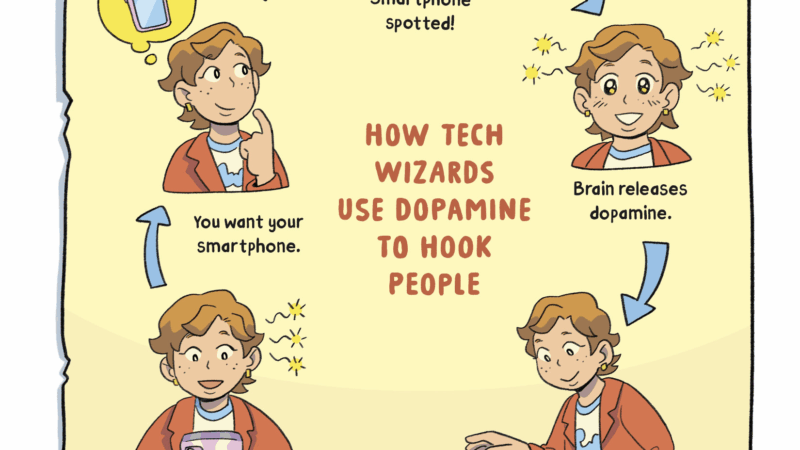
Haidt’s latest work, a collaboration with science journalist Catherine Price, as well as graphic novelist Cynthia Yuan Cheng, is a graphic novel aimed at children instead of adults. A brief prelude to the book lays out a not-so-subtle allegory: A bunch of “greedy” wizards have created stones that promise happiness in the form of “friendship, freedom, and fun.” Eventually, the people who use the stones begin to feel as though they have lost all sense of happiness and fun. It’s the “rebels,” first a few, soon many, who eventually band together and find strength in numbers to free themselves from the glittering gemstones that once largely imprisoned them.
If this sounds overly trite or simplistic, as a parent it’s hard not to feel an essence of truth in the notion that certain forms of technology and their applications (iPhones, Chromebooks and tablets; video games, social media and YouTube) have transformed our children’s and teenagers’ lives and our experiences as parents, most often not for the better.
As the parent of a 10-year-old and a 14-year-old, I can say that not a week has gone by in nearly a decade that the use of such technologies hasn’t led to some form of bickering or disagreement. And at this point it’s clear that such is the experience of households all over the country. It’s not that these technologies are all bad, of course, but their addictive design, and the lack of cultural norms and especially regulations around such devices, have shaped people’s use of them in often damaging and destructive ways. Endless elements of day-to-day life, including especially for young people learning and socialization, have been negatively impacted.
The Amazing Generation is a self-described “guide,” and it toggles between two kinds of content. Prose-heavy sections of the book give background information about everything from the rise of different kinds of media, including smartphones, to explanations of “the attention economy,” to summaries of how different social media and technology companies have responded to calls for legislation. These sections also include heaps of infographics and visuals, including one of my favorites, “Screen Time Calculator That You Can Use to Freak People Out.” (Note: This one, like much of the advice and instruction given throughout the book, works as well on adults as on children.) “1 hour per day = 15 full days per year. 2 hours per day = 1 full month per year. Etc.” This is a page I wouldn’t mind seeing blown up and hung on classroom walls, including the college classrooms where I teach.

The second portion of the book is a fictional graphic novel tracking the lives of six young people, their relationships to themselves and one another, and the various technologies that mediate those interactions. Like the allegory to the book, at times the fictional story feels obvious and simplistic in its messaging. But it’s hard, again, not to feel a tug of familiarity, as when heavy social media user Alex finally agrees to join his phoneless friend Jax at the skate park. In a series of panels, we see Jax trying out different skating maneuvers in the background, by the end falling onto the ground after another heroic attempt. Jax’s activities are juxtaposed against Alex’s phone screen, on which he has concurrently been scrolling, from a nearby bench, first searching for skating tips then watching world championship skating highlights.
While it is often thrilling to have the world at your fingertips — my teenager learned how to handmake pasta with some help from YouTube, and I have happily spent precious hours online watching obscure interviews of some of my favorite writers — it’s hard to deny the losses that accumulate when real life trial-and-error is supplanted by passive viewing. For many, the balance is clearly off.

What seems especially compelling about The Amazing Generation — which would work well as a classroom guide — is that it can get young people thinking more critically about the products that shape their everyday lives. If the message of the book isn’t subtle, it nonetheless feels like an important antidote to the daily pull and messaging of the online world. Real rebellions from young people won’t follow paths clearly laid out by adults, but in this case it seems well beyond time to stir the pot.
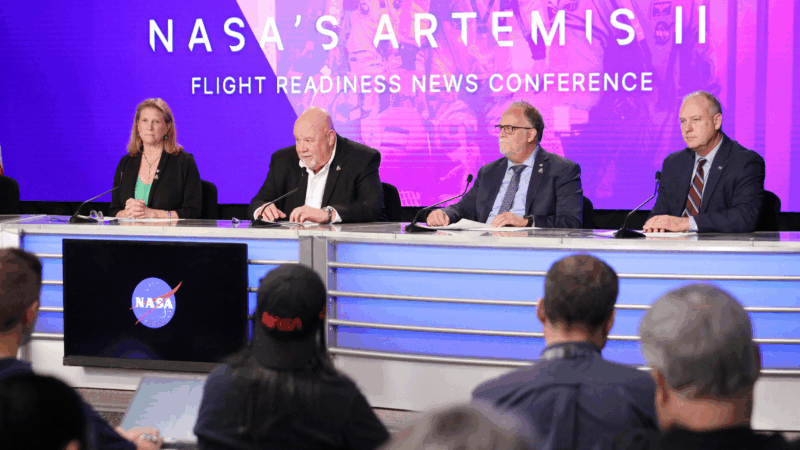
NASA targets Artemis II crewed moon mission for April 1 launch
A six-day launch window opens on April 1 from NASA's Kennedy Space Center in Florida. The lunar orbital mission would be the first time humans have returned to the moon since Apollo 17 in 1972.

Auburn football player uses NIL funds to open a community hub in Birmingham
Jourdin Crawford, a freshman defensive lineman at Auburn, used earnings from a Name, Image, and Likeness deal to give back to his hometown.

Fear of Iranian mines in the Strait of Hormuz could further slow the flow of oil
Attacks by Iran have already nearly halted the flow of oil through the vital waterway as commercial ship crews fear being hit by missiles, drones or mines.

Bruno Mars adds yet another milestone to his career with ‘The Romantic’
Bruno Mars is the most-listened to artist in the world on Spotify. He's won 16 Grammys. In case you thought there were no battles left for him to win, this week he unlocked another achievement.

There’s more than one path to a confessional song
On new albums by viral sensation Yebba and studio whiz Pimmie, it's clear modern R&B has been clearing space for vastly different stripes of singer-songwriter.

Suspect in attack at Michigan synagogue is dead, officials say
Security officers at Temple Israel had "engaged the threat" that apparently started with a vehicle ramming into the building, according to Oakland County Sheriff Mike Bouchard.
