
A fourth judge has blocked a Trump executive order targeting elite law firms
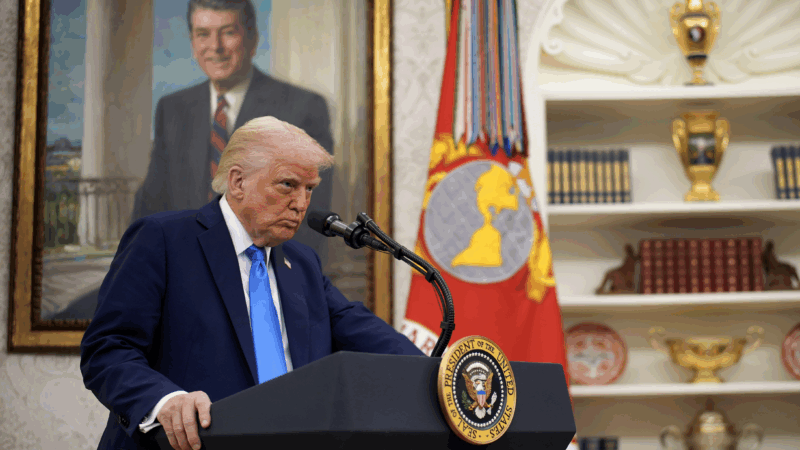
A federal judge has struck down President Trump’s executive order targeting the law firm Susman Godfrey, delivering the latest in a series of legal wins for firms that have challenged the president’s punitive campaign against Big Law.
The ruling Friday from U.S. District Judge Loren AliKhan marks the fourth time out of four that a federal judge has permanently blocked one of Trump’s executive orders seeking to punish an elite law firm.
Judge AliKhan said in her ruling that the executive order against Susman Godfrey “is unconstitutional from beginning to end.”
“Every court to have considered a challenge to one of these orders has found grave constitutional violations and permanently enjoined enforcement of the order in full,” she wrote. “Today, this court follows suit, concluding that the order targeting Susman violates the U.S. Constitution and must be permanently enjoined.”
“The Court’s ruling is a resounding victory for the rule of law and the right of every American to be represented by legal counsel without fear of retaliation,” Susman Godfrey said in a statement. “We applaud the Court for declaring the administration’s order unconstitutional. Our firm is committed to the rule of law and to protecting the rights of our clients without regard to their political or other beliefs.”
The latest order delivers a resounding rebuke to Trump’s unprecedented series of executive orders targeting prominent law firms since February. The orders have sought to punish them for representing causes or clients that he opposes, or for once employing attorneys he dislikes, such as former special counsel Robert Mueller.
The orders impose several punitive measures, including suspending security clearances for the firm’s attorneys, barring its employees’ access to government buildings and officials, and ending government contracts with the firm.
Four law firms — Perkins Coie, Jenner & Block, WilmerHale and Susman Godfrey — individually sued to block Trump’s actions, saying the executive orders were unconstitutional and a threat to the legal profession.
In all four lawsuits, judges — appointed by Republican and Democratic presidents alike — have found Trump’s orders unconstitutional and permanently blocked enforcement of them.
“Let’s kill all the lawyers”
In their rulings, the judges found Trump’s orders to be an attack on the law firms’ First and Fifth amendment rights, as well as a broader assault on the American legal system.
“The cornerstone of the American system of justice is an independent judiciary and an independent bar willing to tackle unpopular cases, however daunting,” Judge Richard Leon, who was appointed by former President George W. Bush, wrote in his opinion blocking enforcement of the order against WilmerHale.
“The Founding Fathers knew this! Accordingly, they took pains to enshrine in the Constitution certain rights that would serve as the foundation for that independence,” he added. “Little wonder that in nearly 250 years since the Constitution was adopted no Executive Order has been issued challenging these fundamental rights.”
That changed, the judge notes, with Trump.
In her ruling in the lawsuit brought by the firm Perkins Coie, Judge Beryll Howell, an appointee of former President Barack Obama, also noted that no American president had ever targeted a law firm with executive orders like Trump has.
But, she noted, “in purpose and effect, this action draws from a playbook as old as Shakespeare, who penned the phrase: ‘The first thing we do, let’s kill all the lawyers.'”
Defending the rule of law
Despite those setbacks, Trump has notched successes with other firms.
At least nine big law firms have cut deals with Trump to either have an order against them lifted or to avoid being the target of one. In return, they’ve agreed to provide hundreds of millions of dollars in pro bono legal work on causes both they and the president support.
Some legal experts, however, question whether those deals are legally valid.
Timothy Zick, a professor at William and Mary Law School, said the Trump administration doesn’t appear to care whether the executive orders against the law firms are constitutional.
“As we’ve seen many firms will capitulate. And if judges invalidate the orders, the administration will just blame ‘radical’ judges for interfering with the president’s agenda,” he said in an email.
Still, the recent court rulings demonstrate the strength of the law firms’ case against the executive orders.
“The firms that cut ‘deals’ surely knew this, but reasoned that more harm would come from fighting the administration than from capitulating,” Zick said.
“A big-picture question is how the law firms will be perceived in the future,” he added. “Those that litigated may benefit from being perceived as defending not just their own interests but those of the Bar and the rule of law. Those that folded may be perceived as having failed in those respects.”
House Dem. Leader Jeffries responds to air strikes on Iran by U.S. and Israel
NPR's Emily Kwong speaks to House Minority Leader Hakeem Jeffries (D-NY), who is still calling for a vote on a war powers resolution following a wave of U.S.- and Israel-led airstrikes on Iran.
Iran’s Ayatollah Ali Khamenei is killed in Israeli strike, ending 36-year iron rule
Khamenei, the Islamic Republic's second supreme leader, has been killed. He had held power since 1989, guiding Iran through difficult times — and overseeing the violent suppression of dissent.

Found: The 19th century silent film that first captured a robot attack
A newly rediscovered 1897 short by famed French filmmaker Georges Méliès is being hailed as the first-ever depiction of a robot in cinema.
‘One year of failure.’ The Lancet slams RFK Jr.’s first year as health chief
In a scathing review, the top US medical journal's editorial board warned that the "destruction that Kennedy has wrought in 1 in office might take generations to repair."
Here’s how world leaders are reacting to the US-Israel strikes on Iran
Several leaders voiced support for the operation – but most, including those who stopped short of condemning it, called for restraint moving forward.

How could the U.S. strikes in Iran affect the world’s oil supply?
Despite sanctions, Iran is one of the world's major oil producers, with much of its crude exported to China.
