
A few things to consider before committing a museum heist
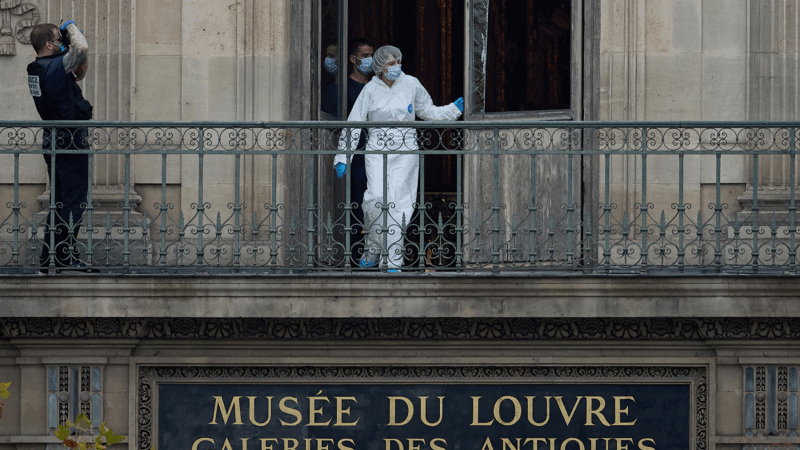
The glamorous image of art heists often conjures up Bond-villain masterminds orchestrating elaborate schemes. Laure Beccuau, the lead prosecutor in the recent Louvre case involving the theft of more than $100 million worth of historic jewelry, suggested in an interview on French news channel BFMTV this week that the job could be the work of organized crime or commissioned by a major “sponsor.”
But lawyer Christopher Marinello, founder and CEO of Art Recovery International, a London and Venice-based group specializing in tracking down stolen works of art, dismisses the latter Hollywood scenario. “There have been questions about some sort of slippery Dr. No-type character who’s ordering these thefts from afar for his personal collection in his underwater lair,” said Marinello. “But in 39 years of working on art recovery cases, I have never seen a theft-to-order case.”
Stealing art can, in fact, be far from lucrative. No reputable buyer will touch recognizable stolen pieces, which typically sell for just a fraction of their true value on the black market. “If you steal a Picasso, you have to keep it a Picasso,” Marinello said. “It has to stay in one piece.”
However, Marinello said there’s a much bigger upside to stealing diamond tiaras and emerald necklaces because they can be broken up and sold off as individual gems. “That can be done as simply as sewing the stones inside a jacket, driving outside of France and going to a place like Tel Aviv or Antwerp where they have jewelry centers and experts who will recut larger stones into smaller stones,” Marinello said. “And then you’ve gotten away with the crime of the decade.”
Relatively light penalties add to the temptation. Stealing a major artwork from a U.S. museum carries a maximum 10-year sentence under federal law and a potential fine, with similar penalties in France. And many museums are also easy targets.
“For well-known pieces of artwork, because their black market value is so low, there’s already very little incentive for criminals to go after those pieces,” said Frederick Chen, an economics professor at Wake Forest University who has co-authored a paper on the economics of art heists. “And so there’s less incentive for museums to invest in security.”
Chen said museums are even less likely to protect artifacts that don’t drive ticket sales. “From the thieves’ perspective, you already know the museum isn’t going to have security that’s going to be as strong as going to, say, a Tiffany’s,” Chen said.
Myles Connor, an 82-year-old veteran art thief who stole a Rembrandt from Boston’s Museum of Fine Arts in 1975 among other crimes and served substantial prison time, agrees museums are vulnerable. “Most museums don’t have armed guards,” he said. “And so if you’re armed and determined, you can grab almost any painting out of almost any museum. And you can also do that with jewelry.”
But Connor says it’s a bad idea to break up valuable jewelry, like pieces found in museums. “If you break them up, you destroy the value of the items and you’d kind of be low-balling yourself,” he said.
Connor said there’s a better way to cash out. “When I stole paintings from museums, it was always with the intention of returning the painting and getting a reward.” Connor said he received $50,000—about $300,000 in today’s money—for returning the Rembrandt.
He said he hopes the Louvre thieves will follow his playbook, adding “I’m sure the reward will be substantial.”
The French government hasn’t yet announced any reward – though some experts, including Anthony Amore, the head of security and chief investigator at Boston’s Isabella Stewart Gardner Museum, itself a target of art theft, have publicly called for it.
Read NPR’s annotated fact check of President Trump’s State of the Union
As President Trump delivers his State of the Union address, reporters from across NPR's newsroom will fact check his speech and offer context.
President Trump set to deliver first State of the Union address of his second term
Facing low approval ratings and ahead of midterm elections in November, President Trump delivers the first State of the Union address of his second term as president Tuesday night.
U.S. House rejects aviation safety bill after Pentagon abruptly withdraws support
The House of Representatives narrowly rejected a bipartisan aviation safety bill that was spurred by the deadly midair collision near Washington, D.C. after the Pentagon abruptly withdrew its support.

China and the US alter foreign aid strategies
China's foreign aid strategy has shifted in the last few decades and now its model may be the one the US is adopting as China moves away from it.

Flavor Flav is among women’s hockey team fans outraged by presidential snub
The rapper, who also serves as the official "hype man" for multiple U.S. Olympic teams, invited the female hockey players to Las Vegas for a "real celebration."

Flavor Flav is among women’s hockey team fans outraged by presidential snub
The rapper, who also serves as the official "hype man" for multiple U.S. Olympic teams, invited the female hockey players to Las Vegas for a "real celebration."
