
A classified network of SpaceX satellites is emitting a mysterious signal

A constellation of classified defense satellites built by the commercial company SpaceX is emitting a mysterious signal that may violate international standards, NPR has learned.
Satellites associated with the “Starshield” satellite network appear to be transmitting to the Earth’s surface on frequencies normally used for doing the exact opposite: sending commands from Earth to satellites in space. The use of those frequencies to “downlink” data runs counter to standards set by the International Telecommunication Union, a UN agency which seeks to coordinate the use of radio spectrum globally.
Starshield’s unusual transmissions have the potential to interfere with other scientific and commercial satellites, warns Scott Tilley, an amateur satellite tracker in Canada who first spotted the signals.
“Nearby satellites could receive radio-frequency interference and could perhaps not respond properly to commands — or ignore commands — from Earth,” he told NPR.
Outside experts agree there’s the potential for radio interference. “I think it is definitely happening,” said Kevin Gifford, a computer science professor at the University of Colorado Boulder who specializes in radio interference from spacecraft. But he said the issue of whether the interference is truly disruptive remains unresolved.
SpaceX and the U.S. National Reconnaissance Office, which operates the satellites for the government, did not respond to NPR’s request for comment.
Caught by the wrong antenna
The discovery of the signal happened purely by chance.
Tilley regularly monitors satellites from his home in British Columbia as a hobby. He was working on another project when he accidentally triggered a scan of radio frequencies that are normally quiet.
“It was just a clumsy move at the keyboard,” he said. “I was resetting some stuff and then all of a sudden I’m looking at the wrong antenna, the wrong band.”
The band of the radio spectrum he found himself looking at, between 2025-2110 MHz, is reserved for “uplinking” data to orbiting satellites. That means there shouldn’t be any signals coming from space in that range.
But Tilley’s experienced eye noticed there appeared to be a signal coming down from the sky. It was in a part of the band “that should have nothing there,” he said. “I got a hold of my mouse and hit the record button and let it record for a few minutes.”
Tilley then took the data and compared it to a catalog of observations made by other amateur satellite trackers. These amateurs, located around the world, use telescopes to track satellites as they move across the sky and then share their positions in a database.
“Bang, up came an unusual identification that I wasn’t expecting at all,” he said. “Starshield.”
Starshield is a classified version of SpaceX’s Starlink satellites, which provide internet service around the world. The U.S. has reportedly paid more than $1.8 billion so far for the network, though little is known about it. According to SpaceX, Starshield conducts both Earth observation and communications missions.
Since May of 2024, the National Reconnaissance Office has conducted 11 launches of Starshield satellites in what it describes as its “proliferated system.”

“The NRO’s proliferated system will increase timeliness of access, diversify communications pathways, and enhance resilience,” the agency says of the system. “With hundreds of small satellites on orbit, data will be delivered in minutes or even seconds.”
Tilley says he’s detected signals from 170 of the Starshield satellites so far. All appear in the 2025-2110 MHz range, though the precise frequencies of the signals move around.
Signal’s purpose in question
It’s unclear what the satellite constellation is up to. Starlink, SpaceX’s public satellite internet network, operates at much higher frequencies to enable the transmission of broadband data. Starshield, by contrast, is using a much lower frequency range that probably only allows for the transmission of data at rates closer to 3G cellular, Tilley says.
Tilley says he believes the decision to downlink in a band typically reserved for uplinking data could also be designed to hide Starshields’ operations. The frequent shift in specific frequencies used could prevent outsiders from finding the signal.
Gifford says another possibility is that SpaceX was just taking advantage of a quiet part of the radio spectrum. Uplink transmissions from Earth to satellites are usually rare and brief, so these frequencies probably remain dark most of the time.
“SpaceX is smart and savvy,” he says. It’s possible they just decided to just “do it and ask forgiveness later.”
He notes it’s unlikely the signals from Starshield have caused significant disruptions so far, otherwise other satellite operators would have complained.
Tilley told NPR he has decided to go public with his discovery because the world’s satellite operators should be aware of what’s happening.
“These are objects in classified orbits, which could potentially disturb other legitimate uses of space,” he said.

Deadline looms as Anthropic rejects Pentagon demands it remove AI safeguards
The Defense Department has been feuding with Anthropic over military uses of its artificial intelligence tools. At stake are hundreds of millions of dollars in contracts and access to some of the most advanced AI on the planet.

Hillary Clinton calls House Oversight questioning ‘repetitive’ in 6 hour deposition
In more than seven hours behind closed doors, former Secretary of State Hillary Clinton answered questions from the House Oversight Committee as it investigates Jeffrey Epstein.
Chicagoans pay respects to Jesse Jackson as cross-country memorial services begin
Memorial services for the Rev. Jesse Jackson Sr. to honor his long civil rights legacy begin in Chicago. Events will also take place in Washington, D.C., and South Carolina, where he was born and began his activism.

In reversal, Warner Bros. jilts Netflix for Paramount
Warner Bros. says Paramount's sweetened bid to buy the whole company is "superior" to an $83 billion deal it struck with Netflix for just its streaming services, studios, and intellectual property.

Trump’s ballroom project can continue for now, court says
A US District Judge denied a preservation group's effort to put a pause on construction
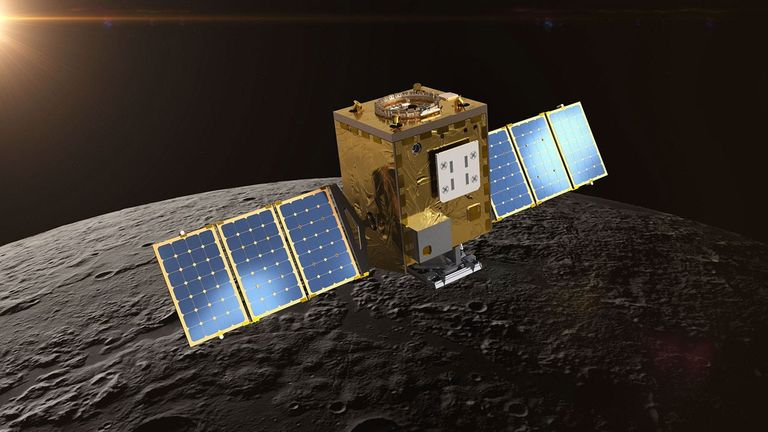
NASA lost a lunar spacecraft one day after launch. A new report details what went wrong
Why did a $72 million mission to study water on the moon fail so soon after launch? A new NASA report has the answer.
