
A ‘black moon’ will appear in the sky this weekend, but you won’t see it. Here’s why
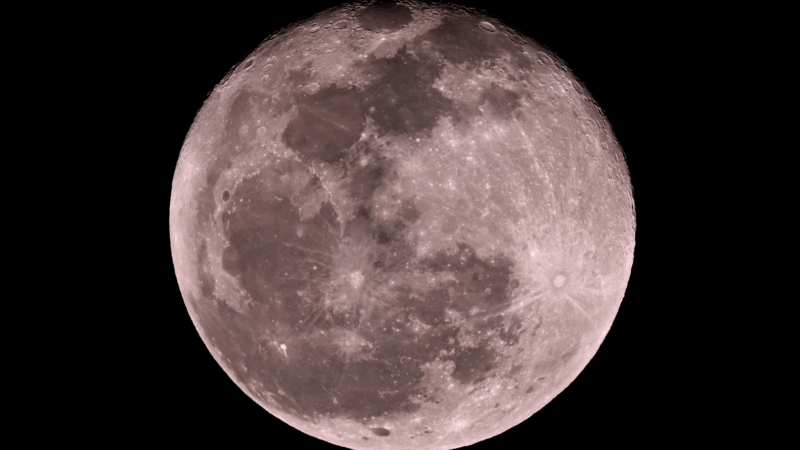
There are “blood,” “super” and “blue” moons, and then there’s the “black” moon.
The “black moon,” a rare phenomenon that occurs during a new moon phase of the lunar cycle, will occur this weekend. But don’t get your hopes up too much, scientists say, because it will be technically invisible.
Here’s what to know.
What is it?
When the moon is nearly between Earth and the sun, one side of the moon faces the sun, and that side is illuminated, but the side the Earth sees is dark. This is called the new moon phase of the lunar cycle — when the moon isn’t visible at night.
During this phase, the illuminated side of the moon is not only facing away from Earth, but it is also up in the sky during the daytime and rises and sets at the same time as the sun, according to NASA. The moon is gravitationally locked with Earth, meaning we always see the same side of the moon from Earth.
It’s unclear when it was coined, but “black moon” is an unofficial astronomical term. A new moon is considered by some to be a black moon one of two ways. It can happen when a new moon appears twice in one month (new moons usually happen once per month) or when there are four new moons in one season. When there are four new moons in one season, the third new moon is called a “black moon.”
Saturday’s black moon is the third new moon of the summer season. The fourth new moon will occur on Sept. 21, one day before the first official day of the fall season or autumnal equinox in the Northern Hemisphere — when the sun moves directly over the equator, creating equal amounts of daylight and night time.
You won’t see it
You won’t be able to see the black moon, but it will still be there in the sky. Since the illuminated part of the moon will be facing away from Earth, the moon will appear to be invisible in the night sky.
However, this is a great opportunity to stargaze and see the Dumbbell Nebula (M27), known for its dumbbell-like shape, which can be seen with a telescope between the Altair and Deneb stars, according to NASA.
When is the next “black moon”?
The next black moon is set to occur Aug. 31, 2027, according to Space.com. That new moon will be the second new moon phase in one calendar month.

Bernard LaFayette, Selma voting rights organizer, dies at 85
Bernard LaFayette, who died Thursday, laid the foundations of the Selma, Alabama, campaign that culminated in the passage of the Voting Rights Act. He was a Freedom Rider and helped found the Student Nonviolent Coordinating Committee.

Oil surges to its highest price since 2023, and stocks drop after U.S. jobs report
Stocks fell Friday on worries that the economy could become stuck in a worst-case scenario of stagnating growth and high inflation. Oil prices touched their highest levels since 2023 after surging again because of the Iran war.

No lawsuits required: U.S. Customs is working on a system to refund tariffs
U.S. Customs told the trade court it aims for a streamlined process in 45 days to return importers' money without requiring individual lawsuits.
Poll: A majority of Americans opposes U.S. military action in Iran
Most Americans disapprove of President Trump's handling of Iran, and a majority sees Iran as either only a minor threat or no threat at all, an NPR/PBS News/Marist poll finds.

Your Winter Paralympics primer: What, who and how to watch
Hundreds of para athletes are competing in Italy through March 15. Many Americans are defending past titles, with the U.S. sled hockey team hoping to fend off rival Canada for its fifth straight gold.

After the U.S. sinks an Iranian warship, Sri Lanka takes custody of an Iranian vessel
The move followed Wednesday's sinking of another Iranian warship by a U.S. submarine. Australia confirmed three Australians were on that submarine.
