
A Biden-era rule sought to stabilize child care. Why Trump wants it gone

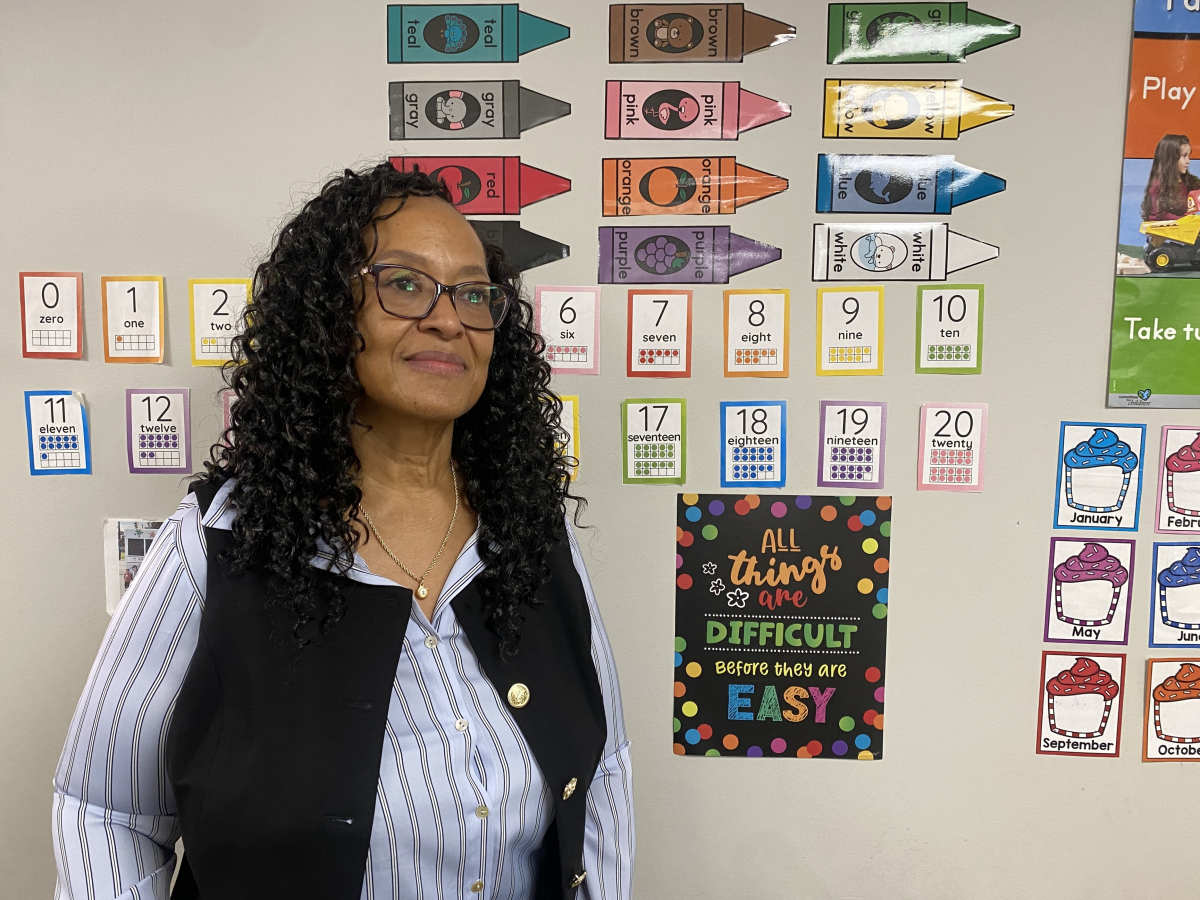
Winter can be especially challenging for Michelle Wright, owner of Michelle’s Place Child Care Center, with two locations in southwestern Illinois, across the Mississippi River from St. Louis.
Seasonal illnesses and bad weather often keep kids home. On certain days, Wright finds herself scrambling to figure out if she’ll be able to pay her teachers.
“That staff comes ready to work, maybe spent gas [money], maybe took an Uber, a bus to get here, and then six kids are out and I know the numbers are down,” she says. “I have to send that staff home.”
That’s because many states, including Illinois, use their own money and federal funds to pay out child care subsidies for low-income families based on attendance. When overall attendance for the month drops below 70%, Wright stands to lose some of the income she was expecting.
It’s a unique challenge for child care providers like Wright who operate in some of America’s poorer communities. Some 90% of the families Wright serves receive child care subsidies, so most of her income comes from the state, with payments made after the care has been provided.
Wright knows things would be easier if she had opened her centers in more affluent areas. Families that don’t qualify for subsidies and instead pay for child care on their own typically pay up front. They’re on the hook for the tuition whether their children attend or not, so providers can count on that income.
In 2024, the Biden administration finalized a rule aimed at giving providers like Wright more predictability. The rule requires states to pay child care subsidies the way most American families pay tuition – in advance and based on enrollment, not on who shows up.
A number of states have made the switch. Others, including Illinois, applied for waivers, giving them more time to comply with the rule. But now, the Trump administration has proposed getting rid of the rule all together, citing concerns about fraud.
Fraud allegations drew child care into the spotlight
Across the U.S., the families of some 1.4 million children get help paying for child care through the Child Care and Development Fund. That federal program was pulled into the spotlight after allegations of child care fraud erupted in Minnesota in late December.
The allegations, waged by a YouTuber, led first to an attempt by the Trump administration to freeze child care subsidies in five Democrat-led states. The announcement prompted an outcry and a lawsuit that has prevented a freeze, at least for now.
A couple weeks later, the Department of Health and Human Services released a video using the fraud allegations as a jumping off point to announce the Trump administration’s proposal for repealing the Biden rule.
In the video, Jim O’Neill, an HHS deputy secretary who has since left the agency, says forcing states to pay child care subsidies up front and based on enrollment created vulnerabilities.
“Those policies weakened accountability and made fraud easier, not harder,” O’Neill says.
While child care providers have been prosecuted for fraud in years past, including in Minnesota, such cases are rare. The Administration for Children and Families, the federal agency that oversees the Child Care and Development Fund, reported a payment error rate of less than 4% in 2023.
In recent years, many states have stepped up oversight, including by having state inspectors make more unannounced visits to child care centers. Child care providers are required to submit daily attendance logs to state agencies.
Still, child care advocates worry the Trump administration’s focus on fraud could get in the way of progress.
Bipartisan support for strengthening child care
Since the COVID pandemic, stabilizing child care has become a bipartisan issue, with Republican-led states among those making changes to strengthen the industry.
Last year, amid growing recognition that child care is essential to the state’s economy, Missouri’s Republican-controlled legislature approved the change to pay child care subsidies in advance and based on enrollment, not on attendance logs. Beta testing has been underway.
But late last year, the state announced it needed more time to ensure the new system works correctly and to secure long-term funding.
Casey Hanson, deputy director of the statewide policy and advocacy group Kids Win Missouri, notes that the change will bring additional costs.
“We think [it’s] the right thing to do. It’s the way providers are paid in the private market. It’s how we’re going to create a more sustainable system,” says Hanson. “But it is expensive for states, and state budgets are tough.”
Denise Wiese, executive director of Lemay Child and Family Center, a nonprofit center in St. Louis County, hopes the change will be one of many Missouri makes to ensure the viability of high-quality child care providers.
“We have to take care of the children in our communities,” she says. “They’re the ones that are going to lead this country and lead the state 30 years from now, and we just want them to start off on a strong footing.”
Transcript:
AILSA CHANG, HOST:
Across the country, many child care providers are barely staying afloat. As essential as they are, their industry operates on tiny profit margins. And now the Trump administration is rolling back policies aimed at providing stability. The rationale is the prevention of fraud. NPR’s Andrea Hsu reports.
ANDREA HSU, BYLINE: Michelle Wright runs two child care centers in Southwestern Illinois, just across the Mississippi River from St. Louis.
MICHELLE WRIGHT: You OK?
(SOUNDBITE OF COUGHING)
HSU: This time of year, bad weather and illnesses can take a toll.
WRIGHT: It’s wintertime. It’s Midwest.
HSU: Attendance sometimes drops below 70%, which is a problem for Wright, and here’s why. Ninety percent of the families she serves qualify for child care subsidies, which the state pays out based on attendance. So when a lot of kids are absent, she may not get paid what she was expecting. She has to scramble to figure out if she’ll be able to pay her teachers.
WRIGHT: That staff comes ready to work. Maybe spent gas, maybe took a Uber or a bus to get here. And then six kids are out, and I know the numbers are down. I have to send their staff home.
HSU: It’s a unique challenge for those like Wright, who want to serve low-income communities.
WRIGHT: I chose the area because of the need.
HSU: Things would be easier if she had opened her centers in more affluent areas. Families who pay for care themselves typically pay up front, and they’re on the hook for the tuition, whether their children come in or not. Subsidy payments here in Illinois and many other states go out after the care has been provided and based on who shows up, allowing for some number of absences. Wright says, this is one reason there’s not a lot of high-quality child care in low-income areas. It doesn’t make business sense.
WRIGHT: Most people won’t take 90% subsidy.
HSU: This issue came to a head during COVID, when many children were out for days. To keep day cares open, more states began paying based on who was enrolled, not who showed up. Turned out to be a game changer for many day cares, giving them predictability. Later, the Biden administration issued a rule mandating all states make this change and pay the subsidies upfront, like private-paying families do. Dozens of states got waivers, giving them more time to comply, but now the rule is getting scrapped altogether.
(SOUNDBITE OF ARCHIVED RECORDING)
JIM O’NEILL: Hello, I’m HHS Deputy Secretary Jim O’Neill.
HSU: This is a video posted by the Department of Health and Human Services in January. O’Neill, who has since left HHS, says requiring states to pay for care up front and based on enrollment created vulnerabilities.
(SOUNDBITE OF ARCHIVED RECORDING)
O’NEILL: Those policies weakened accountability and made fraud easier, not harder.
HSU: This announcement came shortly after allegations of child care fraud erupted in Minnesota. Such fraud is rare, but it does happen. In the past, providers have been found guilty of claiming subsidies for children who weren’t in their care. States have moved to safeguard their systems with more oversight, more unannounced visits by state inspectors. Still, child care advocates worry the Trump administration’s focus on fraud could get in the way of progress.
DENISE WIESE: Ready?
UNIDENTIFIED PERSON: Get it.
WIESE: One, two, three.
UNIDENTIFIED CHILD: [inaudible].
HSU: At Lemay Child and Family Center in St. Louis County, Missouri, Denise Wiese, the center’s executive director, has been looking forward to changes in how subsidies are paid. Last year, Missouri’s Republican legislature approved making payments up front based on who’s enrolled, not on who shows up. Beta testing has been underway, and…
WIESE: We’re hoping by mid-year, that will be throughout the state.
HSU: But late last year, the state announced it needed more time to ensure the new system works correctly and to secure long-term funding because it will be more expensive. Whether the changes happen or not, Wiese is pushing for more investment, sustained investment in child care.
WIESE: We have to take care of the children in our communities. They’re the ones that are going to lead this country and lead the state 30 years from now.
HSU: She says the country can’t have a stable future without stable child care, Andrea Hsu, NPR News.

Alabama’s new state climatologist takes the reins
The controversial John Christy is retiring as Alabama’s state climatologist. Lee Ellenburg now assumes the role and is already making a few changes, including declaring that climate change is real and caused by humans.

Colossal Biosciences breeds controversy while trying to revive mammoths
A Texas biotech company is trying to bring mammoths and other extinct creatures back to life. The science is as intriguing as the ethical questions are thorny.
Mundane, magic, maybe both — a new book explores ‘The Writer’s Room’
Why are we captivated by the spaces where where authors write? Katie da Cunha Lewin set out to explore "The Hidden Worlds That Shape the Books We Love."
GOP Rep. Tony Gonzales heads to a runoff in Texas amid a new ethics probe in the House
Texas Republican Rep. Tony Gonzales has faced increasing pressure from his party to resign or drop out of his race after allegations of an affair with a staffer.
Satellite images show Iran school strike hit more targets than earlier reported
The images suggest that precision munitions struck other buildings, including a clinic that was also inside the complex.

As live music becomes more inaccessible, most fans stay watching through screens
Now that it is becoming harder and harder to get a ticket to your favorite artist's show, watching indirectly is becoming a popular compromise. What is gained and lost in a tiered concert hierarchy?
