
A $400,000 profit on Maduro’s capture raises insider trading questions on Polymarket
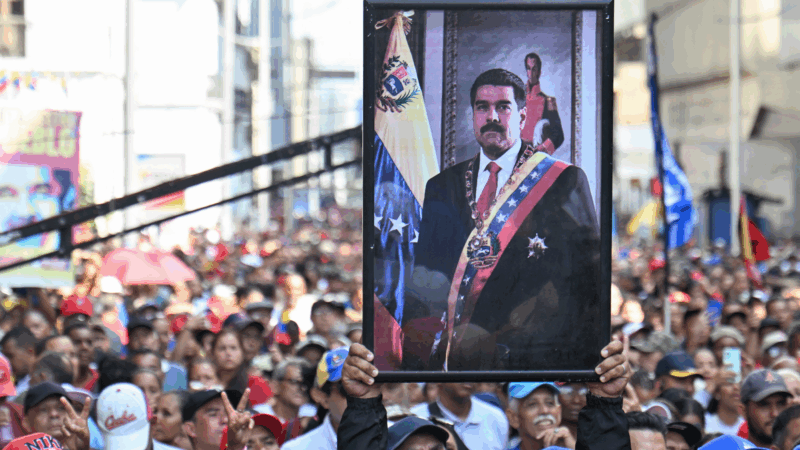
For one prediction market trader, the Trump administration’s weekend capture of Venezuelan leader Nicolás Maduro was a nearly half-million-dollar payday.
On Polymarket, a popular site for making bets on the outcome of real world events, a user wagered $32,000 that Maduro would be toppled by the end of January hours before Trump ordered the operation. When it was clear the U.S. had captured Maduro, the trader made more than $400,000 in profit.
Was the trader just lucky, or privy to classified government deliberations? For now, it’s impossible to tell.
Online sleuths have attempted to identify this trader with no luck. The account, which originally went by the handle “Burdensome-Mix” before changing its display name to a string of letters and numbers, joined Polymarket just weeks ahead of making the Maduro trade.

Most traders on prediction markets like Polymarket and Kalshi place bets under pseudonyms, not their real names. Yet if the accounts are linked to cryptocurrency wallets, it is sometimes possible to unmask a user.
Chainalysis, a company that tracks crypto theft, told NPR it cannot determine the person behind the account, but noted that they are using several U.S. crypto exchanges to cash out, suggesting they are not trying to conceal their identity by funneling money through shadowy overseas exchanges, something that is typical in crypto fraud schemes.
“Was it insider trading? Hard to say,” said Daniel Taylor, a professor at the University of Pennsylvania’s Wharton School who studies insider trading and corporate fraud. “It’s easier in hindsight to pick out things that look suspicious than to pick them out in real time.”
In the case of the person who placed the lucrative Maduro wager, the mystery rages on, but it has sparked debate about the potential for insider trading on prediction markets, where financial experts say abuse can go unnoticed by federal regulators.
Unlike the stock market, where the Securities and Exchange Commission polices market activity for potential insider trading, far fewer guardrails are in place to keep prediction markets in line.
Polymarket and its rival, Kalshi, fall under the supervision of the Commodity Futures Trading Commission. The agency can enforce anti-fraud rules including instances of insider trading. But the agency has about one-eighth the staff of the SEC, despite Kalshi alone receiving more than $2 billion in trades in a single week.
The president’s son, Donald Trump Jr., is an adviser to both Polymarket and Kalshi, which makes some experts skeptical that the agency will ever go too hard on the companies.
“Given the conflicted relationship of the First Family,” said Yale School of Management professor Jeffrey Sonnenfeld, “CFTC oversight could be compromised.”
Yash Kanoria, a professor at Columbia Business School, agreed that the companies’ ties to the Trump administration undermine faith that regulators will aggressively monitor the platforms for traders seeking to rig bets.
“We need them to be invested in weeding out bad activity like insider trading, without any distracting influences,” he said.
The CFTC and Polymarket did not return requests for comment.
Kalshi said in a statement that the platform prohibits insider trader “including government employees trading on prediction markets related to government activity.” Similarly, Polymarket’s rules prohibit market manipulation more generally.
The Biden administration cracked down on prediction markets, fighting them in court over allowing bets on U.S. elections and pushing back against sports betting, which is outlawed in nearly 20 states.
Trump’s regulators have taken the opposite approach. The Justice Department and CFTC have dropped investigations into prediction markets. Trump’s own social media site, TruthSocial, has announced plans to introduce its own prediction market.
There have been other instances of potential insider trading on Polymarket, like when someone netted nearly $1 million by correctly betting on what 22 out of 23 of Google’s most-searched terms would be last year.
The University of Pennsylvania’s Taylor says even if it can be shown that someone used non-public information to make money on a prediction market, a successful prosecution would hinge on showing harm.
“How would the U.S. government be harmed by someone trading on advanced warning of the Maduro operation?” he said. “If you can’t show that you’re depriving someone of value, it’s going to be a very difficult case.”
Have information you want to share about the Maduro trade or insider trading on prediction markets? Bobby Allyn is available via the encrypted messaging app Signal at ballyn.77.
Epstein’s longtime accountant testifies he was ‘not aware’ of sex offender’s crimes
Richard Kahn testified to the House Oversight Committee that he did not know about Epstein's crimes. He said monetary gifts that Epstein made did not raise any red flags.

Rebecca Gayheart Dane on caring for her late husband, Eric Dane, and synthetic voices
The wife of 'Grey's Anatomy' actor Eric Dane says caring for him gave her an "extra dose" of compassion for others.

Chile turns right: Kast inaugurated as nation’s most conservative leader since Pinochet
Chile has sworn in its most right-wing president in decades — and his rise, and ideology, are rooted in a small town beneath the Andes.
Iran’s soccer team cannot participate in the FIFA World Cup, Iranian minister says
Iran is set to play three games in the U.S. this June. But amid the U.S.-Israel military campaign that has killed Iran's supreme leader, Iran's sports minister said the team would pull out.

Pentagon probe points to U.S. missile hitting Iranian school
A military assessment suggests a U.S. Tomahawk cruise missile was responsible for at least 165 deaths at an Iranian girls' school, according to a U.S. official who was not authorized to speak publicly.

Harrison Ford isn’t retiring: ‘I really wouldn’t know what to do with myself’
Ford struggled to find his footing in Hollywood before being cast as Han Solo in Star Wars. Now 83, he plays a therapist in the Apple TV series Shrinking: "I really do love the work," he says.
