
A 101-year-old runs the largest nutcracker museum in the U.S. Here’s a look inside

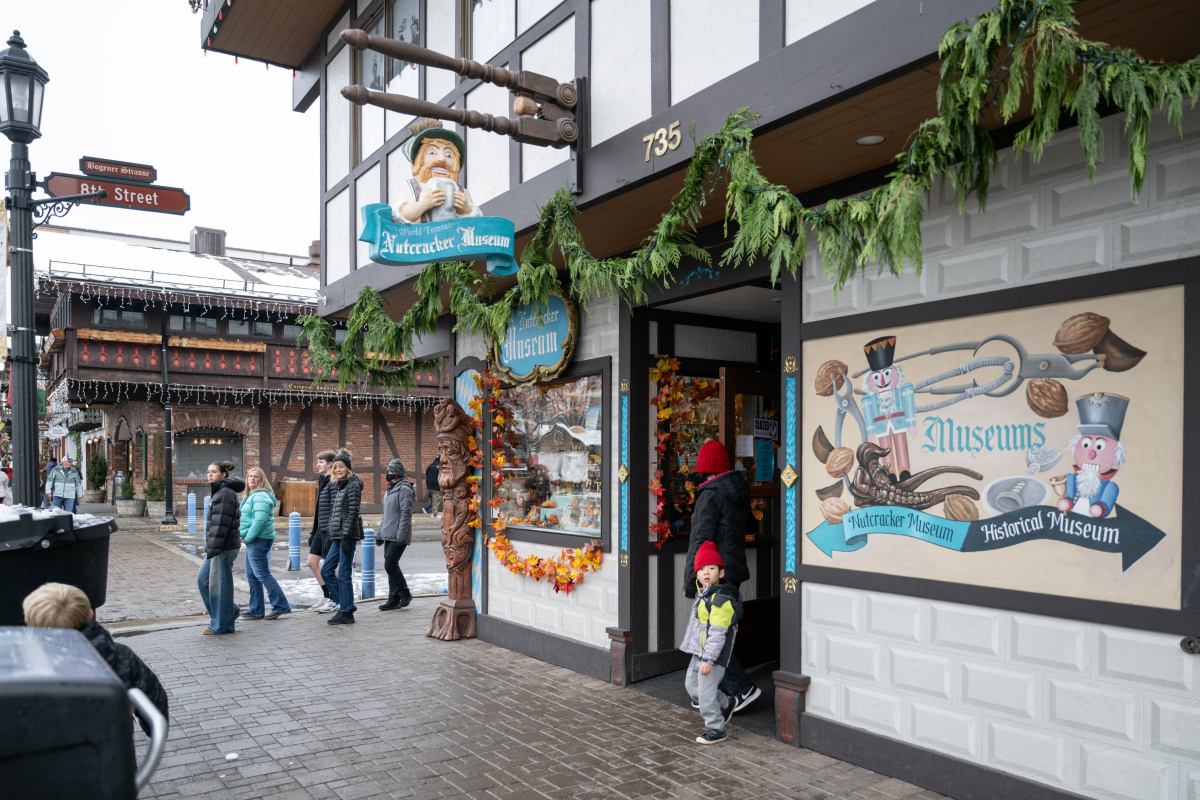
Tucked into the Bavarian-esque town of Leavenworth, Wash., at the foothills of the Cascade mountains is a two-story jewel of whimsy and, some might say, obsession. It’s the Leavenworth Nutcracker Museum, the nation’s largest nutcracker collection, which houses an array of more than 9,000 handcrafted nutcrackers, one dating back to at least 200 AD.
Presiding over it all is Arlene Wagner, usually perched on a stool at the museum’s entrance wearing a pearl necklace and traditional German dirndl dress. (Think Julie Andrews in the Sound of Music.) While diminutive – she stands at just 4 ft. 10 inches — the “Nutcracker Lady” is a spitfire of an entrepreneur who just celebrated her 101st birthday.
“I had no idea it would turn into this,” Wagner proudly told NPR, primping her white halo of curls. What started out as a one-off acquisition has become a legacy, she explained.
Wagner began the collection unintentionally in 1976. She was the director of a ballet company in Renton, Wash., at the time and was putting up a production of Pyotr Tchaikovsky’s The Nutcracker.
“We were looking for the nutcracker for [the protagonist] Clara to hold and we found all of these big mouthed, crunchy guys, and so we started collecting them,” Wagner said.
Those first few were of the toy soldier variety that is now almost inextricably associated with Christmas and winter holiday decor. (They typically wear a tall black hat and a red military-style jacket, and sport white shoulder-length hair.) But, she soon became more interested in more unusual types after she went to an antique show in Portland, Ore., with her late husband, George Wagner. “That’s when we got introduced to the porcelain ones and the old metal ones,” she said. “We were so taken!” she added.

Shopping for nut-cracking devices became a passion for the couple. They shopped at estate sales and auctions, and made regular trips to Europe to find rare items. Eventually, their interests expanded beyond the hand-carved wooden treasures known as “nussknackers,” which hinge to crack nutshells in their mouths. They also began to collect versions featuring the more streamlined “lever” style that look like a set of pliers, and some that gently crush nuts using a screw mechanism. The couple became drawn to ornate metal betel cutters from India, tools intricately carved out of bone and tusks, and even primitive “nutting bowls” made of stone that date back thousands of years.
Wagner joked that the couple never went on a cruise because all of their travel was dedicated to buying more nutcrackers.

By 1995, they’d amassed a collection of 7,000, which became too unwieldy for any sort of home display, according to Wagner. “It was time to share it with people,” she said, smiling. They opened the museum that year.
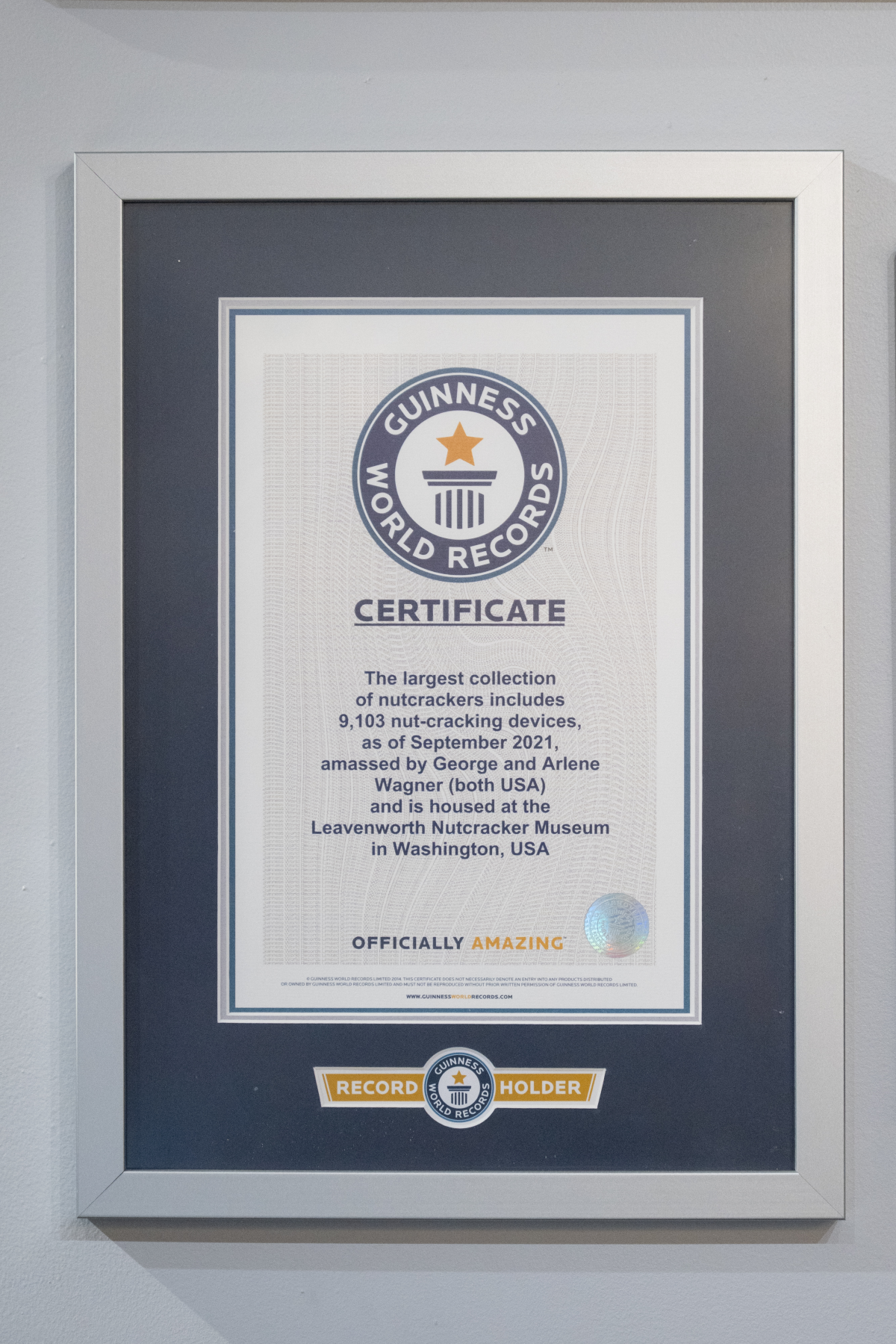
Even since the death of her husband in 2011, she has continued to grow the collection. In September of 2021, she reached a remarkable milestone: the Guinness World Record for the largest collection of nutcrackers in the world with 9,103 unique devices. Officials counted three times, she said with a laugh.
(To Wagner’s dismay, the museum’s Guinness glory was short-lived. A few months later the title was taken by a Lithuanian man who owns a collection of 10,000 nutcrackers.)
Favorites include centuries-old nutcrackers
Inside, the museum is a riot of color, lined with floor-to-ceiling, custom-made display cases that are meticulously curated by Wagner. So far, she said, she has acquired nutcrackers from 50 countries, spanning two millennia.

During a recent visit, Wagner showed off some of her most prized trophies. Among them is one of the oldest crafted nutcrackers she possesses: a bronze device forged sometime between 200 B.C. and 200 A.D. It had been buried for centuries somewhere between Rome and Naples and was unearthed in the 1960s, according to the antiques dealer who acquired it for the Wagners. The small tool measures 12 inches and is decorated with lion designs, indicating it likely belonged to a wealthy ancient Roman household, she said.

Another of her favorites is a simply carved, lever-style nutcracker from France that is made from rich, warm boxwood. It’s about 8 inches long and depicts the bust of a man who is wearing what looks like a laurel wreath. Below the head is a date: 1554.
“It’s the earliest known-of dated nutcracker in the world,” Wagner says, emphasizing the word “dated.”
One of the longest walls on the first floor of the museum is dedicated to just about any American holiday one can think of. New Year? Check. Valentine’s Day? Check. Cinco de Mayo? Check. Wagner said she adores the colors and costumes of each of the designs.

How nutcrackers became a symbol of Christmas
Tourists are drawn to Leavenworth because of the Bavarian theme that’s been adopted by all of the town’s businesses — including the local McDonald’s. Wagner boasts that the nutcracker museum and its gift shop have become one of its main attractions. (It also probably doesn’t hurt that there’s a German beer garden on the same block.) And the winter holidays are the museum’s time to shine.
“It’s all so amazing,” Linda Krueger told NPR. She is also a nutcracker enthusiast, visiting the museum from California with her son and daughter-in-law. Over the last 45 years, Krueger has patiently collected “a very giant tub full” of nutcrackers that fill her home every year at Christmas. When explaining why she likes them, she just said, “I’m German.”
The usefulness of nutcrackers have made them a household item for thousands of years. But it was the 1816 publication of The Nutcracker and the Mouse King by German author E.T.A. Hoffman that led to the widespread popularity of the toy soldiers and other figures from the book, particularly across Germany.

A 17-minute film produced by Wagner detailing the history of nutcrackers explains that before the book, nutcrackers were often shaped as kings and soldiers and believed to bring good luck and ward off evil. They were often given as gifts from fall to the end of the year, when nuts are harvested, according to Wagner. They were also often included in Christmas stockings along with candies and nuts, she added.
Larger, toy soldier nutcrackers exploded in popularity in the United States following World War II, according to Steinbach, one of the most popular German nutcracker-making companies. The business seized on the opportunity to introduce the brightly painted toys to a new market: American soldiers stationed in the German city of Hanover who wanted to take home a souvenir. Today, Steinbach produces 30,000 to 40,000 nutcrackers a year, and about 90% of them are sold in the U.S., the AP recently reported.
Then there was the ballet — specifically, George Balanchine’s version, which premiered at the New York City ballet in 1954. The production and subsequent tours enchanted American audiences, firmly cementing the nutcracker as a Christmas star.

The key to a long life
Days before her 101st birthday, Wagner surveyed her two-story kingdom from her designated stool near the museum’s entrance. “This is where I can keep an eye on everything,” she said, as she greeted a stream of families, handed out scavenger hunt checklists and made sure gift shop customers were being helped.
These days she works about four hours a day, and she’s got a new “Nutcracker Lady” in training – Michelle McMullen, who’s been by Wagner’s side now for years. She’ll take over when Wagner is finally ready to step back. But she doesn’t anticipate that will be anytime soon.
“The key to living a long life is to stay busy,” Wagner said.
And as of this week, Wagner will have a special new nutcracker for sale: a 10-inch hand carved replica of herself made by German artisans. A cloud of white hair and pearl necklace included.


Pentagon puts Scouts ‘on notice’ over DEI and girl-centered policies
After threatening to sever ties with the organization formerly known as the Boy Scouts, Defense Secretary Hegseth announced a 6-month reprieve

President Trump bans Anthropic from use in government systems
Trump called the AI lab a "RADICAL LEFT, WOKE COMPANY" in a social media post. The Pentagon also ordered all military contractors to stop doing business with Anthropic.

HUD proposes time limits and work requirements for rental aid
The rule would allow housing agencies and landlords to impose such requirements "to encourage self-sufficiency." Critics say most who can work already do, but their wages are low.
Paramount and Warner Bros’ deal is about merging studios, and a whole lot more
The nearly $111 billion marriage would unite Paramount and Warner film studios, streamers and television properties — including CNN — under the control of the wealthy Ellison family.

A new film follows Paul McCartney’s 2nd act after The Beatles’ breakup
While previous documentaries captured the frenzy of Beatlemania, Man on the Run focuses on McCartney in the years between the band's breakup and John Lennon's death.

An aspiring dancer. A wealthy benefactor. And ‘Dreams’ turned to nightmare
A new psychological drama from Mexican filmmaker Michel Franco centers on the torrid affair between a wealthy San Francisco philanthropist and an undocumented immigrant who aspires to be a dancer.
