
8.8-magnitude earthquake sets off tsunami warnings in Japan, Alaska and Hawaii

One of the world’s strongest earthquakes struck Russia’s Far East early Wednesday, an 8.8-magnitude temblor that set off a tsunami in the northern Pacific region and prompted warnings for Alaska, Hawaii and south toward New Zealand.
Tsunami warning sirens blared Tuesday in Honolulu and people moved to higher ground.
The Japan Meteorological Agency said a first tsunami wave of about 30 centimeters (about 1 foot) reached Nemuro on the eastern coast of Hokkaido.
Damage and evacuations were reported in the Russian regions nearest the quake’s epicenter on the Kamchatka Peninsula.
The first tsunami wave hit the coastal area of Severo-Kurilsk, the main settlement on Russia’s Kuril Islands in the Pacific, according to the local governor Valery Limarenko. He said residents were safe and staying on high ground until the threat of a repeat wave was gone.
The Pacific Tsunami Warning Center said waves of 1 to 3 meters (yards) above tide level were possible along some coastal areas of Hawaii, Chile, Japan and the Solomon Islands. Waves of more than 3 meters (yards) were possible along some coastal areas of Russia and Ecuador.
The Pacific Tsunami Warning Center said a tsunami had been generated by the quake that could cause damage along the coastlines of all the Hawaiian islands.
“Urgent action should be taken to protect lives and property,” the warning stated. The first waves were expected around 7 p.m. Tuesday local time.
The quake at 8:25 a.m. Japan time had a preliminary magnitude of 8.0, Japan and U.S. seismologists said. The U.S. Geological Survey later updated its measurement to 8.8 magnitude and the USGS said the quake occurred at a depth of 20.7 kilometers (13 miles).
The quake was about 119 kilometers (74 miles) away from the Russian city of Petropavlovsk-Kamchatsky, which has a population of 180,000, on the Kamchatka Peninsula.
Russia’s Tass news agency said people in Petropavlovsk-Kamchatsky ran out into the street without shoes or outerwear. Cabinets toppled inside homes, mirrors were broken, cars swayed in the street and balconies on buildings shook noticeably. Tass also reported power outages and mobile phone service failures.
Tass also quoted a local Russian official as saying residents on Sakhalin Island were being evacuated and emergency services were working at full capacity.
The National Tsunami Warning Center, based in Alaska, issued a tsunami warning for parts of the Alaska Aleutian Islands, and a watch for portions of the West Coast, including California, Oregon, and Washington, and Hawaii.
The advisory also includes a vast swath of Alaska’s coast line, including parts of the panhandle.
The earthquake appeared to be the strongest anywhere in the world since the March 2011 earthquake off northeast Japan that measured 9.0 magnitude and caused a massive tsunami that set off meltdowns at a Fukushima nuclear power plant. Only a few stronger earthquakes have ever been measured around the world.
New Zealand authorities issued warnings of “strong and unusual currents and unpredictable surges” along coastlines throughout the country. The alert by the government emergency management agency said people should move out of the water, off beaches and shore areas, and away from harbors, marinas, rivers and estuaries.
New Zealand is in the South Pacific and about 6,000 miles from the epicenter.
Earlier in July, five powerful quakes — the largest with a magnitude of 7.4 — struck in the sea near Kamchatka. The largest quake was at a depth of 20 kilometers and was 144 kilometers (89 miles) east of the city of Petropavlovsk-Kamchatsky.
On Nov. 4, 1952, a magnitude 9.0 quake in Kamchatka caused damage but no reported deaths despite setting off 9.1-meter (30-foot) waves in Hawaii.

Judge rules 7-foot center Charles Bediako is no longer eligible to play for Alabama
Bediako was playing under a temporary restraining order that allowed the former NBA G League player to join Alabama in the middle of the season despite questions regarding his collegiate eligibility.
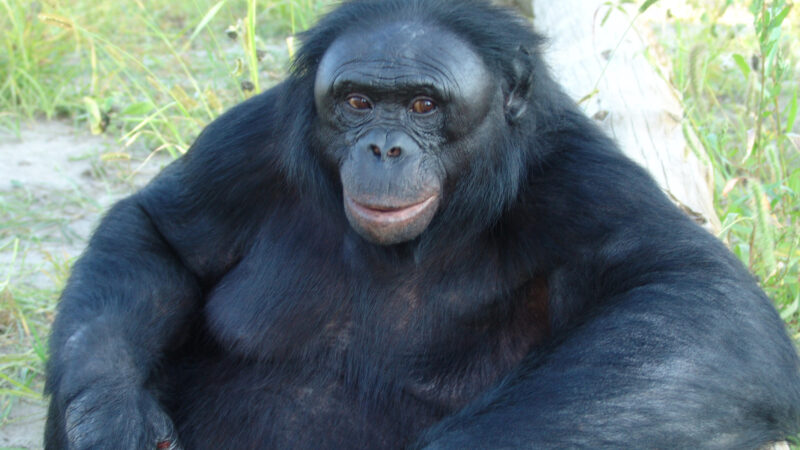
An ape, a tea party — and the ability to imagine
The ability to imagine — to play pretend — has long been thought to be unique to humans. A new study suggests one of our closest living relatives can do it too.

How much power does the Fed chair really have?
On paper, the Fed chair is just one vote among many. In practice, the job carries far more influence. We analyze what gives the Fed chair power.
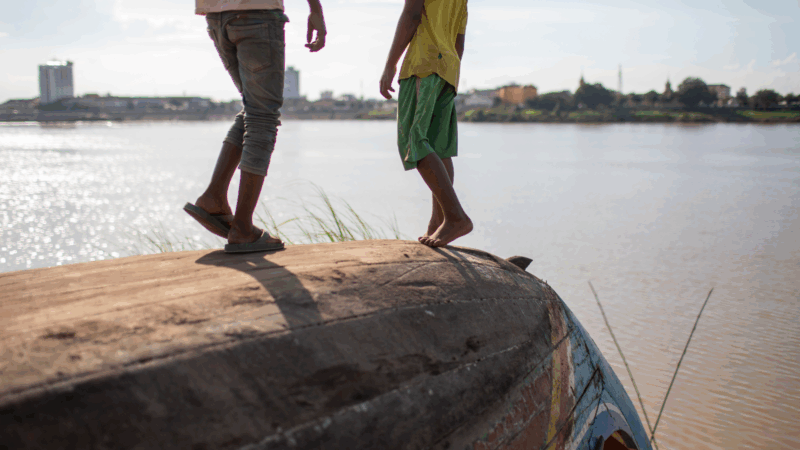
‘Please inform your friends’: The quest to make weather warnings universal
People in poor countries often get little or no warning about floods, storms and other deadly weather. Local efforts are changing that, and saving lives.
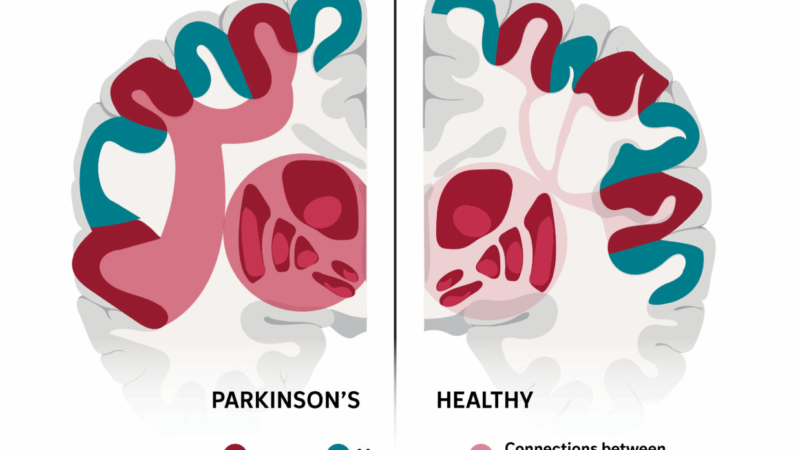
This complex brain network may explain many of Parkinson’s stranger symptoms
Parkinson's disease appears to disrupt a brain network involved in everything from movement to memory.

Immigration officials to testify before House as DHS funding deadline approaches
Congressional Democrats have a list of demands to reform Immigration and Customs Enforcement. But tensions between the two parties are high and the timeline is short – the stopgap bill funding DHS runs out Friday.
