
32 Palestinians killed trying to reach food distribution hubs, Gaza authorities say
DEIR AL BALAH, Gaza Strip — Israeli troops opened fire Saturday toward crowds of Palestinians seeking food from distribution hubs run by a U.S.- and Israeli-backed group in southern Gaza, killing at least 32 people, according to witnesses and hospital officials.
The shootings occurred near hubs operated by the Gaza Humanitarian Foundation, which launched operations in May. The U.S. and Israel seek to replace the traditional U.N.-led aid distribution system in Gaza, asserting that Hamas militants siphon off supplies. The U.N. denies the allegation.
While GHF says it has distributed millions of meals to hungry Palestinians, local health officials and witnesses say Israeli army fire has killed hundreds of people as they try to reach the hubs. GHF’s four sites are in military-controlled zones.
Israel’s army, which isn’t at the sites but secures them from a distance, said Saturday that it fired warning shots near Gaza’s southernmost city of Rafah, after a group of suspects approached troops and ignored calls to keep their distance. It said the incident occurred overnight when the distribution site was closed.
GHF said that there were no incidents at or near its sites and added, “we have repeatedly warned aid seekers not to travel to our sites overnight and early morning hours.”
Witnesses allege indiscriminate fire
Most of Saturday’s deaths occurred as Palestinians massed around 3 kilometers (2 miles) from a GHF aid distribution center near the southern city of Khan Younis.
Mahmoud Mokeimar said that he was walking with masses of people, mostly young men, toward the hub. Troops fired warning shots, and then opened fire.
“The occupation opened fire at us indiscriminately,” he said. He said that he saw at least three motionless bodies on the ground and many wounded people fleeing.
Akram Aker, another witness, said that troops fired machine guns mounted on tanks and drones between 5 a.m. and 6 a.m.
“They encircled us and started firing directly at us,” Aker said. He said he saw many casualties on the ground.
Sanaa al-Jaberi said that there was shooting after the site opened as people seeking aid broke into a run.
“Is this food or death? Why? They don’t talk with us, they only shoot us,” she said, and showed off her empty bag.
Nasser Hospital in Khan Younis said that it received 25 bodies. Seven other people, including one woman, were killed in the Shakoush area, hundreds of meters or yards north of another GHF hub in Rafah, the hospital said.
Dr. Mohamed Saker, the head of Nasser’s nursing department, said that it received 70 wounded people. He told The Associated Press that most people were shot in the head and chest.
“The situation is difficult and tragic,” he said, adding that the facility lacks medical supplies. Some of the wounded, including a child, were treated on the floor. One boy stood patiently, holding up a blood bag for someone on a stretcher.
Meanwhile, Fares Awad, head of the Health Ministry’s ambulance and emergency service in northern Gaza, said that two people were killed in Gaza City when an airstrike hit a tent in a camp sheltering displaced families.
In central Gaza, Al-Awda Hospital said that 12 people were killed in an airstrike including police official Omar Aqel. Two children, including an infant, and five women — all relatives of Aqel — were among the dead.
Al-Awda Hospital said that it also received two people killed by an Israeli strike on a group of people in Bureij, and that another strike on a group of people along Salah El Din street in central Gaza killed a child.
Another strike on a house in the Gaza City neighborhood of Sheikh Radwan killed at least four people, according to the Health Ministry’s ambulance and emergency service. A strike on a cart in Tal al-Hawa in northern Gaza killed another four people, the service said.
Israel’s army had no comment on specific strikes, but said that it had struck around 90 targets throughout Gaza over the past day.
Humanitarian crisis
Gaza’s population of more than 2 million Palestinians are in a catastrophic humanitarian crisis. Distribution at GHF sites is often chaotic. Boxes of food are stacked on the ground and crowds surge in to grab whatever they can, according to witnesses and videos released by GHF.
Hamas triggered the 21-month war when militants stormed into southern Israel on Oct. 7, 2023, killing around 1,200 people and taking 251 others hostage. Fifty remain, but fewer than half are thought to be alive.
Israel’s military offensive has killed more than 58,000 Palestinians, according to the Gaza Health Ministry, which doesn’t say how many militants are among the dead. The ministry, which says more than half of the dead have been women and children, is part of the Hamas government. But the U.N. and other international organizations see it as the most reliable source of data on casualties.
Israel and Hamas have been holding ceasefire talks in Qatar, but international mediators say there have been no breakthroughs.
“After 652 days, it is time to do what is right for Israel: Bring all 50 hostages home and end this war,” Efrat Machikawa, a relative of released hostage Gadi Moses, told the weekly rally in Tel Aviv.
Thousands of people later marched to the local branch of the U.S. Embassy to demand a ceasefire deal.
West Bank church attack
In the occupied West Bank, U.S. Ambassador to Israel Mike Huckabee visited the Palestinian Christian village, Taybeh, where residents say extremist Israeli settlers set fire to the Church of St. George on July 9.
Huckabee, an evangelical Christian who is normally strongly supportive of Israel, condemned the attack.
“To commit an act of sacrilege by desecrating a place that is supposed to be a place of worship — it’s an act of terror and it’s a crime,” he said.
The West Bank has experienced a surge in settler violence since the start of the war in Gaza. Palestinians say Israeli security forces have done little to stop the violence, and few settlers have been punished.
Iran’s president defies U.S. demands while apologizing for strikes on neighbors
President Masoud Pezeshkian said Saturday that a demand by the U.S. for an unconditional surrender is a "dream that they should take to their grave." He also apologized for Iran's attacks on regional countries.
What the Trump administration says about why it went to war with Iran
The Trump administration says it is "laser focused" and mission driven, but the messaging has been varied. The range of cited motivations for striking Iran now are sometimes at odds with each other.

Trump looks to turn attention to Western Hemisphere at Americas summit
President Trump is set to gather with Latin American leaders on Saturday at his Miami-area golf club as his administration looks to turn attention to the Western Hemisphere, at least for a moment.
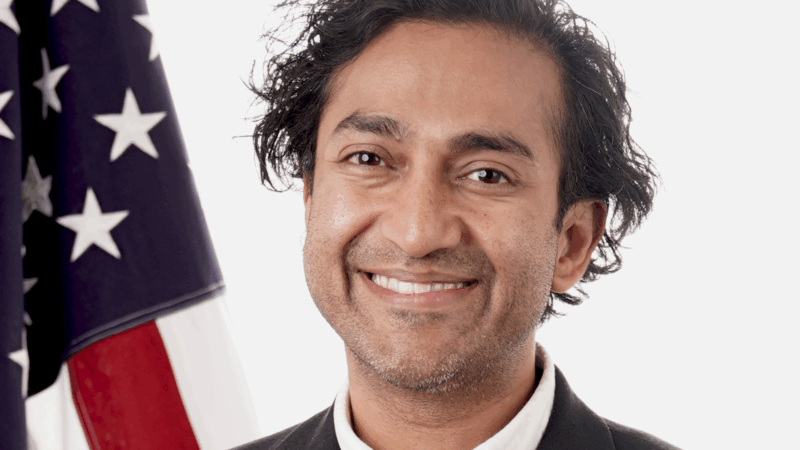
Trump administration’s embattled FDA vaccine chief is leaving for the second time
The FDA's controversial vaccine chief, Dr. Vinay Prasad, is leaving the agency. It's the second time he has abruptly departed following decisions involving the review of vaccinations and specialty drugs.
Family, former presidents and a Hall of Famer give Rev. Jesse Jackson a final sendoff
Several speakers at Jackson's funeral invoked his hallmark catchphrases: "Keep hope alive" and "I am somebody."
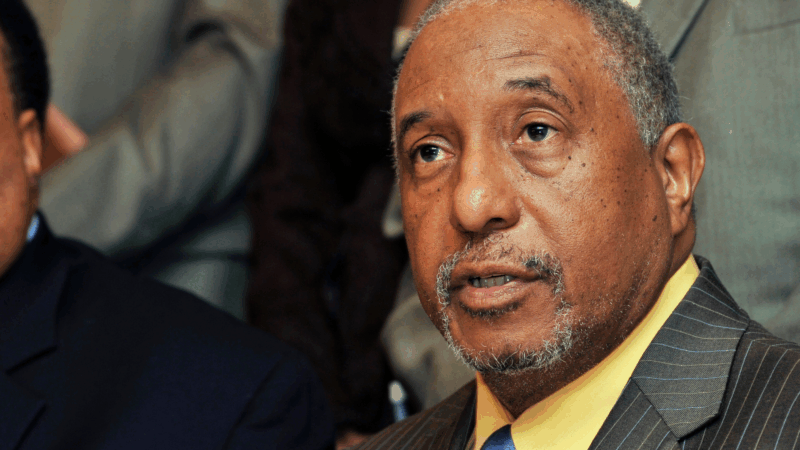
Bernard LaFayette, Selma voting rights organizer, dies at 85
Bernard LaFayette, who died Thursday, laid the foundations of the Selma, Alabama, campaign that culminated in the passage of the Voting Rights Act. He was a Freedom Rider and helped found the Student Nonviolent Coordinating Committee.
