
Care close to home: how a rural doctor meets medical needs in Alabama’s countryside
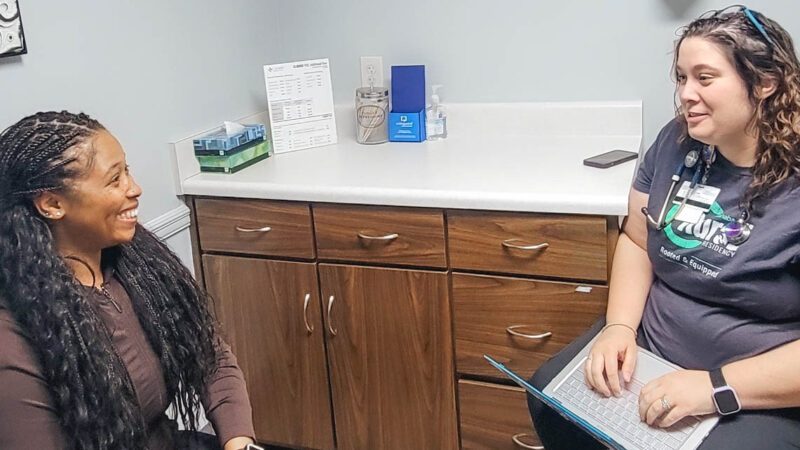
Doctors are harder to come by in rural Alabama than in big cities. That’s why Cahaba Medical Care developed a residency program that both trains and then hires doctors in rural clinics. One of their most recent graduates of the program, Dr. Haley Warwick, now works in the town of Woodstock, halfway between Tuscaloosa and Birmingham. Warwick’s office, which her family decorated for her, is characterized by cows.
Two tiny Scottish Highland cow figurines perch on either side of her new plaque, which reads, Doctor Haley Warwick, family medicine. Her diploma from her three-year residency with Cahaba Medical Care hangs on the wall next to Bible verses. More Scottish cows stickers adorn her laptop, which she brings with her to see her next patient, who is treated for a suspicious looking mole. Warwick has been helping this patient for a while and they know each other.
“Hello friend!” Warwick greeted her patient. “How are you?”
“Tired,” Her patient said with a sigh.
“Did you work last night again?”
“No, I didn’t work, I just goofed off,” Her patient replied and the pair shared a laugh.
It was Warwick’s first day as an attending at the clinic. Later, she will order an ultrasound and send another patient to a different Cahaba Medical Care clinic to see an OBGYN. It won’t be too expensive, she told the patient, who is suffering from severe bleeding and cramps outside of her menstrual cycle. Helping women get medical conditions diagnosed and treated is a big part of her job.
“People keep not having pap smears before Cahaba,” Warwick said. “They didn’t have transportation to the OBGYN or didn’t have insurance or both. And so you see a lot of people who say ‘I’ve never had a pap smear.’”
These problems aren’t uncommon. The Commonwealth Fund, a health policy nonprofit, found last year that Alabama ranks 45th in overall women’s health and 42nd in coverage, access and affordability.
Warwick also helps a lot of patients who struggle with chronic illnesses — a common problem across the state. The Alabama Department of Public Health reports that the top seven causes of death in 2021 were all chronic diseases.
“We deal with a lot of uncontrolled diabetes,” Warwick said. “Us in the South, we don’t have great diets. We eat fried foods, we eat junk foods.”
Warwick added that since people who live in rural Alabama often struggle with poverty, that affects how their ability to manage their health.
“You try to control the diabetes, but if all patients can afford is junk food then it’s hard to control,” Warwick said.
The clinic does what it can by offering payment plans. It also holds drives for hygiene products like diapers and period products.
Because she did her residency at the clinic, Warwick already knows several of her patients and is able to give them continuous care they might not otherwise have access to. She said when patients can afford to keep coming back, she is better able to help them manage their conditions. She sent one of her patients to a cardiologist because he had an irregular heartbeat. And she wouldn’t have known something was wrong if she didn’t know her patient well.
“He came into my office one day after a hospital follow up and I said, ‘You’re not yourself,’” Warwick said. “I said ‘Something is off.’ I sent him to the hospital where he was diagnosed with atrial fibrillation.”
Warwick, like other Cahaba providers, lives in the community she works in. The Alabama Hospital Association recommends providers live where they work. Warwick said she likes small towns, being originally from one in Tennessee.
“That’s how I knew I wanted to stay rural because I’m not a city girl whatsoever,” Warwick said, with a giggle.
Warwick said she helped her family members with medical issues growing up but her dreams of becoming a doctor predate her earliest memories.
“My grandparents said I would watch the St. Jude telethons and I would point to the kids and say ‘I’m gonna make those kids better one day,’” Warwick said.
Warwick said growing up, her own family struggled to find medical care in their rural community. Now, she’s working so that others can find care closer to home.
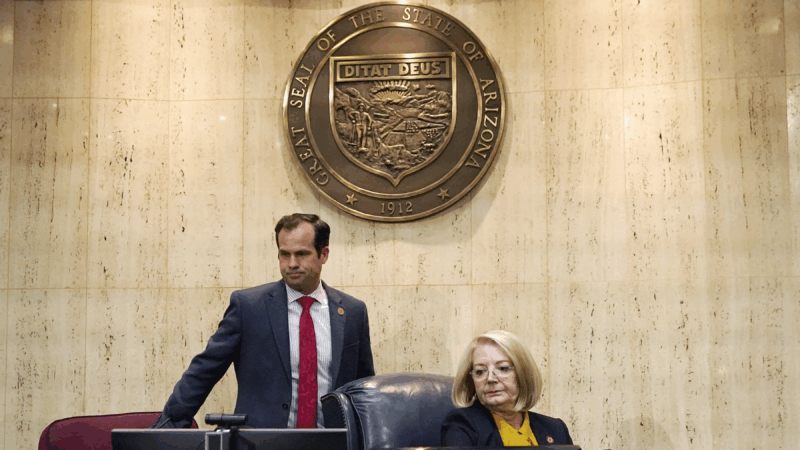
Top Arizona lawmaker says he’s complied with a subpoena for 2020 election records
Arizona's state Senate president says he has complied with a subpoena he received last week seeking records from a flawed, Republican-led review of the 2020 election in Maricopa County.

Colors fly as Hoover celebrates Holi
Colored powder filled the air at Veterans Park in Hoover on Saturday. Crowds gathered to celebrate Holi, the Hindu festival of Spring, usually identified by the throwing of colors.
Americana’s newcomer Jobi Riccio faces the pressure on her new record
The country and bluegrass songwriter talks about her sophomore album, Face the Feeling, out May 15.

What to know about Mojtaba Khamenei, Iran’s new supreme leader
The second son of the late supreme leader keeps a low profile. But he's long been viewed as wielding his power behind the scenes, from crushing dissent to influencing presidential elections.
Anthropic sues the Trump administration over ‘supply chain risk’ label
The Pentagon told suppliers they can't use Anthropic's artificial intelligence tools after the company said it would not let its tech be used for autonomous weapons and mass domestic surveillance.
This historian dug up the hidden history of ‘amateur’ blackface in America
In her new book, Darkology, historian Rhae Lynn Barnes writes about how blackface and minstrel shows became one of the most popular forms of entertainment in 19th- and 20th-century America.
