
The Voting Rights Act is turning 60. Civil rights marchers recall a hard-won struggle
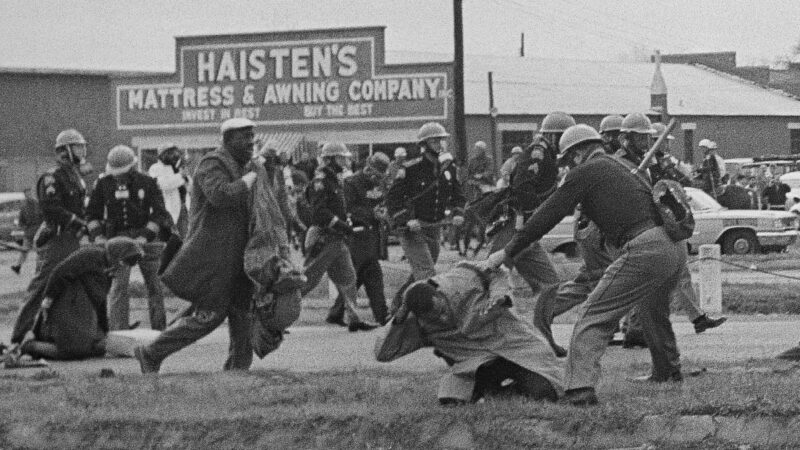
State troopers swing billy clubs to break up a civil rights voting march in Selma, Ala., March 7, 1965.
MONTGOMERY, Ala. (AP) — Facing a sea of state troopers, Charles Mauldin was near the front line of voting rights marchers who strode across the now-infamous Edmund Pettus Bridge in Selma, Alabama, on March 7, 1965.
The violence that awaited them shocked the nation and galvanized support for the passage of the U.S. Voting Rights Act a few months later.
Wednesday marks the 60th anniversary of the landmark legislation becoming law. Those at the epicenter of the fight for voting rights for Black Americans recalled their memories of the struggle, and expressed fear that those hard-won rights are being eroded.
Bloody Sunday in Alabama, 1965
Mauldin was 17 when he joined the ill-fated “Bloody Sunday” march. John Lewis, who became a longtime Georgia congressman, and Hosea Williams were the first pair of marchers. Mauldin was in the third pair.
“We had gotten past being afraid at that point. What was happening in Selma and to us was so unjust that we were determined to fight it regardless of the consequences,” Mauldin, now 77, said.
The head of the state troopers told them that they were in an illegal gathering and had two minutes to disperse. Williams asked for a moment to pray, Mauldin recalled.
Immediately, state troopers in gas masks and helmets, as well as deputies and men on horseback, attacked the marchers — men, women, children. They lashed out with billy clubs and tear gas, with stomping horse hooves and cattle prods.
A cause worth dying for
Richard Smiley, then 16, was also among the marchers. He stashed candy in his pockets so he would have something to eat in case they went to jail.
As they approached the bridge, he saw about 100 white men on horseback.
“The only qualification they needed was to hate Blacks,” Smiley said.
“Our knees were knocking. We didn’t know whether we were going to get killed. We were afraid but we weren’t going to let fear stop us,” Smiley, 76, recalled. “At that point we would’ve gave up our life for the right to vote. That’s just how important it was.”
Selma in 1965 was a “very poor city and a racist city,” he said. He said there were some “white people in the town that supported our cause, but they couldn’t stand up” because of what would happen to them.
Echoes of the past
The Voting Rights Act led to sweeping change across the American South as discriminatory voting practices were dismantled and Black voter turnout surged. Democratic President Lyndon Johnson called the act “a triumph for freedom as huge as any victory won on any battlefield,” when he signed it on Aug. 6, 1965.
However, both Mauldin and Smiley see echoes of the past in the current political climate. While not as extreme as the policies of the Jim Crow South, Mauldin said there are attacks on the rights of Black and brown voters.
“The same struggle we had 61 years ago is the same struggle we had today,” Mauldin said.
Some states have enacted laws that make it harder not easier to vote, with voter ID requirements, limits to mail voting and other changes. President Donald Trump and Republican-led states have pushed sweeping rollbacks of diversity, equity and inclusion initiatives with Trump declaring he “ended the tyranny” of such programs.
The Justice Department, once focused on protecting access to voting, is taking steps to investigate alleged voter fraud and noncitizen voting. The department is joining Alabama in opposing a request to require the state to get future congressional maps precleared for use, calling it “a dramatic intrusion on principles of federalism.”
A long, unfinished struggle
The fight for voting rights was a long struggle, as is the struggle to maintain those rights, said Hank Sanders, a former state senator who helped organize the annual Bloody Sunday commemoration in Selma.
Two weeks after Bloody Sunday, the Rev. Martin Luther King led marchers out on the walk to Montgomery, Alabama, to continue the fight for voting rights. Sanders was among the thousands who completed the last legs of the march and listened as King’s famous words “How long, not long” thundered down over the crowd.
“That was a very powerful moment because I left there convinced that it wouldn’t be long before people would have the full voting rights,” Sanders, 82, recalled. He said the reality it would be a longer fight set in the next year when a slate of Black candidates lost in an overwhelmingly Black county
The Voting Rights Act for decades required that states with a history of discrimination — including many in the South — get federal approval before changing the way they hold elections. The requirement of preclearance effectively went away in 2013 when the U.S. Supreme Court ruled, in a case arising from Alabama, that the provision determining which states are covered was outdated and unconstitutional.
That led to a flood of legislation in states impacting voting, Sanders said. “It’s no longer a shower, t’s a storm,” Sanders said.
“I never thought that 50 years later, we’d still be fighting,” Sanders said, “not just to expand voting right but to be able to maintain some of the rights that we had already obtained.”
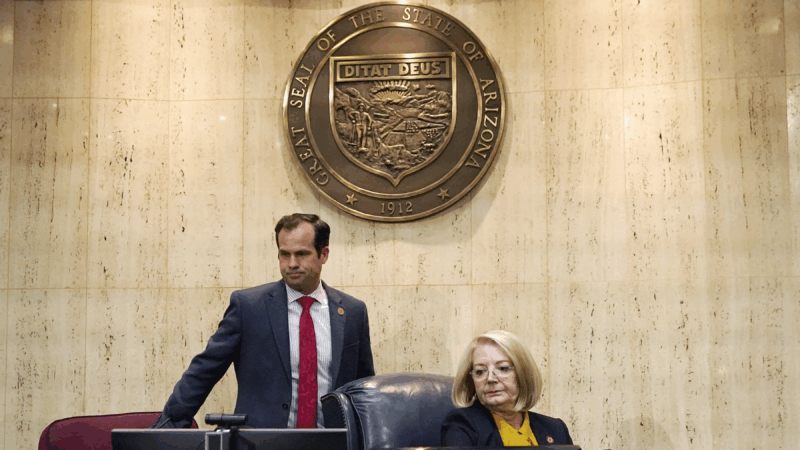
Top Arizona lawmaker says he’s complied with a subpoena for 2020 election records
Arizona's state Senate president says he has complied with a subpoena he received last week seeking records from a flawed, Republican-led review of the 2020 election in Maricopa County.
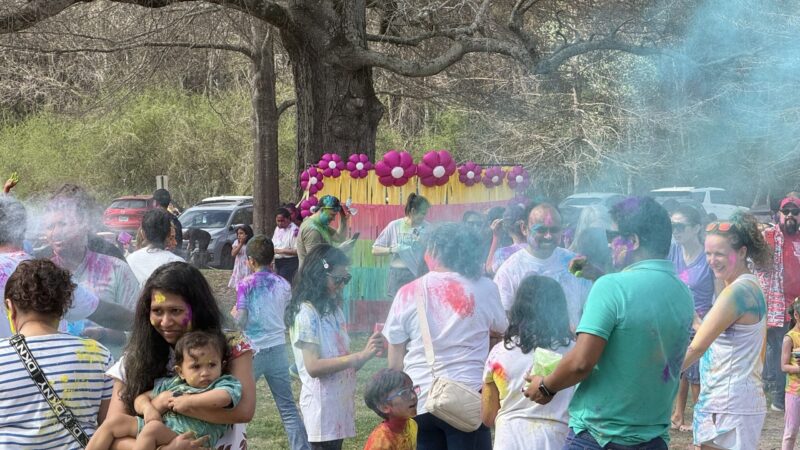
Colors fly as Hoover celebrates Holi
Colored powder filled the air at Veterans Park in Hoover on Saturday. Crowds gathered to celebrate Holi, the Hindu festival of Spring, usually identified by the throwing of colors.
Americana’s newcomer Jobi Riccio faces the pressure on her new record
The country and bluegrass songwriter talks about her sophomore album, Face the Feeling, out May 15.
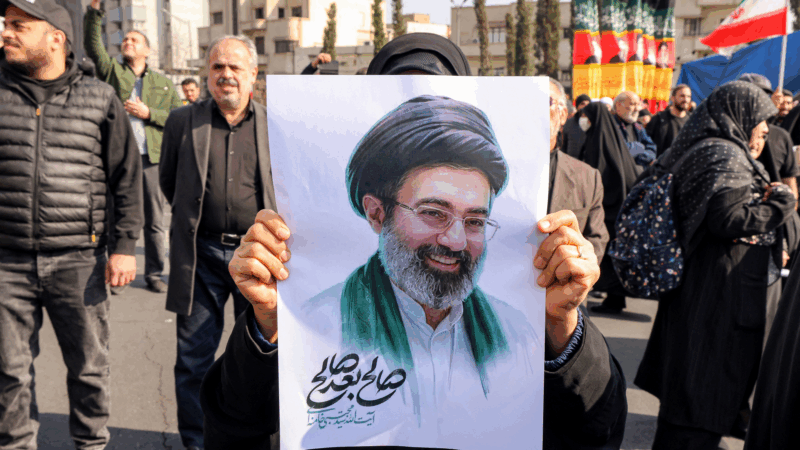
What to know about Mojtaba Khamenei, Iran’s new supreme leader
The second son of the late supreme leader keeps a low profile. But he's long been viewed as wielding his power behind the scenes, from crushing dissent to influencing presidential elections.
Anthropic sues the Trump administration over ‘supply chain risk’ label
The Pentagon told suppliers they can't use Anthropic's artificial intelligence tools after the company said it would not let its tech be used for autonomous weapons and mass domestic surveillance.
This historian dug up the hidden history of ‘amateur’ blackface in America
In her new book, Darkology, historian Rhae Lynn Barnes writes about how blackface and minstrel shows became one of the most popular forms of entertainment in 19th- and 20th-century America.
