
Following Trump’s lead, Alabama seeks to limit environmental regulations
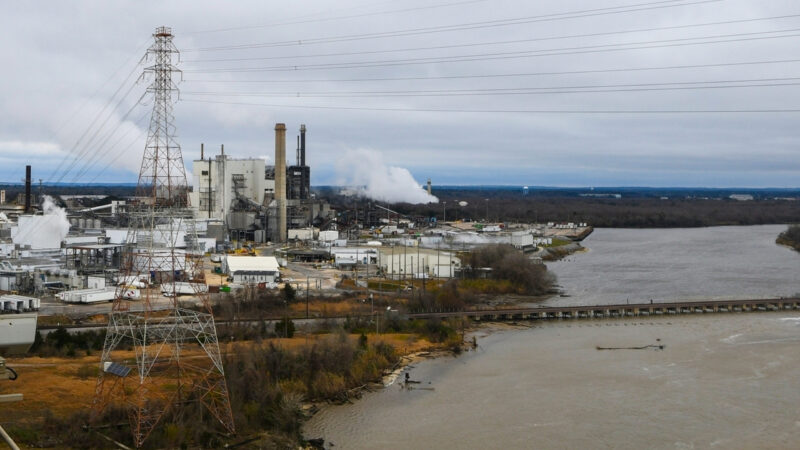
Industrial development is seen along the Mobile River near Mobile, Ala., on Jan. 29, 2019.
MONTGOMERY, Ala. (AP) — Some Republican legislators are looking to restrict their states’ ability to set environmental regulations, a move that comes as President Donald Trump ’s administration pushes to roll back environmental rules on power plants, water and greenhouse gases.
The Alabama Legislature on Tuesday approved legislation backed by business groups that would prevent state agencies from setting restrictions on pollutants and hazardous substances exceeding those set by the federal government. In areas where no federal standard exists, the state could adopt new rules only if there is a “direct causal link” between exposure to harmful emissions and “manifest bodily harm” to humans.
Supporters said the Alabama measure would ground standards in “sound science” and prevent regulatory overreach. Environmental groups said it would cripple the state’s ability to respond to environmental or health risks, including a group of chemicals known as PFAS, or forever chemicals, that has contaminated swaths of the South.
Sarah Stokes, a senior attorney with the Southern Environmental Law Center, said the bill sets an “impossible hurdle” for state regulations since the bill specifies that an “increased risk of disease” is not enough to demonstrate harm to humans.
“It’s a blank check to businesses. We’re basically sacrificing human health for businesses,” Stokes said. “That doesn’t seem like the best calculation for our citizens.”
The U.S. Chamber of Commerce and business groups supported the legislation, and the bill’s sponsor, Republican Sen. Donnie Chesteen, told a legislative committee this month that his bill is a “pro-business” piece of legislation.
“If we’re going to be able to compete with states in the Southeast to attract and bring some of these businesses in, then we need to have these standards adopted so that it’s clearly defined what our companies are working with,” Chesteen said. Supporters also argued the bill follows Trump’s deregulatory agenda.
“This does not remove the use of sound science and legitimate science,” Republican Rep. Troy Stubbs said during debate. “What it does is protect Alabama and the people of Alabama from runaway government that can become overly burdensome and regulatory to a point that it drives the cost of living way up.”
Stubbs disputed that it would weaken existing rules, saying current state regulations would stay in place. However, the environmental lawyer Stokes said she is concerned that businesses could use it as a basis to challenge existing rules.
The measure is the latest effort to restrict state-level environmental regulations. Indiana Gov. Mike Braun signed an executive order last year saying Indiana can’t have new environmental rules stricter than federal ones unless deemed necessary by state law or the governor. Tennessee lawmakers last year passed legislation requiring any regulations that are more stringent than federal regulations to be based on links to “manifest bodily harm in humans.”
Stokes said the Alabama proposal goes further than the Tennessee law. A similar bill has been introduced in Utah.
Stokes said the Alabama legislation was introduced after advocacy groups persuaded the Alabama Environmental Management Commission to consider updating state standards for arsenic and cyanide and 11 other toxic pollutants.
Cara Horowitz, an environmental law professor and executive director of the Emmett Institute on Climate Change and the Environment at UCLA School of Law, said the legislation would prevent state agencies from making “independent decisions about how much to protect public health from things like water pollution, air pollution, and toxics.”
“Alabama could adopt its own pollution standard only where the state’s rationale for doing so relies on a very particular kind of science,” Horowitz wrote in an email. “Alabama could not rely, for example, on studies showing a correlation between pollution exposure and an increased risk of disease.”
The bill also bars agencies from using the EPA’s Integrated Risk Information System, which characterizes the health hazards of chemicals found in the environment, as the default basis for water quality standards. A lobbying group for the chemical industry has criticized the system as overly burdensome and scientifically flawed.
Democrats in the Alabama Legislature spoke against the bill for two hours until GOP lawmakers voted to end debate and force a vote.
Democratic Rep. Chris England said the bill turns Alabama residents into test subjects. “We are a petri dish for businesses to do as they will until they kill people,” England said.
Rep. Neil Rafferty, also a Democrat, said the bill is “defining sound science just to gut our ability to use it to drive science-based and data-driven policy.”
The state House of Representatives voted 88-34 for the bill, which now goes to Republican Gov. Kay Ivey. A spokeswoman for Ivey did not have an immediate comment on the bill.
With a win over Sweden, the U.S. men’s hockey team will play for an Olympic medal
A thrilling overtime goal by defenseman Quinn Hughes puts Team USA through to a semifinal game against Slovakia. On the other side of the bracket, Canada had its own close call, but moves on to face Finland.
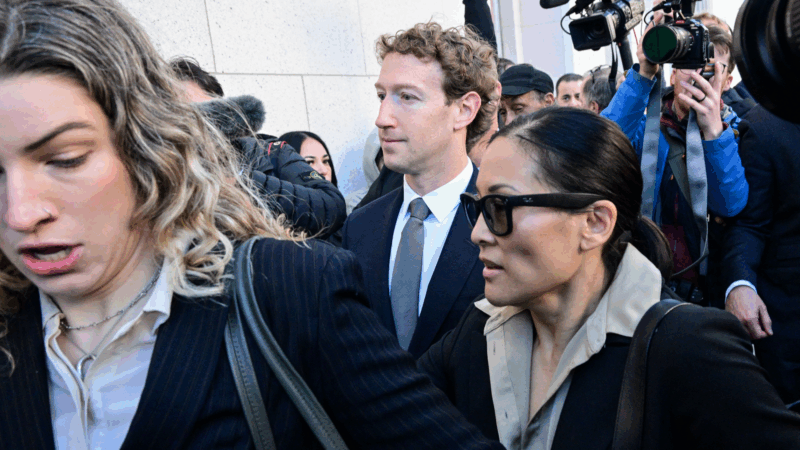
Zuckerberg grilled about Meta’s strategy to target ‘teens’ and ‘tweens’
The billionaire tech mogul's testimony was part of a landmark social media addiction trial in Los Angeles. The jury's verdict in the case could shape how some 1,600 other pending cases from families and school districts are resolved.
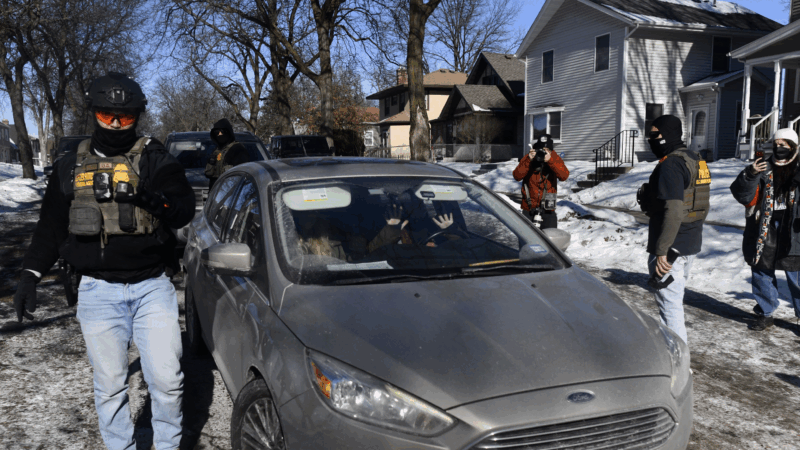
The Trump administration is increasingly trying to criminalize observing ICE
ICE officers often tell people tracking and watching them that they are breaking federal law in doing so, but legal experts say the vast majority of observers are exercising their constitutional rights.
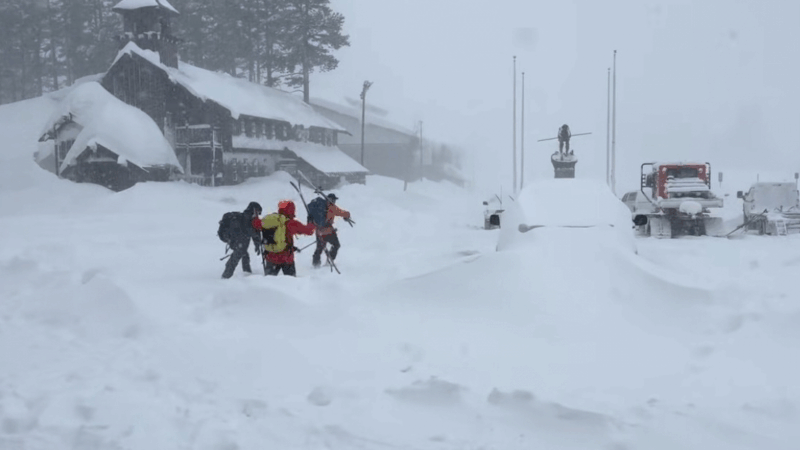
8 backcountry skiers found dead and 1 still missing after California avalanche
Authorities say the bodies of eight backcountry skiers have been found and one remains missing after an avalanche near Lake Tahoe in California. Six others were found alive.
FDA reverses course on Moderna flu shot
The Food and Drug Administration's about-face comes a little more than a week after the agency refused to consider the company's application to market the new kind of influenza vaccine.
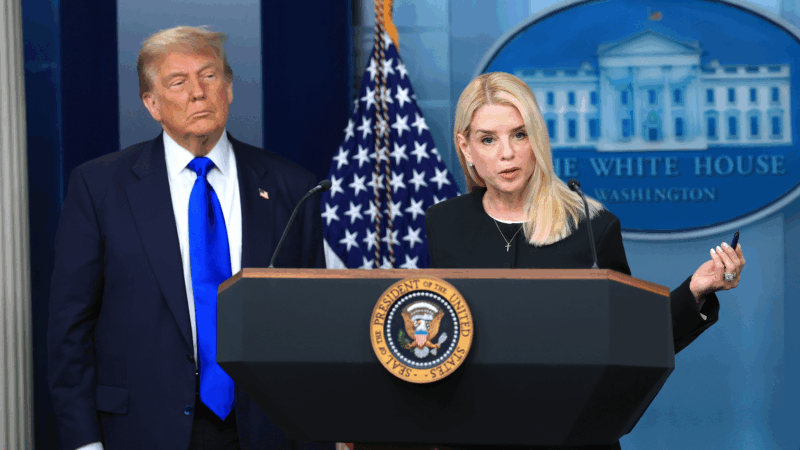
Trump would like the government he leads to pay him billions
President Trump is asking the federal government for billions of dollars in damages, putting his own Justice Department on the spot and creating an unprecedented ethical morass.
