
Bill would move Alabama to closed primaries
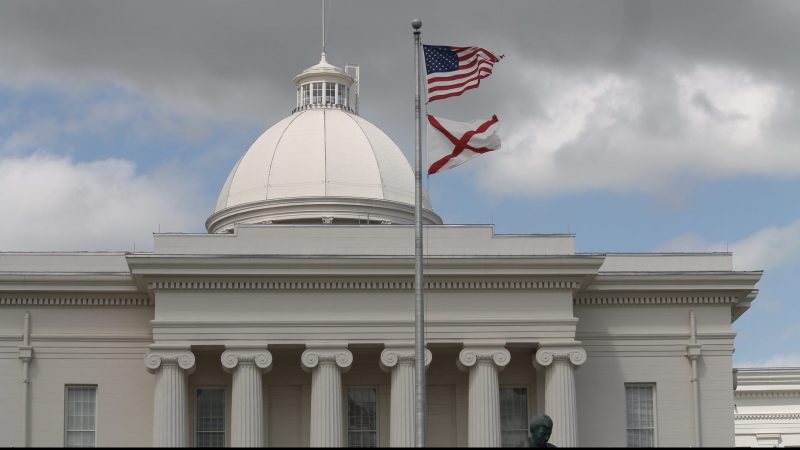
Right now, any Alabama voter can participate in a primary or primary runoff election. Lawmakers in Montgomery took up a bill this week that would change that system. We get more on that and other legislative action from Todd Stacy. He’s host of Capitol Journal and Alabama Public Television. He spoke with WBHM’s Andrew Yeager.
This interview was edited for length and clarity.
This bill in question would require residents to choose a political party when they register to vote in order to vote in a primary. It received a House committee hearing this week. What came out of that?
They didn’t vote on it. Like you said, it was just a hearing. They’re probably going to return next week and vote on it. This idea has been around for a while. Like you say, Alabama does not have [closed primaries]. You can vote in the Republican primary. You can vote in the Democratic primary. The only restriction there is that if you vote, you can’t cross over. If you voted in the Republican primary, then you can’t cross over and turn around and vote in the Democratic runoff or vice versa. So that’s the only restriction.
But this would mean that you would have to register as a Republican or as a Democrat to vote in that party’s primary. Now there’s lots of ways you could do that. In fact, you could it at the ballot box. There’s always been resistance to this just because a lot of folks fear that it would really just diminish turnout. There are lots of Alabamians who are pretty independent and don’t really want to register by party to say nothing of people like us in the media.
What the driving force behind this is the Alabama Republican Party. They want to close off the primary to only those who are loyal Republicans. And they think that will get more conservative candidates in elected office. That’s where it’s coming from. We’ll see if it has the legs to actually pass.
The Public Service Commission has received a lot of attention this session with energy bills on the minds of many Alabamians. The Senate on Thursday passed a bill which would overhaul the utility regulator. What would this latest proposal do?
So they’ve gotten away from the appointed rather than elected position. That’s dead. So this would keep it as an elected body, but expand it from three public service commission members to seven and seven by Alabama’s seven congressional districts. It would also create a Secretary of Energy. This is an idea that came from Tommy Tuberville that would oversee the body’s work.
And the whole point here, the driving force behind it is to somehow get a a handle on electricity rates. There’s a lot of folks upset about electricity rates and that’s being reflected in the legislature. So that passed the Senate. It passed unanimously and everybody, every member of the Senate was a co-sponsor. That’s significant. But over in the House, there’s another bill that goes even further. It would require rate hearings. There hasn’t been a rate hearing since the 1980s actually. And so you’re starting to hear talk of maybe these bills get merged. There are eight days remaining in the session, so that’s really an issue to watch.
Lawmakers took up the state’s budgets this week with the General Fund budget making out of the Senate on Wednesday. Give us an overview of that spending package.
Well, it’s pretty familiar. It’s a lot like last year’s budget or, I guess, the current fiscal year. [It’s] $3.72 billion. It is a slight increase over what the governor proposed. It fully funds state employee pay increases. Most agencies level funded. There are a few agencies that got plus-ups like corrections, ALEA, things like that. But it’s a pretty normal budget and it passed unanimously. I don’t expect any resistance to that as it goes to the House.
That’s the general fund side. Now the education budget made it through the House Thursday. What are the highlights from that budget?
The House passed the $10.5 billion Education Trust Fund. Think about that. I mean, you go back 20 years and you’re talking like $6 billion. It’s 10.5 Billion. That’s a new record for the state, should it pass. It funds a teacher and education worker pay increase at 2%. It also includes about half of the shortfall for PEEHIP. That’s the Public Education Employees’ Health Insurance Program. That’s facing about a $380 million dollar hole That’s significant.
But also included in this budget are funding priorities like the Literacy Act, like the Numeracy Act, Pre-K, the RAISE Act, these programs that have seen success. We’ve seen some accolades lately for Alabama on the education front. The legislature really wants to keep the foot on the gas with some of these initiatives. You know, you put your money where your mouth is. Those funding priorities are reflected in this budget.

Giant robots battle it out in Detroit’s Robowar
Fighting robots is a cultural fantasy going back at least to Richard Matheson's 1956 story "Steel." One Detroit impresario is now bringing the idea to the stage — and real audiences.

Why ‘Sinners’ should win best picture (but probably won’t) — and more Oscar predictions
NPR critics share their hopes and predictions for the 2026 Academy Awards, which air on Sunday.

Countries are negotiating rules to mine the deep sea. The U.S. is pushing ahead alone
With growing interest in mining critical metals from the seafloor, countries are now negotiating international rules. The Trump administration is forging ahead on its own, speeding up environmental review for mining the fragile ecosystem.
4 confirmed dead after U.S. military aircraft goes down in Iraq
The U.S. Central Command confirmed that at least four of six crew members on the KC-135 aircraft were dead, after the refueling plane went down in western Iraq on Thursday.

It’s Chalamet vs. ballet in this week’s news quiz. Are your answers en pointe?
Meanwhile, if you've been paying attention to medicine, basketball and the British Parliament, you'll get at least three questions right this week.
Trump wants more apprenticeships. An Arkansas manufacturer is giving it a try
President Trump has touted apprenticeships as part of his promise of a golden era for American workers. But are his administration's investments enough?
