
Alabama’s new state climatologist takes the reins
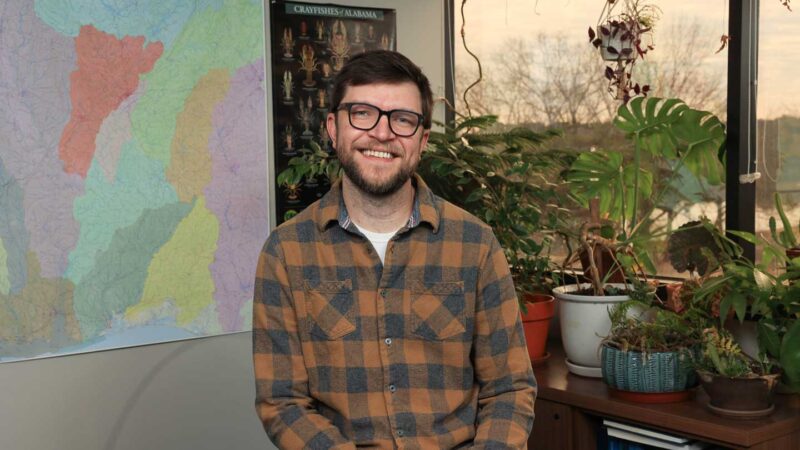
It’s the end of an era for Alabama. The outspoken and often controversial John Christy is retiring as Alabama’s state climatologist. In his place, Gov. Kay Ivey appointed current associate climatologist Lee Ellenburg. WBHM’s Richard Banks spoke with Ellenburg about his plans for the office.
This interview has been edited for length and clarity.
What are the duties of a state climatologist?
First and foremost, it’s to really serve Alabama, and that means the agencies that are within the state and the public, through trusted research, outreach, data driven tools that support decisions about our state’s environment and our economy. We try to highlight significant events and, then also, when agencies will reach out to us to get data, maybe that’s through the ag and industries [agency], trying to understand certain thresholds for maybe crop insurance or disaster declarations.
Do you have stations around the state and other tools that you take measurements from?
We’ve got a host of stations that can observe a range of things from temperature, rainfall and wind speed through our office. We have our own state mesonet, and we work really closely with the University of South Alabama. They have a great mesonet and are expanding that. There’s a host of different networks from Auburn and Extension through our office. So there’s a lot of different ways that we collect this data. Some of these are nationally, kind of maintained networks. And so a huge part of our role is trying to bring that data together to have a better perspective and a more informed kind of outlook on what the risks are.
And do economic developers and businesses work with you to determine what is or isn’t a good site to develop or, let’s say, build out?
Yeah, that would be the responsibility of our office. I haven’t necessarily had to field those questions just yet, [since I] just started the other day. But like when Mercedes was coming in, understanding the climatology of tornadoes and where they’re likely to strike. I have had some folks reach out for, like, frost advisories, where the likelihood of frost is across the state and different things for temperature.
How will you approach your job differently from your predecessor, John Christie, who’s been in that office for what, the past 25 years now?
My first thing, I hired a climate services coordinator. Our plan is to really visit every agency in Alabama that might even touch climate data. I want to know what they do, how they do it, understand the data they use, let them know what kind of data we provide, better understand if there’s more data and different products that could make their lives easier.
Christie is, I’m sure you know, he’s a climate change skeptic, and he’s been a controversial player in the climate change debate, not just in the state, but nationally for many years. He’s even appeared before Congress about 20 times. He believes that greenhouse gas emissions, especially from carbon dioxide, have very little influence on the climate. And that’s a belief that runs counter to the vast majority of climate researchers. Now, as the state’s new climatologist, what are your thoughts about climate change? Is it happening? Is it human caused?
While I may not agree with every interpretation or conclusion that Dr. Christie has advanced, I just want to be very clear, I have a very deep respect for his scientific rigor. But yes, the climate is changing, and yes, anthropogenic forces play an important role, whether that’s through greenhouse gasses, but also at the regional scale. We’re looking at drivers like land use change that can be really impactful as well. And so my responsibility at this office is to understand what those changes mean. Specifically for Alabama.
Also we place a really equal emphasis on past climate, right? So we look at understanding what’s happened in the past 100 years, because things that happened can tell us about what’s possible here. In the 50s, we had, from 1952 to 54, some of the driest years on record. The 112 degrees in 1925. The negative 27 degrees in 1966. We’ve had some incredible extremes. And so even being able to understand with certainty what’s happened in the past and knowing that these things can and most likely will happen again, that allows us to create a perspective and a case for having more resilience across the state.
What else? Anything else that you want to add?
Just incredibly honored to be named the state climatologist. And my connection to Alabama is personal as well as professional. I’ve lived here my whole life. I grew up in Cullman County. My dad owned a nursery in Baileyton. I saw firsthand how climate variability affects livelihoods. These were not just statistics. We saw them firsthand and my dad had to deal with that and understand what risk is and resilience.
One of my favorite authors, Wendell Berry – I named my son after him – he always writes about how place is integral to kind of understanding the world around us. The idea is that the meaning of action and time is kind of inseparable from place. And so my commitment to this role is grounded in that belief that the work we do is most meaningful when it’s rooted in a history and in a place [where] we can be accountable to the communities we serve. And so it’s a really great honor and I’m looking forward to leading this office.
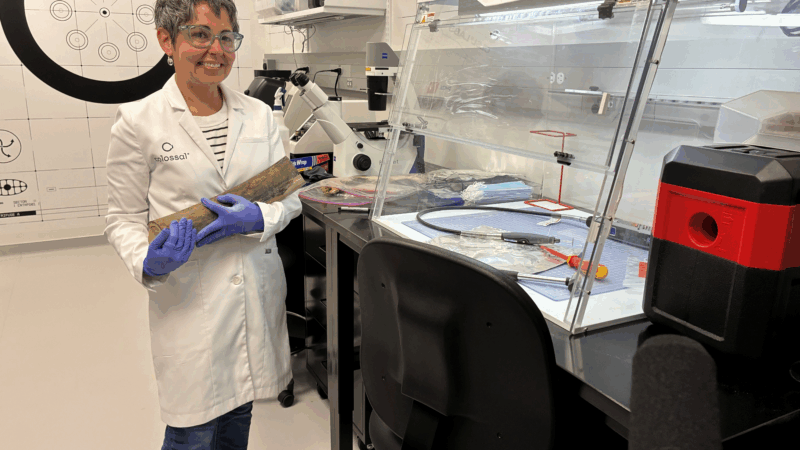
Colossal Biosciences breeds controversy while trying to revive mammoths
A Texas biotech company is trying to bring mammoths and other extinct creatures back to life. The science is as intriguing as the ethical questions are thorny.
Mundane, magic, maybe both — a new book explores ‘The Writer’s Room’
Why are we captivated by the spaces where where authors write? Katie da Cunha Lewin set out to explore "The Hidden Worlds That Shape the Books We Love."
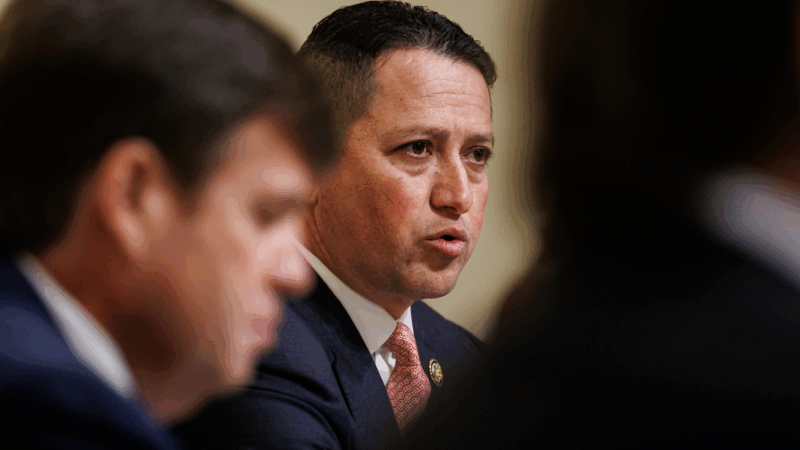
GOP Rep. Tony Gonzales heads to a runoff in Texas amid a new ethics probe in the House
Texas Republican Rep. Tony Gonzales has faced increasing pressure from his party to resign or drop out of his race after allegations of an affair with a staffer.
Satellite images show Iran school strike hit more targets than earlier reported
The images suggest that precision munitions struck other buildings, including a clinic that was also inside the complex.
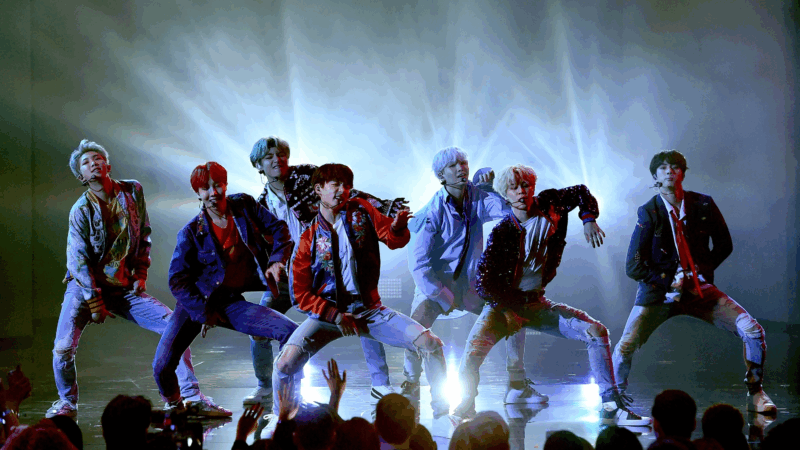
As live music becomes more inaccessible, most fans stay watching through screens
Now that it is becoming harder and harder to get a ticket to your favorite artist's show, watching indirectly is becoming a popular compromise. What is gained and lost in a tiered concert hierarchy?
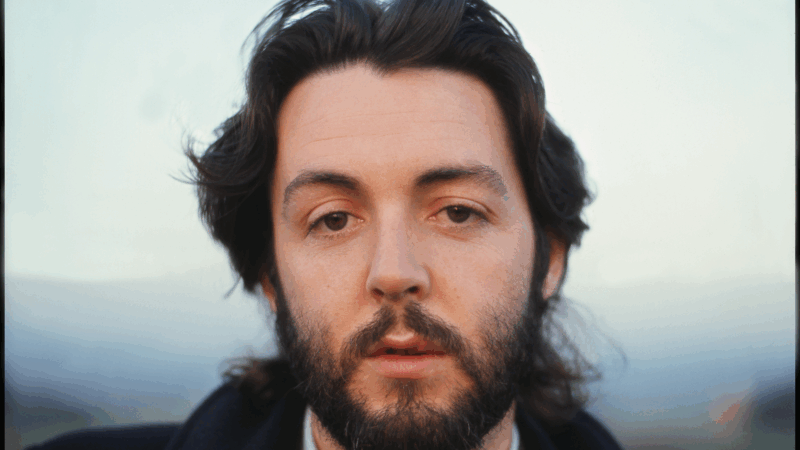
Paul McCartney’s decade of transformation: From Beatles breakup to John Lennon’s murder
Man on the Run shows McCartney's effort to define himself outside The Beatles' shadow: "Paul making this documentary was a way of coming to terms with that whole period," says director Morgan Neville.
