
Supreme Court struggles over whether Alabama can execute man found to be intellectually disabled

The Supreme Court facade is seen in Washington, Nov. 4, 2020.
By Mark Sherman and Kim Chandler
WASHINGTON (AP) — The Supreme Court on Wednesday struggled over how courts should decide borderline cases of whether convicted murderers are intellectually disabled and should be shielded from execution.
There was no clear outcome apparent after the justices heard two hours of arguments in an appeal from Alabama, which wants to put to death a man who lower federal courts found is intellectually disabled.
Joseph Clifton Smith, 55, has been on death row roughly half his life after his conviction for beating a man to death in 1997.
The Supreme Court prohibited execution of intellectually disabled people in a landmark ruling in 2002. The justices, in cases in 2014 and 2017, held that states should consider other evidence of disability in borderline cases because of the margin of error in IQ tests.
The issue in Smith’s case is what happens when a person has multiple IQ scores that are slightly above 70, which has been widely accepted as a marker of intellectual disability. Smith’s five IQ tests produced scores ranging from 72 to 78. Smith had been placed in learning-disabled classes and dropped out of school after seventh grade, his lawyers said. At the time of the crime, he performed math at a kindergarten level, spelled at a third-grade level and read at a fourth-grade level.
Seth Waxman, representing Smith, told the justices his client received a “diagnosis of mental retardation” — then the commonly accepted term for mental disability — in the seventh grade.
Alabama, 20 other states and the Trump administration all are asking the high court, which is more conservative than it was a decade ago, to cut back on those earlier decisions.
Chief Justice John Roberts and Justices Samuel Alito and Clarence Thomas dissented in both cases, and Alito and Thomas sounded as if they would side with Alabama.
A ruling for Smith would lead to messy court fights for other death row inmates “where everything is up for grabs in every case,” Alito said.
Alabama lawyer Robert M. Overing said Smith’s case should be an easy win for the state because Smith never scored below 70 on any IQ test.
“There is no way that he can prove an IQ below 70,” Overing said.
Alabama appealed to the Supreme Court after lower courts ruled that Smith is intellectually disabled, looking beyond the test scores. The justices had previously sent his case back to the federal appeals court in Atlanta, where the judges affirmed that they had taken a “holistic” approach to Smith’s case, seemingly in line with high court decisions.
But the justices said in June they would take a new look at the case.
Waxman urged the justices to affirm the lower courts rather than issue a decision that would effectively rely exclusively on test scores and rule out additional evidence in cases with borderline IQ scores.
Justice Elena Kagan said courts have to consider the additional evidence, but “that’s not to say you have to accept it.”
Rights groups focused on disabilities wrote in a brief supporting Smith that “intellectual disability diagnoses based solely on IQ test scores are faulty and invalid.”
Smith was convicted and sentenced to death for the beating death of Durk Van Dam in Mobile County. Van Dam was found dead in his pickup truck. Prosecutors said he had been beaten to death with a hammer and robbed of $150, his boots and tools.
A federal judge in 2021 vacated Smith’s death sentence, though she acknowledged “this is a close case.”
Alabama law defines intellectual disability as an IQ of 70 or below, along with significant or substantial deficits in adaptive behavior and the onset of those issues before the age of 18.
A decision in Hamm v. Smith, 24-872, is expected by early summer.

Iran’s supreme leader warns any US attack would spark ‘regional war’
Iran's supreme leader warned Sunday that any attack by the United States would spark a "regional war" in the Mideast, further escalating tensions as President Donald Trump has threatened to militarily strike the Islamic Republic.

Minnesota citizens detained by ICE are left rattled, even weeks later
The number of immigration agents in Minnesota may be reduced, but they'll leave leave behind a changed community, including many U.S. citizens questioned and detained in recent weeks.

Gaza border crossing buzzes with activity after years of near-complete closure
Reopening the border crossing is a key step as the Israel-Hamas ceasefire moves ahead.
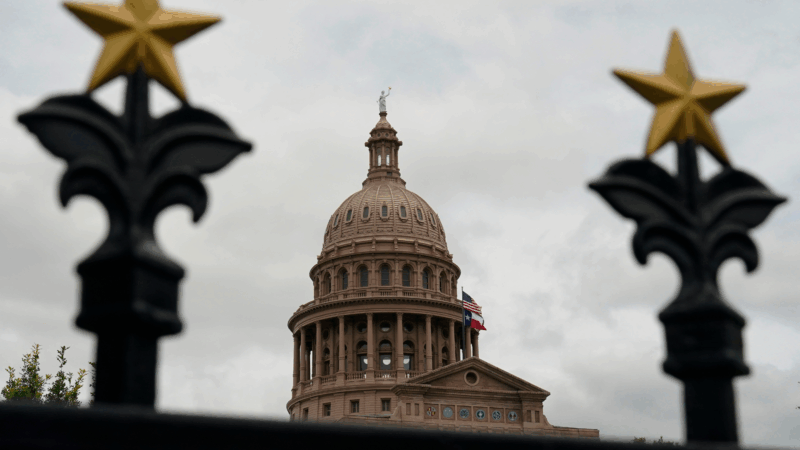
Democrat Taylor Rehmet wins a reliably Republican Texas state Senate seat, stunning GOP
Democrat Taylor Rehmet won a special election for the Texas state Senate on Saturday, flipping a reliably Republican district that President Donald Trump won by 17 points in 2024.

Trump says feds won’t intervene during protests in Democratic-led cities unless asked to do so
President Donald Trump said Saturday that he has instructed Homeland Security Secretary Kristi Noem not to intervene in protests occurring in cities led by Democrats unless local authorities ask for federal help.

U.S. intervention in Venezuela divides Houston
In nearly two dozen interviews, Houstonians expressed everything from admiration and relief to skepticism and dread following the seizure of leader Nicolás Maduro.
