
Most of the families applying for Alabama’s new school vouchers have kids in non-public schools
MONTGOMERY, Ala. (AP) — More than half of families who applied for Alabama’s new school voucher program have children attending a private school or are home schooling, numbers that buoy school choice advocates who say the flood of applications proves the approach is what parents want
Alabama Gov. Kay Ivey’s office released application figures Tuesday for the CHOOSE Act, the new program which will help eligible families tap state dollars to help pay for private school or home-schooling costs. Families submitted 22,167 applications for a total of 36,873 students.
Ivey said the robust number of applications are a sign that, “clearly, taxpaying Alabama families want school choice.”
“The CHOOSE Act, Alabama’s education savings account program, will allow more taxpaying Alabama families the opportunity to choose a school that meets their child’s individual needs. We are highly encouraged by the strong response in year one of the program,” Ivey said in a statement about the application numbers.
The substantial number of applications raises the possibility that the state will exhaust the available $100 million in funding for the first year of the program, and that lawmakers will look to put additional money into the program.
The numbers showed that more than half of the applications come for students who are already attending a private school or being home-schooled. Of those 36,873 students, 10,287 students are from public schools, 15,436 students are from private schools and 9,070 are homeschooled.
Alabama is among the states that are using vouchers, tax credits or scholarships to parents to help families pay for private school or education costs outside of the public school setting.
Alabama’s CHOOSE Act, or Creating Hope and Opportunity for Our Students’ Education Act of 2024, will provide eligible families with as much as $7,000 in state money through education savings accounts for private school tuition or costs at a participating school. Parents could also get up to $2,000 for home school expenses.
The first 500 slots are reserved for families of students with disabilities. Eligibility is initially limited to families earning up to 300% of the federal poverty level, which is about $77,460 for a family of three. The income cap will go away in 2027, but lower-income families and families with students with disabilities would have priority for funds.
Alabama lawmakers allocated $100 million for the first year of the program. Gina Maiola, a spokeswoman for Ivey, said the state will provide as many awards “as possible” out of the available funding.
Families will be notified beginning May 1 if they will receive an award.
“This far exceeded what we anticipated in year one as far as the number of applications. Question is how many of those are eligible. How many are under the 300% income cap?” Sen. Arthur Orr, the chairman of the Senate education budget-writing committee, said.
Orr, R-Decatur, said he is looking at the possibility of a conditional or supplemental appropriation if the $100 million isn’t enough to cover the eligible applicants.
White families accounted for 58.6% of applications while non-white families accounted for 41.4% of applications. Alabama’s population is about 64.1% white.
Supporters say the programs let parents choose how best to educate their children. Critics say it drains money from public schools to help families who may have already decided to enroll their children in a private school.
“I’m concerned about the fact that we have about 150 failing schools and those schools need additional revenue,” Sen. Rodger Smitherman, D-Birmingham, said referencing the designation for schools with low test scores.
“As this grows, it’s going to take money from public education,” Smitherman added.
Deadline looms as Anthropic rejects Pentagon demands it remove AI safeguards
The Defense Department has been feuding with Anthropic over military uses of its artificial intelligence tools. At stake are hundreds of millions of dollars in contracts and access to some of the most advanced AI on the planet.
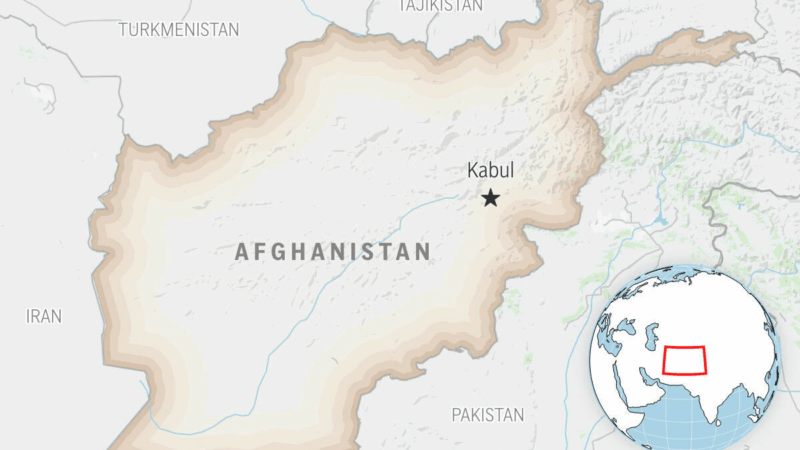
Pakistan’s defense minister says that there is now ‘open war’ with Afghanistan after latest strikes
Pakistan's defense minister said that his country ran out of "patience" and considers that there is now an "open war" with Afghanistan, after both countries launched strikes following an Afghan cross-border attack.

Hillary Clinton calls House Oversight questioning ‘repetitive’ in 6 hour deposition
In more than seven hours behind closed doors, former Secretary of State Hillary Clinton answered questions from the House Oversight Committee as it investigates Jeffrey Epstein.
Chicagoans pay respects to Jesse Jackson as cross-country memorial services begin
Memorial services for the Rev. Jesse Jackson Sr. to honor his long civil rights legacy begin in Chicago. Events will also take place in Washington, D.C., and South Carolina, where he was born and began his activism.

In reversal, Warner Bros. jilts Netflix for Paramount
Warner Bros. says Paramount's sweetened bid to buy the whole company is "superior" to an $83 billion deal it struck with Netflix for just its streaming services, studios, and intellectual property.

Trump’s ballroom project can continue for now, court says
A US District Judge denied a preservation group's effort to put a pause on construction
