
Alabama Supreme Court rules frozen embryos are ‘children’ under state law
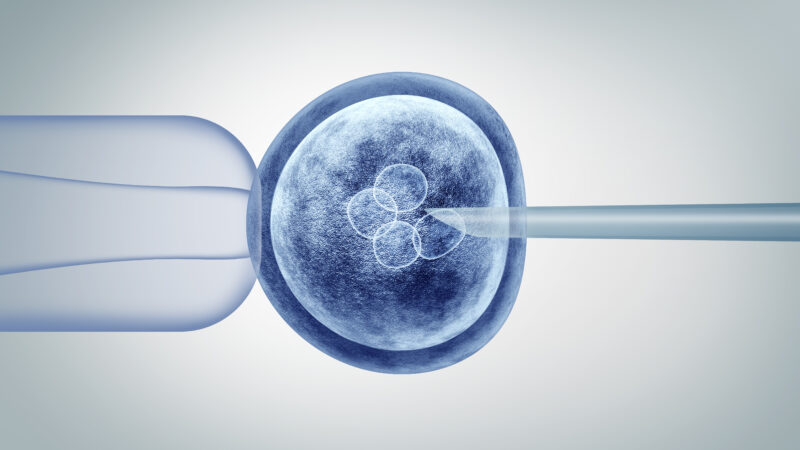
MONTGOMERY, Ala. (AP) — The Alabama Supreme Court has ruled that frozen embryos can be considered children under state law, a decision critics said could have sweeping implications for fertility treatment in the state.
The decision was issued in a pair of wrongful death cases brought by three couples who had frozen embryos destroyed in an accident at a fertility clinic. Justices, citing anti-abortion language in the Alabama Constitution, ruled that an 1872 state law allowing parents to sue over the death of a minor child “applies to all unborn children, regardless of their location.”
“Unborn children are ‘children’ … without exception based on developmental stage, physical location, or any other ancillary characteristics,” Justice Jay Mitchell wrote in Friday’s majority ruling by the all-Republican court.
Mitchell said the court had previously ruled that fetuses killed while a woman is pregnant are covered under Alabama’s Wrongful Death of a Minor Act and nothing excludes “extrauterine children from the Act’s coverage.”
The ruling brought a rush of warnings about the potential impact on fertility treatments and the freezing of embryos, which had previously been considered property by the courts.
“This ruling is stating that a fertilized egg, which is a clump of cells, is now a person. It really puts into question, the practice of IVF,” Barbara Collura, CEO of RESOLVE: The National Infertility Association, told The Associated Press Tuesday. The group called the decision a “terrifying development for the 1-in-6 people impacted by infertility” who need in-vitro fertilization.
She said it raises questions for providers and patients, including if they can freeze future embryos created during fertility treatment or if patients could ever donate or destroy unused embryos.
Sean Tipton, a spokesman with the American Society for Reproductive Medicine, said at least one Alabama fertility clinic has been instructed by their affiliated hospital to pause IVF treatment in the immediate wake of the decision.
Dr. Paula Amato, president of the American Society for Reproductive Medicine, said a decision to treat frozen fertilized egg as the legal equivalent of a child or gestating fetus could limit the availability of modern health care.
“By insisting that these very different biological entities are legally equivalent, the best state-of-the-art fertility care will be made unavailable to the people of Alabama. No health care provider will be willing to provide treatments if those treatments may lead to civil or criminal charges,” Amato said.
Gabby Goidel, 26, who is pursuing IVF treatment in Alabama after three miscarriages, said the court ruling came down on the same day she began daily injections ahead of egg retrieval.
“It just kind of took me by by storm. It was like all I could think about and it was just a very stressful thing to hear. I immediately messaged my clinic and asked if this could potentially halt us. They said we have to take it one day at a time,” Goidel said.
She said her clinic is continuing to provide treatment for now, but said it will let her know if they have to change course.
Goidel said she turned to IVF and preimplantation genetic testing after the multiple miscarriages related to genetic issues.
“Without IVF, I would have to probably go through several more miscarriages before I even had an option of having a baby that is my own,” she said.
The plaintiffs in the Alabama case had undergone IVF treatments that led to the creation of several embryos, some of which were implanted and resulted in healthy births. The couples paid to keep others frozen in a storage facility at the Mobile Infirmary Medical Center. A patient in 2020 wandered into the area and removed several embryos, dropping them on the floor and “killing them,” the ruling said.
The justices ruled that wrongful death lawsuits by the couples could proceed. The clinic and hospital that are defendants in the case could ask the court to reconsider its decision.
Michael Upchurch, a lawyer for the fertility clinic in the lawsuit, Center for Reproductive Medicine, said they are “evaluating the consequences of the decision and have no further comment at this time.”
An anti-abortion group cheered the decision. “Each person, from the tiniest embryo to an elder nearing the end of his life, has incalculable value that deserves and is guaranteed legal protection,” Lila Rose, president and founder of Live Action said in a statement.
Chief Justice Tom Parker issued a concurring opinion in which he quoted the Bible in discussing the meaning of the phrase “the sanctity of unborn life” in the Alabama Constitution.
“Even before birth, all human beings bear the image of God, and their lives cannot be destroyed without effacing his glory,” Parker said.
Justice Greg Cook, who filed the only full dissent to the majority opinion, said the 1872 law did not define “minor child” and was being stretched from the original intent to cover frozen embryos.
“No court — anywhere in the country — has reached the conclusion the main opinion reaches,” he wrote, adding the ruling “almost certainly ends the creation of frozen embryos through in vitro fertilization (IVF) in Alabama.”
The Alabama Supreme Court decision partly hinged on anti-abortion language added to the Alabama Constitution in 2018, stating it is the “policy of this state to ensure the protection of the rights of the unborn child.”
Supporters at the time said it would have no impact unless states gained more control over abortion access. States gained control of abortion access in 2022.
White House press secretary Karine Jean-Pierre said the Alabama decision reflected the consequences of the Supreme Court overturning Roe v. Wade and blamed Republican elected officials from blocking access to reproductive and emergency care to women.
“This president and this vice president will continue to fight to protect access to reproductive health care and call on Congress to restore the protections of Roe v. Wade in federal law for all women in every state,” Jean-Pierre told reporters aboard Air Force One.

Mideast clashes breach Olympic truce as athletes gather for Winter Paralympic Games
Fighting intensified in the Middle East during the Olympic truce, in effect through March 15. Flights are being disrupted as athletes and families converge on Italy for the Winter Paralympics.

A U.S. scholarship thrills a teacher in India. Then came the soul-crushing questions
She was thrilled to become the first teacher from a government-sponsored school in India to get a Fulbright exchange award to learn from U.S. schools. People asked two questions that clouded her joy.

Sunday Puzzle: Sandwiched
NPR's Ayesha Rascoe plays the puzzle with WXXI listener Jonathan Black and Weekend Edition Puzzlemaster Will Shortz.

U.S.-Israeli strikes in Iran continue into 2nd day, as the region faces turmoil
Israel said on Sunday it had launched more attacks on Iran, while the Iranian government continued strikes on Israel and on U.S. targets in Gulf states, Iraq and Jordan.
Trump warns Iran not to retaliate after Ayatollah Ali Khamenei is killed
The Iranian government has announced 40 days of mourning. The country's supreme leader was killed following an attack launched by the U.S. and Israel on Saturday against Iran.

Iran fires missiles at Israel and Gulf states after U.S.-Israeli strike kills Khamenei
Iran fired missiles at targets in Israel and Gulf Arab states Sunday after vowing massive retaliation for the killing of Supreme Leader Ayatollah Ali Khamenei by the United States and Israel.
