
The fight over Alabama’s congressional redistricting now shifts back to federal court
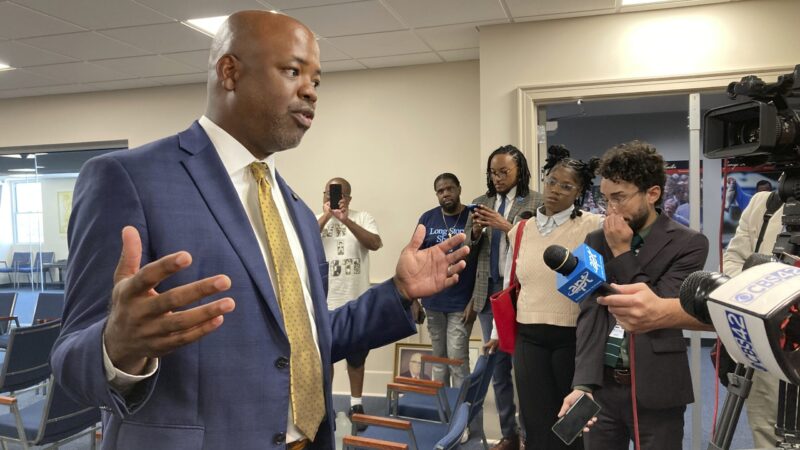
Alabama state Rep. Chris England, D-Tuscaloosa, discusses his objections to a redistricting plan for the state's seven congressional districts on Friday, July 21, 2023, at the Alabama Statehouse in Montgomery, Ala. Lawmakers are redrawing districts after courts said the current map likely violates federal law.
By Kim Chandler and Jeff Amy
MONTGOMERY, Ala. (AP) — Standing at an Alabama Statehouse microphone before lawmakers voted on new congressional districts, state Rep. Chris England said that change in the Deep South state has often happened only through federal court order.
The Democratic lawmaker accused Republicans of repeating history and flouting a judicial mandate to create a second majority-Black district in the state or “something quite close to it.”
“Alabama does what Alabama does. Ultimately, what we are hoping for, I guess, at some point, is that the federal court does what it always does to Alabama: Forces us to the right thing. Courts always have to come in and save us from ourselves,” said England, a Black lawmaker from Tuscaloosa.
The fight over whether Alabama’s congressional map complies with the Voting Rights Act of 1965 now shifts back to federal court as state Republicans submit their new plan to the same three-judge panel that struck down the previous districts.
The outcome could have consequences across the country as the case again weighs the requirements of the Voting Rights Act in redistricting. It could also impact the partisan leanings of one Alabama congressional district in the 2024 elections with control of the U.S House of Representatives at stake.
Alabama lawmakers on Friday approved new district lines six weeks after the surprise U.S. Supreme Court ruling upholding a lower court ruling that the state’s previous map — with one Black-majority district out of seven in a state that is 27% Black — likely violated the Voting Rights Act by diluting the voting power of Black residents.
The state’s Republican legislative supermajority boosted the percentage of Black voters in the majority-white 2nd Congressional District, now represented by Republican Rep. Barry Moore, from about 31% to almost 40%. The plan also dropped the Black voting-age population in the state’s sole majority Black district, now represented by Democratic Rep. Terri Sewell, to 50.65%.
A group of voters who won the U.S. Supreme Court decision announced that they will challenge the new plan. The three-judge panel has set an Aug. 14 hearing on the new plan and could eventually order a special master to draw new lines for the state.
“The Alabama Legislature believes it is above the law. What we are dealing with is a group of lawmakers who are blatantly disregarding not just the Voting Rights Act, but a decision from the U.S. Supreme Court and a court order from the three-judge district court,” the plaintiffs said in a statement. “Even worse, they continue to ignore constituents’ pleas to ensure the map is fair and instead remain determined to rob Black voters of the representation we deserve,” the plaintiffs said.
Alabama will argue that the map complies with the court order and adheres to other redistricting principles such as keeping districts compact and not dividing communities of interest.
“The Legislature’s new plan fully and fairly applies traditional principles in a way that complies with the Voting Rights Act. Contrary to mainstream media talking points, the Supreme Court did not hold that Alabama must draw two majority-minority districts,” state Attorney General Steve Marshall’s office said in a statement. ”Instead, the Court made clear that the VRA never requires adoption of districts that violate traditional redistricting principles.”
In a July 13 letter to the state legislative redistricting committee, Marshall said the plaintiffs in the case “now demand a plan that provides not just a ‘fair chance’ to compete, but instead a guarantee of Democratic victories in at least two districts.”
Republicans, who have been reluctant to create a Democratic-leaning district, are gambling that the court will accept their proposal or that the state will prevail in a second round of appeals. In his letter, Marshall noted that Justice Brett Kavanaugh only partly joined with the Supreme Court’s 5-4 ruling against Alabama.
“I’m confident that we’ve done a good job. It will be up to the courts to decide whether they agree,” said Senate President Pro Tempore Greg Reed, a Republican from Jasper.
The three-judge panel that struck down Alabama’s existing map in 2022 said the “appropriate remedy” is a map with a second majority-Black district or “an additional district in which Black voters otherwise have an opportunity to elect a representative of their choice.” The judges added that it should include a second majority-Black district or “something quite close to it.”
The meaning of “opportunity” dominated much of the floor debate in the Legislature as Democrats criticized the GOP proposal they said would ensure the reconfigured district stays under white Republican control.
“Your opportunity district gives you a majority-white population. … It’s not an opportunity to win. It’s an opportunity to lose,” said Senate Minority Leader Bobby Singleton, a Democrat from Greensboro.
Reed said the court did not give state lawmakers a definition of opportunity, but he argued that the district had been substantially altered.
“If you look at the difference at what the district was before and what the district is now, is there a greater opportunity for others to be elected there other than Republicans? I think the answer is yes,” Reed said.
An analysis by The Associated Press, using redistricting software, shows that the 2nd District map approved Friday has mostly voted for Republicans in recent statewide elections. Donald Trump won the district by nearly 10 percentage points in his 2020 reelection bid.
Alabama was the site of a court case that led to the Supreme Court decision that effectively ended the requirement in the Voting Rights Act that states with a history of racial discrimination in voting, mainly in the South, get Washington’s approval before changing the way they hold elections.
With the current fight over a congressional map, some Alabama Democrats accused Republicans of trying to provoke another challenge to the landmark civil rights law.
“I’m really disappointed in my colleagues who want to tee up the Voting Rights Act up to be gutted,” Singleton said.
___
The Associated Press receives support from several private foundations to enhance its explanatory coverage of elections and democracy. See more about AP’s democracy initiative here. The AP is solely responsible for all content.
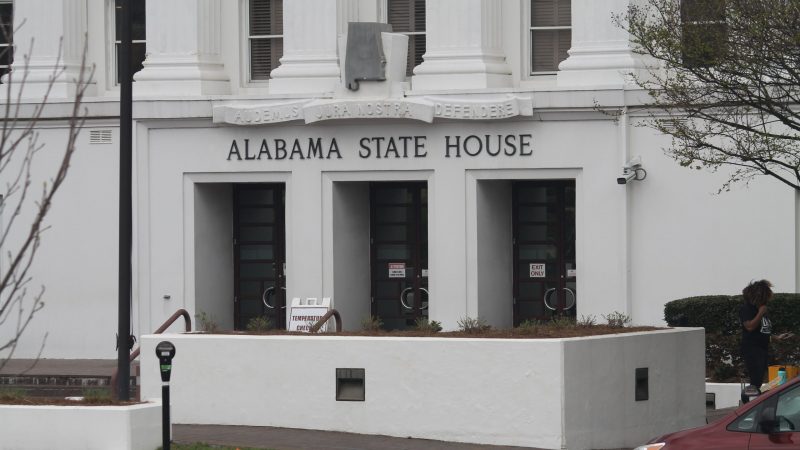
Bill making the Public Service Commission an appointed board is dead for the session
Usually when discussing legislative action, the focus is on what's moving forward. But plenty of bills in a legislature stall or even die. Leaders in the Alabama legislature say a bill involving the Public Service Commission is dead for the session. We get details on that from Todd Stacy, host of Capitol Journal on Alabama Public Television.
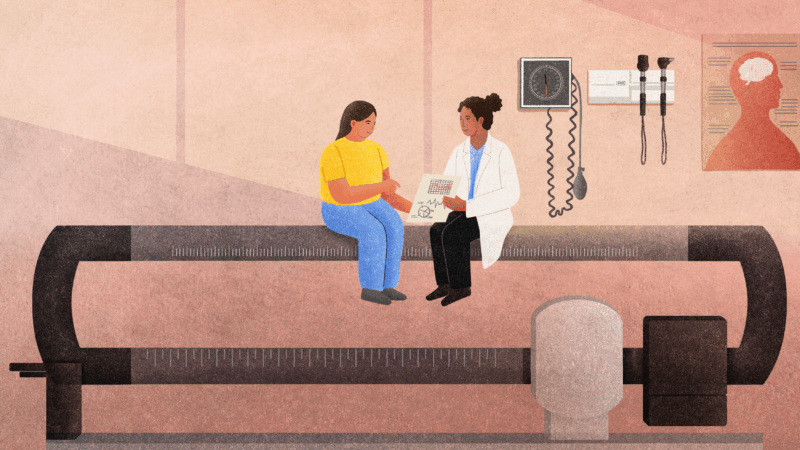
My doctor keeps focusing on my weight. What other health metrics matter more?
Our Real Talk with a Doc columnist explains how to push back if your doctor's obsessed with weight loss. And what other health metrics matter more instead.

Baz Luhrmann will make you fall in love with Elvis Presley
The new movie is made up of footage originally shot in the early 1970s, which Luhrmann found in storage in a Kansas salt mine.

Forget the State of the Union. What’s the state of your quiz score?
What's the state of your union, quiz-wise? Find out!

A team of midlife cheerleaders in Ukraine refuses to let war defeat them
Ukrainian women in their 50s and 60s say they've embraced cheerleading as a way to cope with the extreme stress and anxiety of four years of Russia's full-scale invasion.

As the U.S. celebrates its 250th birthday, many Latinos question whether they belong
Many U.S.-born Latinos feel afraid and anxious amid the political rhetoric. Still, others wouldn't miss celebrating their country
