
Alabama riverfront brawl videos spark a cultural moment about race, solidarity and justice
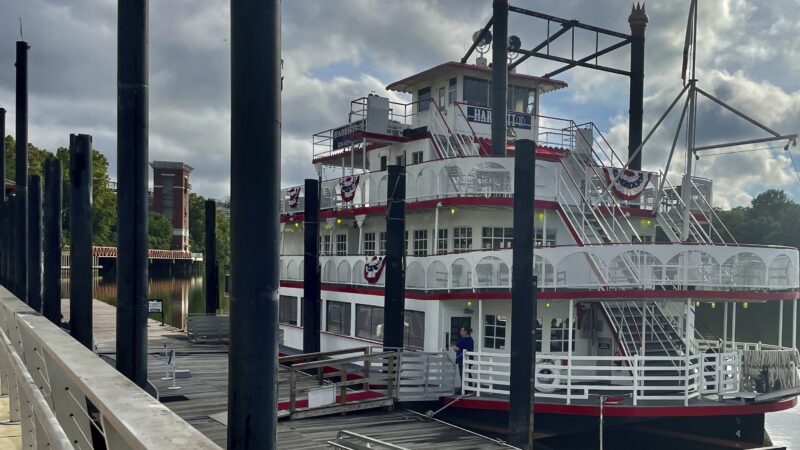
The Harriott II riverboat sits docked in Montgomery, Ala., on Tuesday, Aug. 8, 2023. A riverfront brawl occurred on Aug. 5 when a crew member was punched for trying to move a pontoon boat that was blocking the riverboat from docking.
By Aaron Morrison, Aisha I. Jefferson and Kim Chandler
MONTGOMERY, Ala. (AP) — As bystanders trained their smartphone cameras on the riverfront dock while several white boaters pummeled a Black riverboat co-captain, they couldn’t have known the footage would elicit a national conversation about racial solidarity.
Yet, a week after multiple videos showing the now-infamous brawl and valiant defense of the outnumbered co-captain were shared widely on social media, it’s clear the event truly tapped into the psyche of Black America and created a broader cultural moment.
Andrea Boyles, a sociology professor at Tulane University, said a long history of anti-Black racism and attacks and current events likely magnified the attack’s impact and response.
“Especially at a time like now where we see an increase in anti-Black racism through legislation and otherwise, whether we’re thinking about history, the banning of Black history and curriculum and all sorts of things across the state of Florida” and elsewhere, Boyles said. “So this is why it is on the forefront of people’s minds. And folks are very much tuned in, Black people in particular.”
Many see the Aug. 5 ordeal on the riverfront dock in Montgomery, Alabama’s capital city steeped in civil rights history, as a long-awaited answer to countless calls for help that went unanswered for past Black victims of violence and mob attacks.
“We witnessed a white mob doing this to him,” said Michelle Browder, an artist and social justice entrepreneur in Montgomery, describing the attack by boaters on the Black riverboat co-captain.
“I call it a mob because that is what it was, it was a mob mentality,” she added. “It then became a moment because you saw Black people coming together.”
After being inundated with images and stories of lethal violence against Black people, including motorists in traffic stops, church parishioners and grocery shoppers, the video from Montgomery struck a chord because it didn’t end in the worst of outcomes for Black Americans.
“For Montgomery to have this moment, we needed to see a win. We needed to see our community coming together and we needed to see justice,” Browder said.
Videos of the brawl showed the participants largely divided along racial lines. Several white men punched or shoved the Black riverboat co-captain after he took a separate vessel to shore and tried to move their pontoon boat. The white boaters’ private vessel was docked in a spot designated for the city-owned Harriott II riverboat, on which more than 200 passengers were waiting to disembark.
The videos then showed mostly Black people rushing to the co-captain’s defense, including a Black teenage riverboat crew member who swam to the dock. The videos also showed the ensuing brawl that included a Black man hitting a white person with a folding chair.
As of Friday, Alabama police had charged four white people with misdemeanor assault. The folding chair-wielding man turned himself in Friday and was charged with disorderly conduct.
Jim Kittrell, the captain of Harriott II, told The Daily Beast that he thought race might have been a factor in the initial attack on his co-captain, but the resulting melee was not a “Black and white thing.”
“This was our crew upset about these idiots,” Kittrell also told WACV radio station.
He later explained that several members of his crew, seen confronting the pontoon boat party after the riverboat docked, “felt they had to retaliate, which was unfortunate.”
“I wish we could have stopped it from happening but, when you see something like that, it was difficult. It was difficult for me to sit there in the wheelhouse watching him being attacked,” Kittrell told the station.
Kittrell told The Associated Press by phone that the city had asked him not to talk about the brawl.
Major Saba Coleman of the Montgomery Police Department said on Tuesday that hate crime charges were ruled out after the department consulted with the local FBI. But several observers noted the presence of a hate motivation, or lack thereof, on the part of the pontoon boat party was not why the event resonated so strongly.
“All these individuals having smartphones and cameras have democratized media and information. In the past, it was a very narrow scope on what news was being reported and from what perspectives,” NAACP President and CEO Derrick Johnson said.
The technology, Johnson added, “opened up an opportunity for America as a whole to understand the impact of racism, the impact of violence and the opportunity to create a narrative that’s more consistent with keeping African Americans and other communities safe.”
The riverfront brawl spawned a multitude of memes, jokes, parodies, reenactments and even T-shirts. “Lift every chair and swing,” read one shirt in a play on “ Lift Ev’ry Voice And Sing,” the late-19th century hymn sometimes referred to as the Black national anthem.
Another meme likened the co-captain’s toss of his hat into the air to sending the “bat signal,” a reference to the D.C. Comics character Batman. One image of the scene captured from bystander video was altered to imitate Marvel Comics’ Avengers characters assembling through magic portals on the dock to defend the Black co-captain.
Many observers on social media were quick to point out the significance of the city and location where the brawl took place. Montgomery was the first capital of the Confederacy and the riverfront is an area where enslaved people were once unloaded to be sold at auction. The area is a few blocks from the spot where Rosa Parks was arrested for disobeying bus segregation laws.
“Much of (the riverfront brawl reaction) is emblematic of the history of Montgomery,” said Timothy Welbeck, the director of the Center for Anti-Racism at Temple University in Philadelphia.
“This is the home of the bus boycott; this is the home of intense, racialized segregation and various forms of resistance today,” he said. “Even if there wasn’t an explicit mention of race, many people saw a white man assaulting a Black man as a proxy for some of the racist behavior that they’ve seen before. It brought about a sense of solidarity and unified fate, too, in this particular moment.”
Then there’s the lingering trauma of seeing past Black victims of violence and mob attacks suffer without help or intervention. Here was the rare event in which bystanders not only chronicled the moment but were able to intervene and help someone they saw being victimized.
In other notable instances, such as George Floyd’s murder by Minneapolis police, bystanders were restrained because the perpetrators were law enforcement officers. In a video of Floyd’s encounter with police filmed by Black bystander Darnella Frazier, people can be heard pleading for the Black man’s life as he gasped for air with a white officer’s knee held to his neck.
Physically intervening in Minneapolis would have invited arrests and placed the would-be rescuers at risk for harm themselves.
Historically, lynching victims were often taken from their families as the Black community had to stand by mutely. Emmett Till’s family members in Mississippi were haunted by their inability to stop the white men who kidnapped and killed him.
Bowder, the Montgomery artist, said the conversation needs to continue.
“I’m hoping for a hopeful message out of this,” she said.
Katrina Hazzard, a Rutgers University professor in the Department of Sociology, Anthropology and Criminal Justice, said she has seen that hopeful message in the comments of support that have crossed racial and ethnic lines in identifying the aggressors and the right for people to defend themselves and the crewman.
“That’s just been refreshing for me to see and for me to hear across the board,” she said.
___
Aisha I. Jefferson reported from Chicago and Aaron Morrison, who reported from New York, is a member of AP’s Race and Ethnicity team. AP reporter Gary Fields contributed from Washington, D.C.
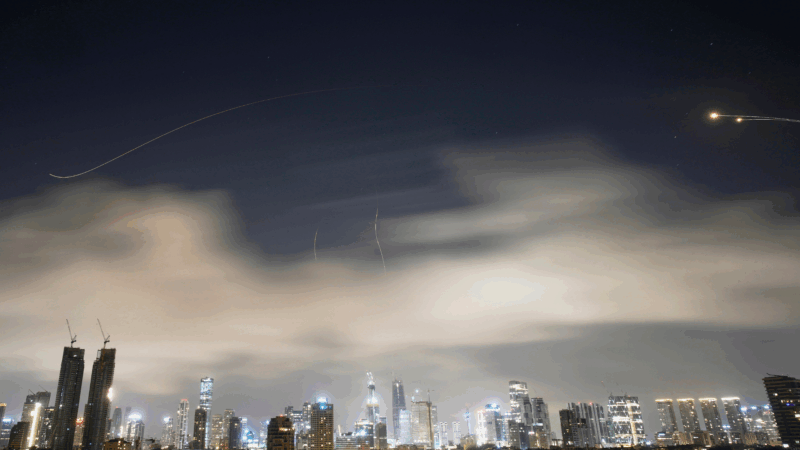
U.S. military names six killed in plane crash as Iran war enters third week
The conflict in the Middle East has entered a third week, with Israel announcing a barrage of new strikes on western Iran on Sunday, while the U.S. defense department released the names of six service members who died when their military refueling aircraft crashed.
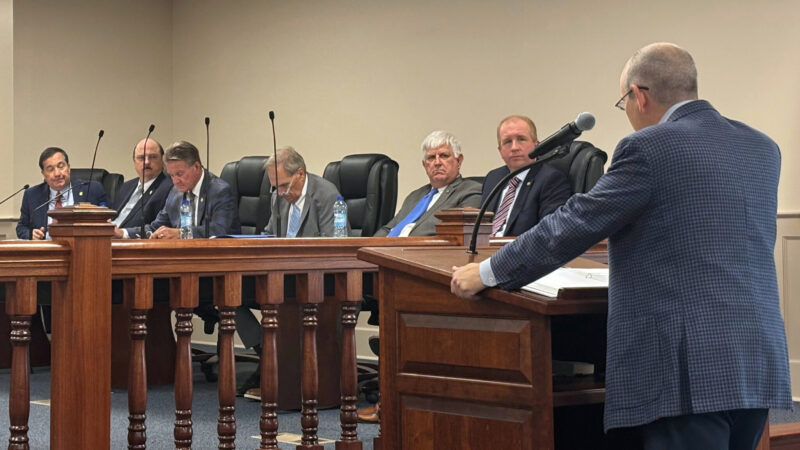
Alabama poised to drastically overhaul utility regulation. Will it lower electric bills?
The Alabama Senate unanimously voted to expand the public service commission, and create a Secretary of Energy to address rising electricity prices. A bill in the House would go even further, requiring rate case hearings and limiting utility profits.
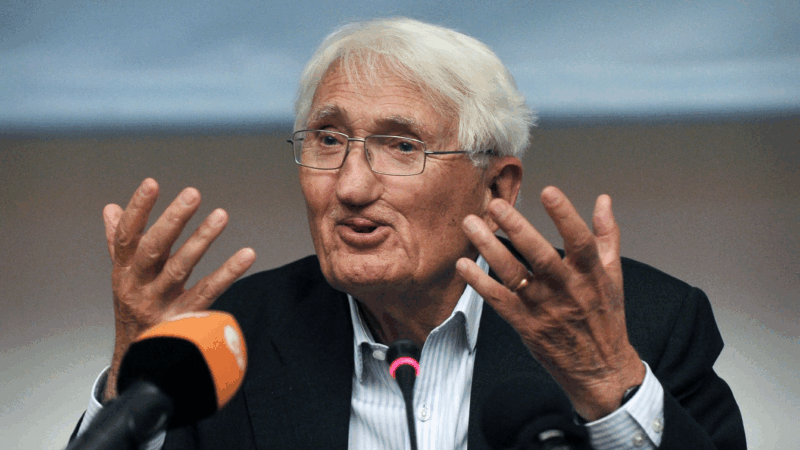
Acclaimed 20th century philosopher Jürgen Habermas dies at 96
Associated with the Frankfurt School, Habermas was a world-renowned thinker on modernity and democracy who helped shape German post-war and post-reunification political discourse.
Why the Chicago Bears could be moving to Indiana
While Illinois is trying to keep the team in Chicago's suburbs, Indiana lawmakers are offering a plan to finance a new stadium
Pentagon tightens controls over Stars and Stripes after calling it “woke”
The new rules for the independent military newspaper are the Defense Department's latest effort to put extraordinary restrictions on journalists covering the agency.
‘War of the Worlds’ remake sinks to the bottom at this year’s Razzie Awards
The surveillance industry version of HG Wells' 1898 classic sci-fi novel stars Ice Cube, and won accolades for worst picture, actor, director and more.
