
Alabama lost a voting rights case at the Supreme Court. It’s still trying to win
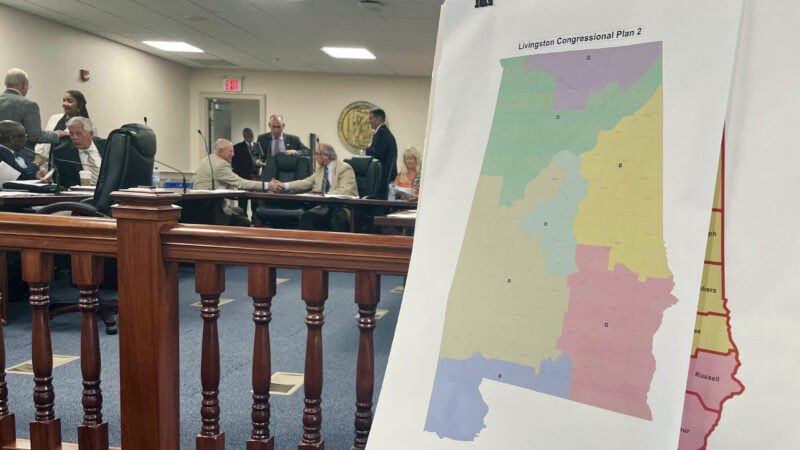
The state of Alabama is taking an unusual legal position as it heads into a closely watched court hearing this week about its congressional voting districts.
In June, Alabama lost at the U.S. Supreme Court. A majority of justices upheld a lower court’s ruling that found the congressional map the state used in last year’s midterm elections likely violated the landmark Voting Rights Act by diluting the power of Black voters.
The remedy the three-judge panel ordered was a new map with two districts where Black voters have a realistic opportunity of electing their preferred candidate for the U.S. House of Representatives. Because of how racially polarized voting is in Alabama, the panel said in each of those two districts, Black Alabamians will need to make up the majority of the voting-age population or “something quite close to it.”
But there is only one majority-Black district in the new redistricting plan passed by the state’s Republican-controlled legislature last month. In another district, Black Alabamians make up 39.9% of the voting-age population — a share that, the map’s challengers say, does not meet the court’s requirements.
And for this week’s court hearing before the panel, Alabama says it’s not planning to put up a fight on those specific points.
After signing the contested map into law in July, Republican Gov. Kay Ivey issued a statement saying, “The Legislature knows our state, our people and our districts better than the federal courts or activist groups.”
The moves are raising questions about whether the state intends to follow federal court orders and how much longer this redistricting lawsuit will be dragged out with next year’s elections looming. The ultimate map used by Alabama — where majority-Black districts are likely to elect Democrats and majority-white districts are likely to elect Republicans — could help determine which major party wins the U.S. House.
Alabama has raised the possibility of appealing to the Supreme Court again
Ahead of this week’s hearing, the state has been trying to get the three-judge panel to allow its attorneys to argue that the panel’s earlier ruling that requires two opportunity districts for Black voters no longer applies.
But in court orders, the judges have repeatedly reminded Alabama: “We are not at square one in these cases.”
Still, the state has signaled it’s preparing to appeal to the Supreme Court any new ruling by the panel that does not allow it to use a congressional map with only one majority-Black voting district for the 2024 elections.
Republican state lawmakers in Alabama seem to think their new map can flip at least one Supreme Court justice’s vote to get a different ruling from the high court, says Kareem Crayton, senior director for voting and representation at the Brennan Center for Justice at New York University’s law school.
Would Justice Brett Kavanaugh change his mind for this Alabama case?
In Alabama’s recent court briefs, there are multiple references to a concurring opinion by Justice Brett Kavanaugh, who was one of the two conservatives who joined the Supreme Court’s liberal justices to vote against Alabama and uphold the court’s past rulings on Section 2 of the Voting Rights Act.
Kavanaugh’s opinion echoed an argument by conservative Justice Clarence Thomas that questions whether it’s constitutional for Congress to allow race-based redistricting to go on indefinitely.
“They seem to believe that theirs is the case to test that question,” Crayton says about what may be the endgame for Alabama’s GOP state lawmakers.
Given how Kavanaugh has already voted in this case, however, Crayton says it’s clear that the justice is “not inclined to, in one year, somehow think that the state refusing to draw a second majority-Black district was somehow compliant” with the three-judge panel’s order or the Supreme Court.
Peyton McCrary, a former historian in the Justice Department’s Civil Rights Division who now teaches at the George Washington University Law School, is also skeptical of Alabama’s likelihood of getting the Supreme Court to weigh in again for this case.
Alabama’s resistance to the panel’s order for a map with two opportunity districts for Black voters, McCrary says, continues a long history of the state looking for every possible way not to follow a federal court’s order when it comes to the voting rights of people of color.
“Alabama has been wasting people’s time for decades trying to do things that are unlikely to prevail. And it’s doing so yet again,” McCrary says.
Edited by Benjamin Swasey
9(MDA2ODEyMDA3MDEyOTUxNTAzNTI4NWJlNw004))
FCC calls for more ‘patriotic, pro-America’ programming in runup to 250th anniversary
The "Pledge America Campaign" urges broadcasters to focus on programming that highlights "the historic accomplishments of this great nation from our founding through the Trump Administration today."

NASA’s Artemis II lunar mission may not launch in March after all
NASA says an "interrupted flow" of helium to the rocket system could require a rollback to the Vehicle Assembly Building. If it happens, NASA says the launch to the moon would be delayed until April.
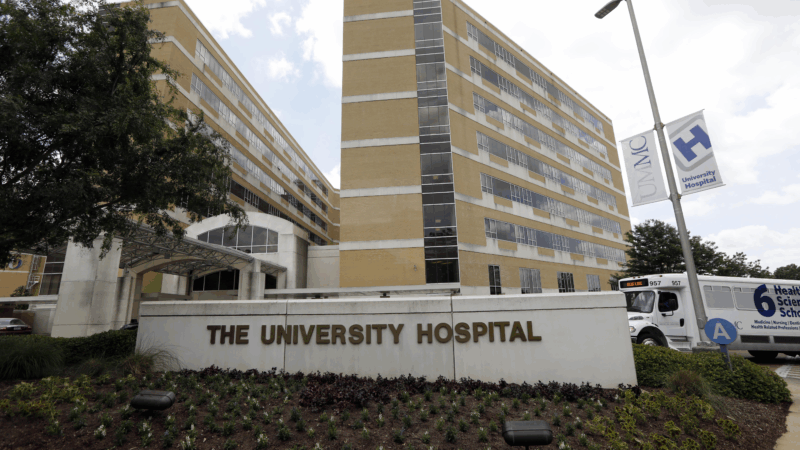
Mississippi health system shuts down clinics statewide after ransomware attack
The attack was launched on Thursday and prompted hospital officials to close all of its 35 clinics across the state.
Blizzard conditions and high winds forecast for NYC, East coast
The winter storm is expected to bring blizzard conditions and possibly up to 2 feet of snow in New York City.

Norway’s Johannes Klæbo is new Winter Olympics king
Johannes Klaebo won all six cross-country skiing events at this year's Winter Olympics, the surpassing Eric Heiden's five golds in 1980.
Willie Colón, salsa pioneer, has died at 75
The South Bronx bandleader took the Latin genre to new heights while recording for Fania Records.
