
Alabama halts execution because of time, IV access concerns
ATMORE, Ala. — Alabama officials called off the Thursday lethal injection of a man convicted in a 1999 workplace shooting because of time concerns and trouble accessing the inmate’s veins.
Alabama Corrections Commissioner John Hamm said the state halted the scheduled execution of Alan Miller after they determined they could not get the lethal injection underway before a midnight deadline. Prison officials made the decision at about 11:30 p.m. The last-minute reprieve came nearly three hours after a divided U.S. Supreme Court had cleared the way for the execution to begin.
“Due to time constraints resulting from the lateness of the court proceedings, the execution was called off once it was determined the condemned inmate’s veins could not be accessed in accordance with our protocol before the expiration of the death warrant,” Hamm said.
Hamm said “accessing the veins was taking a little bit longer than we anticipated.” He did not know how long the team tried to establish a connection, but noted there are a number of procedures to be done before the team begins trying to connect the IV line.
Miller was returned to his regular cell at a south Alabama prison.
The aborted execution came after the state’s July execution of Joe Nathan James took more than three hours to get underway after the state had difficulties establishing an intravenous line, leading to accusations that the execution was botched.
Miller, 57, was sentenced to death after being convicted of a 1999 workplace rampage in which he killed Terry Jarvis, Lee Holdbrooks and Scott Yancy.
“Despite the circumstances that led to the cancellation of this execution, nothing will change the fact that a jury heard the evidence of this case and made a decision,” Alabama Gov. Kay Ivey said in a statement. She added that three families are still grieving.
“We all know full well that Michael Holdbrooks, Terry Lee Jarvis and Christopher Scott Yancey did not choose to die by bullets to the chest. Tonight, my prayers are with the victims’ families and loved ones as they are forced to continue reliving the pain of their loss,” Ivey said.
An anti-death penalty group said the situation with Miller’s attempted lethal injection sounded similar to other “botched” executions.
“It is hard to see how they can persist with this broken method of execution that keeps going catastrophically wrong, again and again. In its desperation to execute, Alabama is experimenting on prisoners behind closed doors — surely the definition of cruel and unusual punishment,” Maya Foa, director of Reprieve US Forensic Justice Initiative, a human rights group opposed to the death penalty, said in a statement.
Prosecutors said Miller, a delivery truck driver, killed co-workers Holdbrooks and Yancy at a business in suburban Birmingham and then drove off to shoot former supervisor Jarvis at a business where Miller had previously worked. Each man was shot multiple times and Miller was captured after a highway chase.
Trial testimony indicated Miller believed the men were spreading rumors about him, including that he was gay. A psychiatrist hired by the defense found Miller suffered from severe mental illness and delusions but also said Miller’s condition wasn’t bad enough to use as a basis for an insanity defense under state law.
Justices in a 5-4 decision lifted an injunction — issued by a federal judge and left in place by the 11th U.S. Circuit Court of Appeals — that had blocked Miller’s execution from going forward. Miller’s attorneys said the state lost the paperwork requesting his execution be carried out using nitrogen hypoxia, a method legally available to him but never before used in the U.S.
When Alabama approved nitrogen hypoxia as an execution method in 2018, state law gave inmates a brief window to designate it as their execution method. Miller testified that he turned in paperwork four years ago selecting nitrogen hypoxia as his execution method, putting the documents in a slot in his cell door at the Holman Correctional Facility for a prison worker to collect.
U.S. District Judge R. Austin Huffaker Jr. issued a preliminary injunction on Tuesday blocking the state from killing Miller by any means other than nitrogen hypoxia after finding it was “substantially likely” that Miller “submitted a timely election form even though the State says that it does not have any physical record of a form.”
Nitrogen hypoxia is a proposed execution method in which death would be caused by forcing the inmate to breathe only nitrogen, depriving him or her of the oxygen needed to maintain bodily functions. Nitrogen hypoxia is authorized for executions in three states but none have attempted to put an inmate to death using the method. Alabama officials told the judge they are working to finalize the protocol.
Many states have struggled to buy execution drugs in recent years after U.S. and European pharmaceutical companies began blocking the use of their products in lethal injections. That has led some to seek alternate methods.

Alabama man, on death row since 1990, to get new trial
The U.S. Supreme Court on Monday declined to review the summer ruling from the 11th U.S. Circuit Court of Appeals. The decision paves the way for Michael Sockwell to receive a new trial.
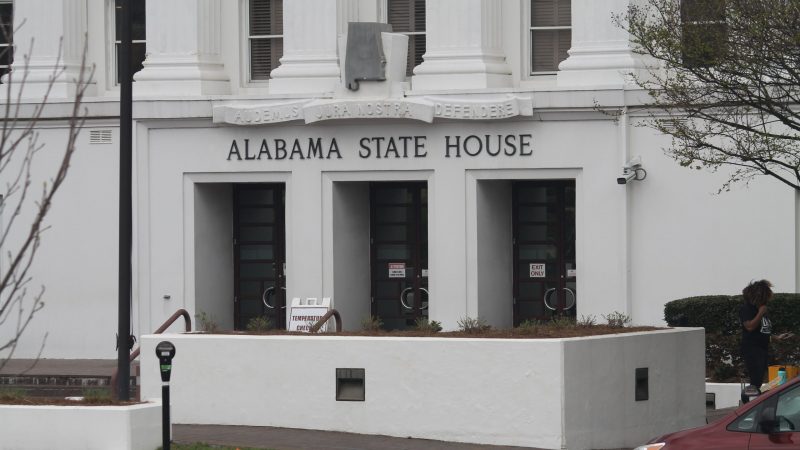
Bill making the Public Service Commission an appointed board is dead for the session
Usually when discussing legislative action, the focus is on what's moving forward. But plenty of bills in a legislature stall or even die. Leaders in the Alabama legislature say a bill involving the Public Service Commission is dead for the session. We get details on that from Todd Stacy, host of Capitol Journal on Alabama Public Television.
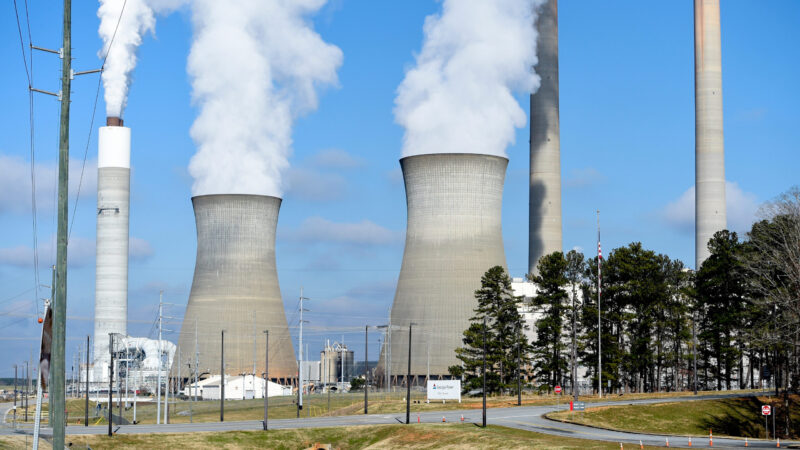
Feds announce $4.1 billion loan for electric power expansion in Alabama
Federal energy officials said the loan will save customers money as the companies undertake a huge expansion driven by demand from computer data centers.
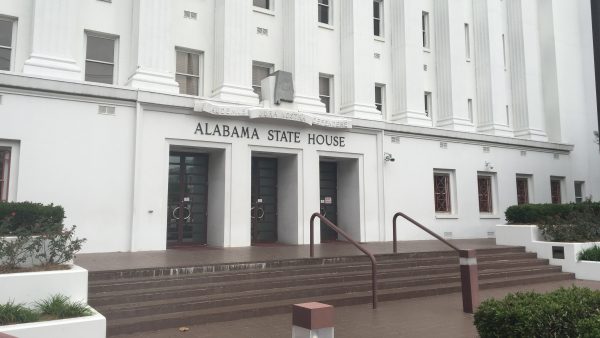
Bill limiting environmental regulations goes to the governor’s desk
President Trump has taken steps to roll back environmental regulations. Some of that same action is taking place in statehouses, including Alabama's. Lawmakers gave final passage this week to a bill that would ban the state from enacting environmental rules more stringent than those at the federal level. That's where we start our weekly legislative update with Todd Stacy, host of Capitol Journal on Alabama Public Television.
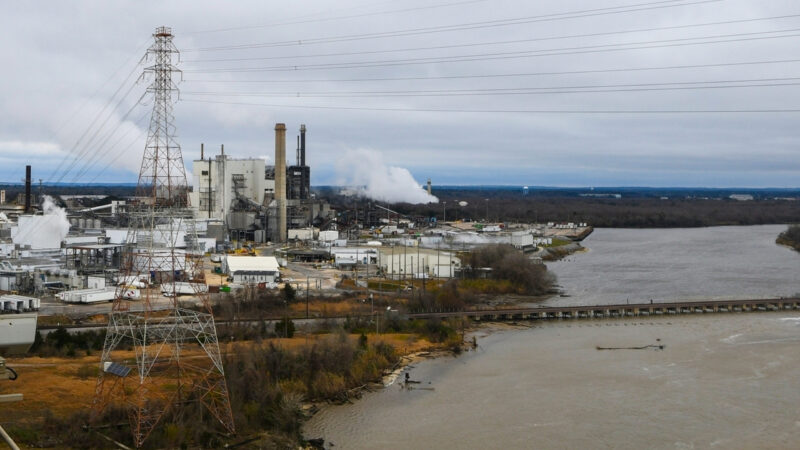
Following Trump’s lead, Alabama seeks to limit environmental regulations
The Alabama Legislature on Tuesday approved legislation backed by business groups that would prevent state agencies from setting restrictions on pollutants and hazardous substances exceeding those set by the federal government. In areas where no federal standard exists, the state could adopt new rules only if there is a “direct causal link” between exposure to harmful emissions and “manifest bodily harm” to humans.
Bill overhauling Alabama Public Service Commission delayed
Alabama lawmakers are considering what would be a sweeping change to the state's utility regulatory board. The members of the Public Service Commission are currently elected to their positions. Under this new proposal, commissioners would be appointed. We talk about that and other legislative matters with Todd Stacy, host of Capitol Journal on Alabama Public Television.
