
Supply chain issues in California open up a business opportunity for Gulf Coast ports
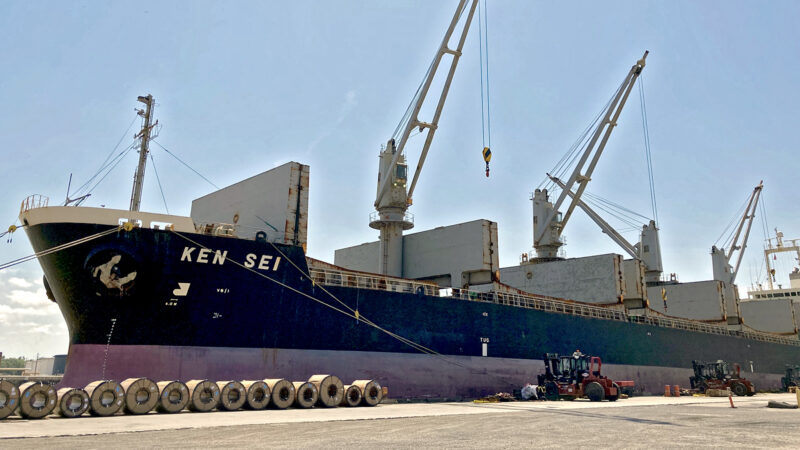
Steel coils sit outside a cargo ship at the Port of Mobile. April 27, 2021.
All the cargo ships stuck waiting off the California coast begs a simple question: Why not sail to the Gulf Coast instead?
Politicians and southern port officials have been making just that call. Former Alabama House of Representatives member Paul DeMarco said the Port of Mobile can help solve the nation’s supply chain problems in a recent op-ed. The Port of New Orleans is also making its pitch to shipping companies during conferences and over social media.
Chief Commercial Officer Todd Rives shared with @WWLTV last week about Port NOLA’s growing breakbulk volumes and willingness to support the supply chain as we see national impacts. See the whole interview here:https://t.co/GZqUz8Z7UU #connectinglousianawiththeworld
— Port of New Orleans (@PortNOLA) November 15, 2021
So far, plenty of companies have listened. The Port of Mobile’s container volume went up 27% in September compared to the same time last year. The port credits at least part of that boost to more vessels coming from Asia. The Port of South Louisiana also saw growth, with 47% more tons of goods coming through during the second quarter of 2021. Experts say sea traffic shifting to these ports helps alleviate the supply chain’s problems.
But while some ships decided to dock in the South, plenty of others still wait in line off the California coast. That’s because problems like truck driver and shipping container shortages can’t be solved by changing ports.
“Some of the problems plaguing the West Coast ports, they’re not gonna just go away just because you shift from one area of the country to another,” said Chris Connor, American Association of Port Authorities president.
Even with the wait, it can actually be cheaper to stick with California. Companies have invested a lot more there in warehouses, rail lines, and other ground infrastructure, which experts say is where the real savings come from.
Ground transportation matters enough that some ships have long chosen to sail from Asia past the Gulf Coast to New York.
“Sometimes it’s cheaper than if you unload the stuff in California,” said Zikai Zhou, assistant professor at the University of Southern Mississippi. “Even if it looks like it’s a longer distance.”
Gulf Coast ports also deal more with exports than imports. And they certainly don’t deal with nearly the same volume as places like Long Beach, which handles more than 40% of the nation’s containerized imports.
Jay Chen, an associate professor with Cleveland State University, said scaling up southern ports isn’t a simple task, comparing it to modifying a Honda Civic for trucking.
“You cannot change a compact car to haul big trailers,” Chen said. “It’s just by design very, very different.”
But the shipping logjam in the Pacific shows that relying on just a few ports is not a good idea either — a handy argument for Gulf Coast officials as they compete for funding from the $17 billion set aside for ports in the recently passed federal infrastructure plan.
It would be too late to make much of a difference this time with this shipping crisis, but the money could go toward upgrading southern ports to better lend a hand the next time the supply chain gets knotted.
This story was produced by the Gulf States Newsroom, a collaboration between Mississippi Public Broadcasting, WBHM in Birmingham, Alabama, WWNO in New Orleans and NPR.
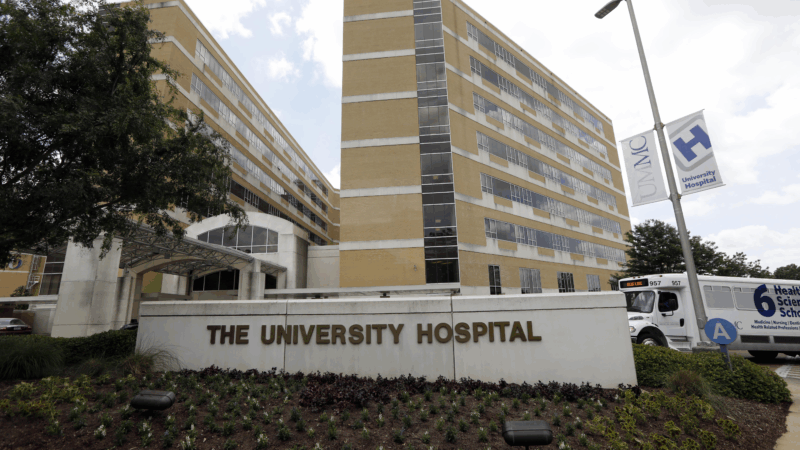
Mississippi health system shuts down clinics statewide after ransomware attack
The attack was launched on Thursday and prompted hospital officials to close all of its 35 clinics across the state.
Blizzard conditions and high winds forecast for NYC, East coast
The winter storm is expected to bring blizzard conditions and possibly up to 2 feet of snow in New York City.
Willie Colón, salsa pioneer, has died at 75
The South Bronx bandleader took the Latin genre to new heights while recording for Fania Records.

Vietnam Veterans sue to block proposed ‘Independence Arch’ near Arlington National Cemetery
The lawsuit challenges President Trump's plans for "Independence Arch," a 250-foot structure proposed for Memorial Circle.
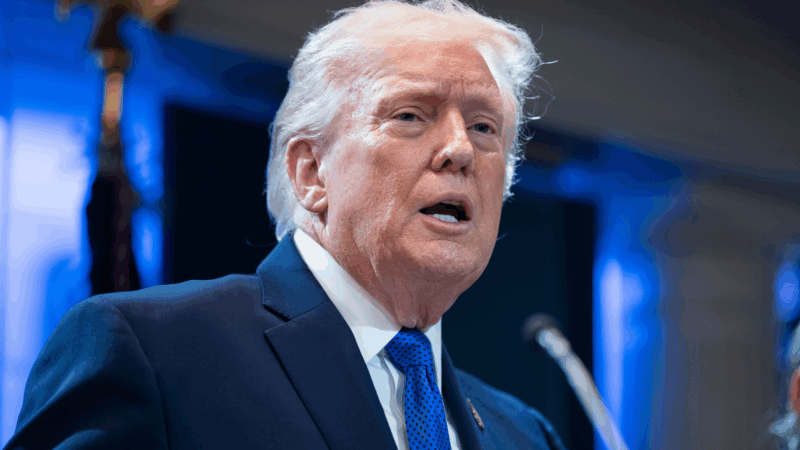
Trump to raise global tariffs to 15%
President Trump previously said he would implement 10% global tariffs after the U.S. Supreme Court struck down his tariff policies.

Pin trading has taken over the Olympics. Here’s what it’s like in Milan
Pin trading has become a hallmark of the Olympics in recent decades — and not just for athletes. An official trading center in Milan was a hotspot for longtime collectors and curious newcomers alike.
