
As southern workers quit in record number, restaurants struggle to meet demands
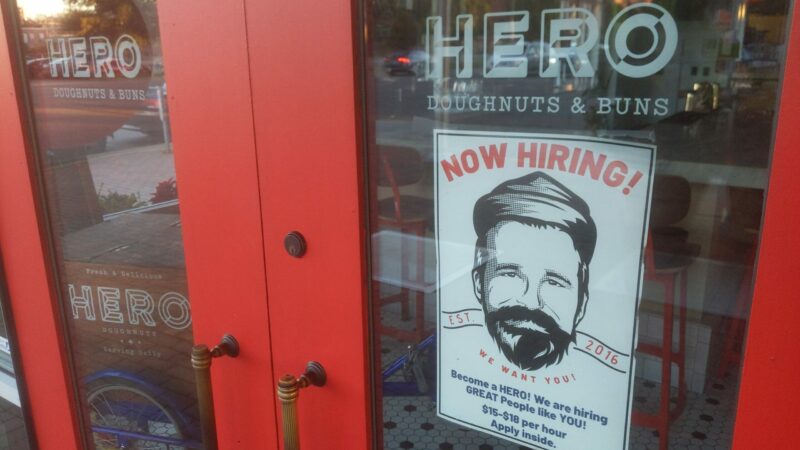
Hero Doughnuts & Buns in Birmingham, Alabama advertises an hourly wage of up to $18 to attract new workers.
Southerners are putting their bosses on notice — two weeks notice, specifically.
About 4.3 million people quit their jobs in August, the highest number on the Bureau of Labor Statistics’ records, and more than 40% of those resignations came from southern states. Some have left due to the delta variant of the coronavirus. Rising wages have led some businesses to steal workers away. And pandemic-caused burnout has led to people deciding some jobs just aren’t worth the stress.
Yet the South is also leading in hiring, with 2.5 million reported in August. The inflation rate of low-wage jobs – which typically have a higher turnover rate – in the region at least partially explains why the South leads here. Restaurants have also been desperate to draw workers back with hiring bonuses and bumped-up pay.
But the constant revolving door to the back office has stressed the region’s restaurants as pandemic restrictions have eased. Customers are eager to eat out again, but staffing problems keep some restaurants from being able to meet the demand.
Accepting All Applications
Yes, the food is the main selling point in the restaurant game. But Jackson, Mississippi restaurant owner Steve O’Neil knows that people’s first experience doesn’t come from the dishes, but the staff.
“You go into a retail store and you don’t like something, you know you might still buy something and you might go back,” said O’Neil, who owns Manship Wood Fired Kitchen and Aplos Simple Mediterranean. “But a lot of people just won’t return to a restaurant if they have a bad customer service experience.”
The constant wave of resignations has hit O’Neil’s restaurants, too, resulting in a lot of new hiring that has left him with a green wait staff. He’s also had to keep applications on his desk that, in the past, he would have slid into the trash bin.
“There’s a lot more room for acceptance at this point,” he said.
O’Neil has been able to hire back up — he actually has just over 100 employees right now, a bit more than normal. A larger number of his newly-restored staff, however, works part-time, only interested in just a couple hours per week.
Many restaurants have been forced to cut their operating hours — for some even full days — due to staffing shortages. The renewed demand for eating out can also make staffing problems worse. Customer demand combined with open job spots can overwhelm the remaining workers, causing them to quit too.
“It’s got some businesses very stressed because in many cases folks are having to pull double shifts,” said Ashley Edwards, the president of the Gulf Coast Business Council. “They’re having to do a lot more with less. But the customers are coming and obviously the consumer spending is there.”
Higher Costs And Wages
Being short-staffed isn’t the only issue restaurants have to worry about. Food prices in September were up 4.6% compared to last year. That’s assuming the restaurant can get the ingredients they need, which isn’t guaranteed given the country’s bottlenecked supply chain.
“When you go out to eat now, when you’re greeted by the server, it’s ‘Let me tell you what we don’t have on the menu today,’” said Pat Fontaine, executive director of the Mississippi Restaurant and Hospitality Association.
That’s in addition to another cost increase related to staffing problems — wages. Workers have been successfully demanding higher pay from restaurants desperate for the extra hands. The cost of training new employees, combined with the inflation on supplies, will likely result in more expensive menu prices for customers, the MRHA warns.
But economists say this is great news for the low-wage workers that staff the front and back of restaurants and have dealt with stagnant pay for years.
“This is a good thing for workers,” said Ben Meadows, an assistant professor of economics at the University of Alabama at Birmingham. “Now employers are having to be competitive to gain employees rather than the vice-versa story.”
O’Neil said his waiters and waitresses can make as much as $60,000 when you include their tips, but he’s keeping their pay at the federal tipped minimum wage of $2.13.
But O’Neil has raised wages about 20% for many of his employees, including his line cooks and food runners. He’s also offering retention and hiring bonuses. Nationally, wages have shot up across the industry, jumping nearly $2 per hour since last year.
“We do everything we can to try and make us the most attractive,” O’Neil said.
This story was produced by the Gulf States Newsroom, a collaboration between Mississippi Public Broadcasting, WBHM in Birmingham, Alabama, WWNO in New Orleans and NPR.

Lack of transportation keeps many Alabamians from working. Rural public transit programs are trying to help
While lack of transportation is a major employment barrier in Alabama, few people take public transit to work. That dynamic is even more pronounced in rural areas.

When a horse whinnies, there’s more than meets the ear
A new study finds that horse whinnies are made of both a high and a low frequency, generated by different parts of the vocal tract. The two-tone sound may help horses convey more complex information.
Trump’s many tariff tools mean consumer prices won’t go down, analysts say
The Supreme Court struck down President Trump's signature tariffs. But the president has other tariff tools, and consumers shouldn't expect cheaper prices anytime soon, economists say.
Hundreds of American nurses choose Canada over the U.S. under Trump
More than 1,000 American nurses have successfully applied for licensure in British Columbia since April, a massive increase over prior years.

Tax credits for solar panels are available, but the catch is you can’t own them
Rooftop solar installers are steering customers toward leases instead of purchases. Federal tax credits for purchased systems have ended but are still available for leased ones.

5 takeaways from Trump’s State of the Union address
President Trump hit familiar notes on immigration and culture in his speech Tuesday night, but he largely underplayed the economic problems that voters say they are most concerned about.
