
Prisons Officials Request $42 Million Increase to Hire Staff, Improve Healthcare
Officials from the Alabama Department of Corrections and the Bureau of Pardons and Paroles presented their budget proposals to lawmakers Thursday ahead of the upcoming legislative session.
ADOC Commissioner Jeff Dunn requested a $42 million increase, bringing the agency’s total General Fund budget to $563 million. Dunn said much of the additional money will be used to recruit 700 more security staff, increase funding for inmate healthcare and hire about 100 mental healthcare professionals.
The agency is under pressure to reform its prisons, which are among the most violent in the country, significantly overcrowded and understaffed. During his presentation, Dunn said the department has made progress in the past year but “challenges still remain.” He said the rate of violence was again “unacceptably high.” Staffing, he said, is a main priority.
“There is a direct correlation between overcrowding and understaffing,” Dunn said. “And so the best thing that we can do is to, as fast as we can, accelerate the on-boarding of new correctional officers, which we are doing.”
Last year the legislature approved a budget increase for the DOC to hire an additional 500 correctional officers. Dunn said as of November 2019, they have seen a net increase of 255 security staff. The department is under a court order to hire a total of 2,200 officers by 2022.
Dunn said they are also “closely monitoring” the recent increase in the inmate population, which went up by 1,100 inmates last year. Lawmakers expressed concern about this trend, which many attribute to a significant decline in the number of inmates being granted parole.
In his presentation to lawmakers, Charles Graddick, director of the Alabama Bureau of Pardons and Paroles, said curbing the inmate population is not his agency’s responsibility.
“I want to make it clear,” Graddick said, “we’re not the outlet to relieve the overcrowded conditions of our prisons.”
Gov. Kay Ivey appointed Graddick last year to lead the bureau and “fix the department,” according to Graddick. Since then, the number of parole hearings has sharply declined, as has the number of inmates who were granted parole. In a recent report, the ACLU warned that current parole rates could lead to a dramatic increase in the inmate population this year. During Graddick’s presentation, Republican state Sen. Cam Ward said the trend could lead to federal intervention.
“If we stay on the current track we’re on right now … we’re going to be on receivership,” Ward said.
Some lawmakers requested more information about the criteria being used to grant or deny parole.
“I’m afraid … that you all are actually re-trying cases all over again for people who’ve served their time,” Democratic state Sen. Bobby Singleton said.
Graddick said he does not control the parole board, but he supports their recent decisions. He said board members must follow the law and use “common sense.” Graddick also said inmates coming up for parole often do not meet criteria for early release.
“I’m not here to point fingers at Corrections,” Graddick said. “But most of them (inmates) don’t have the appropriate training and programming and treatment and home plans and things that are required to be considered for parole.”
Graddick said the bureau faces several challenges of its own, with probation officers struggling to manage heavy case loads. He requested an additional $11 million for the bureau’s 2021 fiscal budget to pay for supplies and additional staff.
Lawmakers pressed Graddick for more information and repeatedly asked about communication between the state Bureau of Pardons and Paroles and the Department of Corrections.
Commissioner Dunn said he couldn’t comment on Graddick’s presentation, but he said ADOC is working to offer incentives to inmates who want to participate in available programs. He also said ADOC plans to increase access to vocational and educational programs with its 2021 fiscal budget.
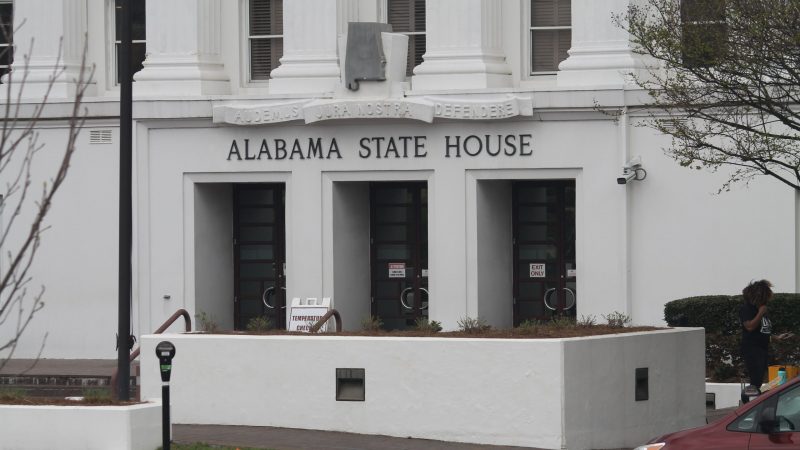
Bill making the Public Service Commission an appointed board is dead for the session
Usually when discussing legislative action, the focus is on what's moving forward. But plenty of bills in a legislature stall or even die. Leaders in the Alabama legislature say a bill involving the Public Service Commission is dead for the session. We get details on that from Todd Stacy, host of Capitol Journal on Alabama Public Television.
My doctor keeps focusing on my weight. What other health metrics matter more?
Our Real Talk with a Doc columnist explains how to push back if your doctor's obsessed with weight loss. And what other health metrics matter more instead.

Baz Luhrmann will make you fall in love with Elvis Presley
The new movie is made up of footage originally shot in the early 1970s, which Luhrmann found in storage in a Kansas salt mine.

Forget the State of the Union. What’s the state of your quiz score?
What's the state of your union, quiz-wise? Find out!

A team of midlife cheerleaders in Ukraine refuses to let war defeat them
Ukrainian women in their 50s and 60s say they've embraced cheerleading as a way to cope with the extreme stress and anxiety of four years of Russia's full-scale invasion.

As the U.S. celebrates its 250th birthday, many Latinos question whether they belong
Many U.S.-born Latinos feel afraid and anxious amid the political rhetoric. Still, others wouldn't miss celebrating their country
