
Recovery Resource Center Bridges Gaps in Addiction Treatment
For someone with addiction, deciding to get help is often the first step to recovery. But finding that help is not always easy. State-funded treatment facilities can have complicated requirements and long waiting lists. A new resource center at Cooper Green Mercy Health Services in Birmingham aims to ease the process by connecting people to treatment and providing support along the way.
As a licensed counselor, Leslie Plaia has worked at a number of addiction treatment programs. She is familiar with the admissions process and red tape that comes with it. She realized over time that individuals dealing with addiction are overwhelmed by it.
“When people decided that they wanted to get sober they had no idea what to do,” Plaia says. “And they would call different numbers and either people wouldn’t answer or someone would say ‘hey you need this type of assessment or you need this or that.’ And people were kind of lost.”
Plaia now tries to bridge that gap as the director of the Recovery Resource Center. The center opened in May, in response to the opioid crisis. Its sole purpose is to link people to addiction treatment. Many staff members, called peer support specialists, are also in long-term recovery, like Melissa Beck.
“You have an advocate,” Beck says. “You have a peer support specialist, somebody that’s been pretty close to where you’ve been that’s got a lot of empathy and says ‘hey I can hold your hand and walk you through this process.’”
That process can be confusing, especially for someone with little or no insurance. The first step is an assessment required for state-funded programs. It measures someone’s addiction and recommends a level of treatment. Recovery Resource Center performs the assessment for free, no appointment necessary. They search for corresponding treatment programs and help clients get there.
“We’ll follow up with clients on a daily basis to make sure they’re not running into any road blocks,” Beck says. “And a road block can be ‘I can’t get transportation to where I need to go’ or something as simple as ‘I don’t have state identification.’”
For some, a big road block is the waiting game. It is common to wait anywhere from two to six weeks to get a spot at a state-funded inpatient addiction treatment program. Beth Bachelor, executive director of Fellowship House, one of the biggest inpatient treatment facilities for the uninsured in Jefferson County, says many cannot afford to wait weeks for treatment.
“This is a problem that affects people only when they’re in crisis,” Bachelor says.
With more than 100 people waiting for a bed, Fellowship House can’t keep up with demand. Across the board, providers are understaffed and overworked. That trickles down. When people call to ask about the admissions process or check their status on a waiting list, it can be difficult to talk to an actual person. Calls go unanswered or end with answering machines.
Bachelor says for someone with addiction, delays and confusion increase the likelihood of serious withdrawal symptoms, continued drug use or overdose.
“These are people that have asked for help,” she says. “I think we should be able to help those people when they ask for it. Because one of the things that makes treatment effective is timeliness.”
The Recovery Resource Center does not change the system. The waiting lists still exist. But the center helps navigate the process. Lashun, who asked us not to use her last name, experienced this firsthand. When alcohol use caused her psychiatric medications to stop working, Lashun’s doctor referred her to the Recovery Resource Center. They got her into a detox facility and then helped her transition to an inpatient program.
“I probably would not have went to rehab if I did not have that resource,” Lashun says.
She still receives phone calls from her peer support specialist. That follow-up continues for a year after a client gets sober. Director Leslie Plaia says it has a big impact.
“And that’s the thing that we hear about the most – ‘thank you so much for calling, thank you so much for getting back to me,’” she says. “Because it can be a really lonely process just in general.”
The Recovery Resource Center is funded for three years through a combination of grants and community partnerships. The hope is to create a safety net, so when someone is ready to get help, they will know where to go and they only have to ask once.
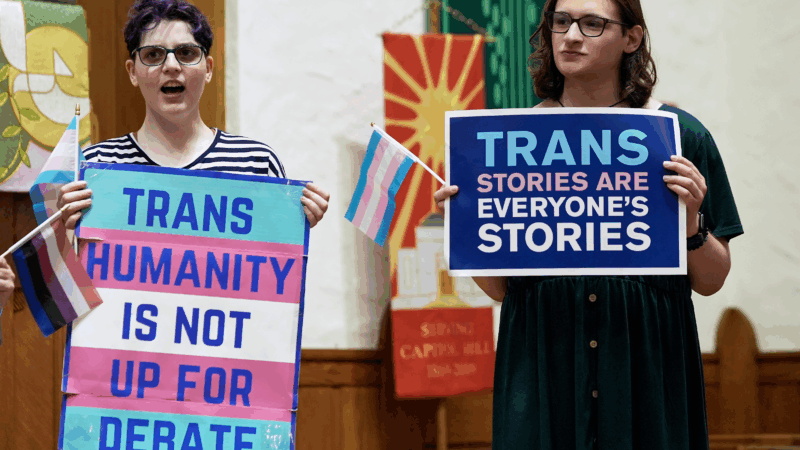
Trump administration lauds plastic surgeons’ statement on trans surgery for minors
A patient who came to regret the top surgery she got as a teen won a $2 million malpractice suit. Then, the American Society of Plastic Surgeons clarified its position that surgery is not recommended for transgender minors.

Sunday Puzzle: -IUM Pandemonium
NPR's Ayesha Rascoe plays the puzzle with KPBS listener Anthony Baio and Weekend Edition Puzzlemaster Will Shortz.
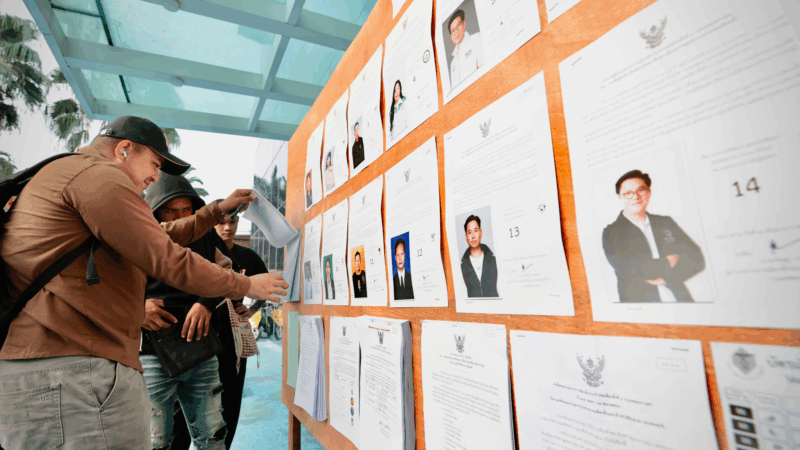
Thailand counts votes in early election with 3 main parties vying for power
Vote counting was underway in Thailand's early general election on Sunday, seen as a three-way race among competing visions of progressive, populist and old-fashioned patronage politics.

US ski star Lindsey Vonn crashes in Olympic downhill race
In an explosive crash near the top of the downhill course in Cortina, Vonn landed a jump perpendicular to the slope and tumbled to a stop shortly below.

For many U.S. Olympic athletes, Italy feels like home turf
Many spent their careers training on the mountains they'll be competing on at the Winter Games. Lindsey Vonn wanted to stage a comeback on these slopes and Jessie Diggins won her first World Cup there.
Immigrant whose skull was broken in 8 places during ICE arrest says beating was unprovoked
Alberto Castañeda Mondragón was hospitalized with eight skull fractures and five life-threatening brain hemorrhages. Officers claimed he ran into a wall, but medical staff doubted that account.
