
New Technology Aims To Measure Concussion Risk In Athletes
Concussions can occur from head injuries while playing any sport where a player receives a blow to the head. And for years, hearing the crack of two helmets colliding or seeing a player crash to the ground headfirst, was the only way to determine if a player might have suffered a concussion. But that’s changing. In the second installment in our series on sports concussions, Les Lovoy reports on a Birmingham company that’s on the forefront of creating sensor technology that allows coaches and physicians to measure the impact to the head — in real time.

Les Lovoy,WBHM
Shauna Clevenger (right), was taking batting practice before a softball game and got hit in the head, from a wlld pitch. Her parents, Shannon and Shaun Clevenger took her to a doctor the next morning, who confirmed she had received a concussion.
Shauna Clevenger (right), was taking batting practice before a softball game and got hit in the head, from a wlld pitch. Her parents, Shannon and Shaun Clevenger took her to a doctor the next morning, who confirmed she had received a concussion.
On a hot summer Saturday afternoon, Shauna Clevenger steps up two the batters box. Her softball team, the “Cobras” is playing in a tournament, outside of Cullman. Shauna’s a, soft-spoken incoming high school freshman, and today she has her long brown hair in pigtails.
A few weeks back, Shauna was taking batting practice before a game. Her coach threw through a wild pitch.
She points to her temple. Shauna, wasn’t wearing a helmet. After the game, she told her mother what happened. For a short time, she felt like she couldn’t speak, and had a headache. Her parents were concerned. Shannon Clevenger is Shauna’s mom.
“And, that night, she came in and had gotten a shower and came in and said when she looked at her phone, it made her head hurt worse,” she said. “So, at the point, we were concerned she possibly had a concussion.”
Her parents took her to a doctor the next morning, who confirmed she had a concussion. Robert Canatu, professor of neurology at Boston University, says they did the right thing. He says getting a concussion, especially while playing football, is similar to a bowl of Jell-O being shaken hard.
“The skull is taking the hit and then the head is being moved and he contents of the head are being very violently shaken. And, they’re being rotated, as well, Canatu explained. “And, those are the factors that stretch the brain tissue, tear brain tissue, windup causing concussions and sometimes worse, such as bleeds within the brain.”
Diagnosing them quickly is key. A number of companies are creating products to help coaches and doctors see if a player possibly has a concussion. These range from special helmets to mouthpieces and caps to headbands. In Alabama, a Birmingham-based company named Archetype recently developed the Player MD system. Jason Cooner is Archetype’s CEO.
“Player MD is basically a sensor-based application,” he said. “We put sensors on skull caps or headbands, monitor impacts on athletes as they’re playing sport and basically what it does is it quantifies the impact into an overall risk assessment.”
Les Lovoy,WBHM
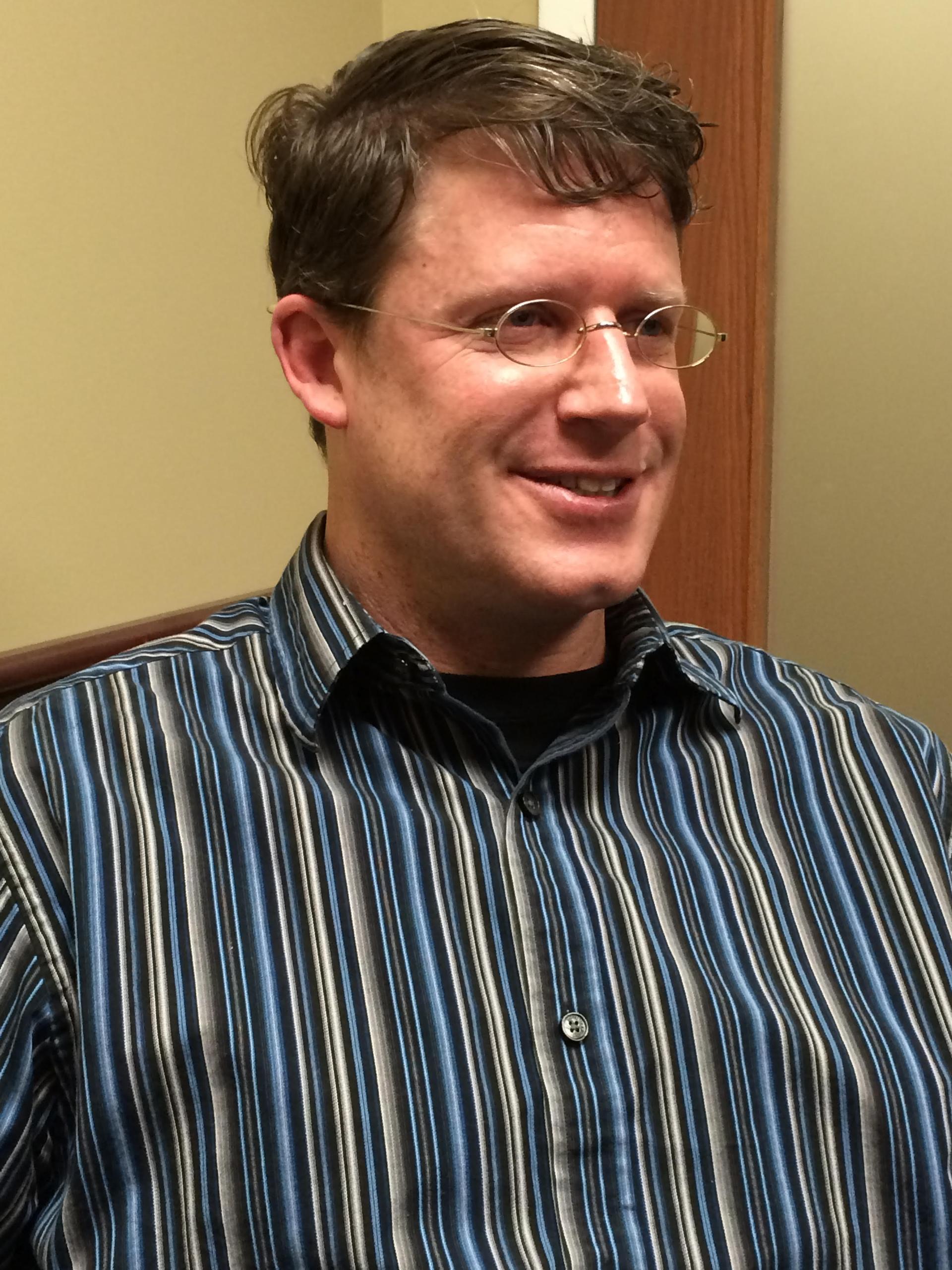
Jason Cooner is the CEO of Archetype, a Birmingham-based company, which has created a sensor-based system which measures blows to the heads of athletes.
Jason Cooner is the CEO of Archetype, a Birmingham-based company, which has created a sensor-based system which measures blows to the heads of athletes.
With data from Player MD’s sensors, Cooner and his team compare a player’s hits to their database of about 2 million impacts. I wanted to see how this technology works first-hand. So, I’m putting on a helmet that a division one football team would wear out on the field. OK Jason, give me a pop.
He shows me a graph that’s appeared on his computer screen.
“If you notice, you have had a very big whack there and have a 25 percent chance of potential concussion in the hospital,” Cooner said. “Now when they get over 10 percent, I say that’s when you need to keep an eye on the kid.”
Dr. Jeffrey Dugas is a surgeon in Birmingham who specializes in sports medicine at Andrews Sport Medicine Orthopedic Center. He’s also team physician for several area high school football teams. Dr Dugas says technology like Archetype’s Player Md can’t diagnose concussions. That’s a call for physicians to make. What it can do is give the medical staff a heads up.
“So, if we know that a kid hits a red line, so to speak, or a threshold at which we’re concerned about a head injury, that doesn’t mean they have a concussion,” Dugas noted. “It doesn’t mean they have a traumatic brain injury. It just means we need to be more aware of it, as the medical professionals, that are on the sidelines, looking at these kids. It raises a red flag with us, and we say we need to make sure that one is ok.”
But coaching staffs are slow to embrace the new technology. One reason is cost. At $150 per, some high schools may find the cost prohibitive. And, there’s the perception among players that someone is “less tough” if they agree to wear something that measure hits. Shaun Clevenger was shaken by his daughter Shauna’s brush with a concussion. He says it’s worth the cost, finically and beyond, to protect young athletes’ heads.
“Anything they can do to help research, I think they should go ahead and participate, especially something we’re so gray in,” Clevenger said.
The “grey” Clevenger is referring to, are the “unknowns” when it comes to diagnosing a concussion. It might take a major shift in culture and attitudes of players and coaches for this technology to become mandatory or standard. For now, some prominent Alabama college football programs are leading the charge. Auburn University uses Player MD during practice and will start equipping players with the sensors during games in the upcoming season. For WBHM, I’m Les Lovoy.
‘One year of failure.’ The Lancet slams RFK Jr.’s first year as health chief
In a scathing review, the top US medical journal's editorial board warned that the "destruction that Kennedy has wrought in 1 in office might take generations to repair."
Here’s how world leaders are reacting to the US-Israel strikes on Iran
Several leaders voiced support for the operation – but most, including those who stopped short of condemning it, called for restraint moving forward.

How could the U.S. strikes in Iran affect the world’s oil supply?
Despite sanctions, Iran is one of the world's major oil producers, with much of its crude exported to China.

Why is the U.S. attacking Iran? Six things to know
The U.S. and Israel launched military strikes in Iran, targeting Khamenei and the Iranian president. "Operation Epic Fury" will be "massive and ongoing," President Trump said Saturday morning.
Sen. Tim Kaine calls on the Senate to vote on the war powers resolution
NPR's Scott Simon talks to Sen. Tim Kaine, D-Va., about the U.S. strikes on Iran.
Iran strikes were launched without approval from Congress, deeply dividing lawmakers
Top lawmakers were notified about the operation shortly before it was launched, but the White House did not seek authorization from Congress to carry out the strikes.
